

Add Post Title Here ..
In order To See Your Custom HTML/JavaScript Code in Action You Must Click On The Preview Page Button, Your Code is NOT going to be active in the edit mode
ThaBox: Movement-First Strength Training and Results-Driven Coaching in Latta, SC
Location: Latta, South Carolina
Founder / Coach: David Deberry
Training Focus: Movement assessment, scalable strength and conditioning, corrective exercise, and measurable work capacity.

In a fitness market where many people judge a facility by its lighting, mirrors, and social-media appeal, ThaBox has earned its identity in a different way: through coaching substance. Deberry’s gym is not built around appearances first. It is built around movement, effort, assessment, and the steady process of helping people become more capable than they were when they walked in.
That makes ThaBox an authority story, not just a local business profile. The real subject is the method: how Deberry evaluates movement, scales workouts, documents progress, coaches different ability levels, and helps members understand that training is not only about fatigue. It is about building a body that can move, perform, recover, and keep improving.
- Why Deberry puts movement assessment before harder training.
- How ThaBox structures scalable, timer-based workouts.
- What clients can expect from the gym’s coaching experience.
- How Deberry measures progress through work capacity and consistency.
- Why ThaBox stands out in the Latta and Dillon County fitness market.
David Deberry’s credibility is grounded in time under the bar, time on the floor, and time spent coaching real people. His path into fitness began with his own effort to change his body and self-image, then developed into a professional track after others began seeking his advice. He later worked in fitness environments including Fitness World Gyms in Florence and the City of Dillon Wellness Center before coming to ThaBox in 2015.
Today, his authority is not presented as a slogan. It appears in the details of how he coaches: the overhead squat assessment, the corrective exercise plan, the ankle mobility check, the timed circuit, the documentation of reps, and the close attention to what each client actually needs. For Deberry, the work is personal because the programming is personal.
Deberry’s training philosophy starts with a simple premise: people should not rush into harder training before their movement gives them a foundation to handle it. He looks for the movement impairments that can show up from everyday life, including weak glutes, tight hip flexors, and limited ankle mobility. Those issues may seem small until a person tries to lift heavier, move faster, cut harder, or absorb force under fatigue.
His clearest standard is the progression he described for athletes: move well first, move well under load, then move well fast. That philosophy is especially relevant for student athletes, where he sees recurring problems around ankles, knees, and hips, often connected to repeated sport movements and limited downtime. In Deberry’s system, training is not just about making the workout harder. It is about making the body better prepared.
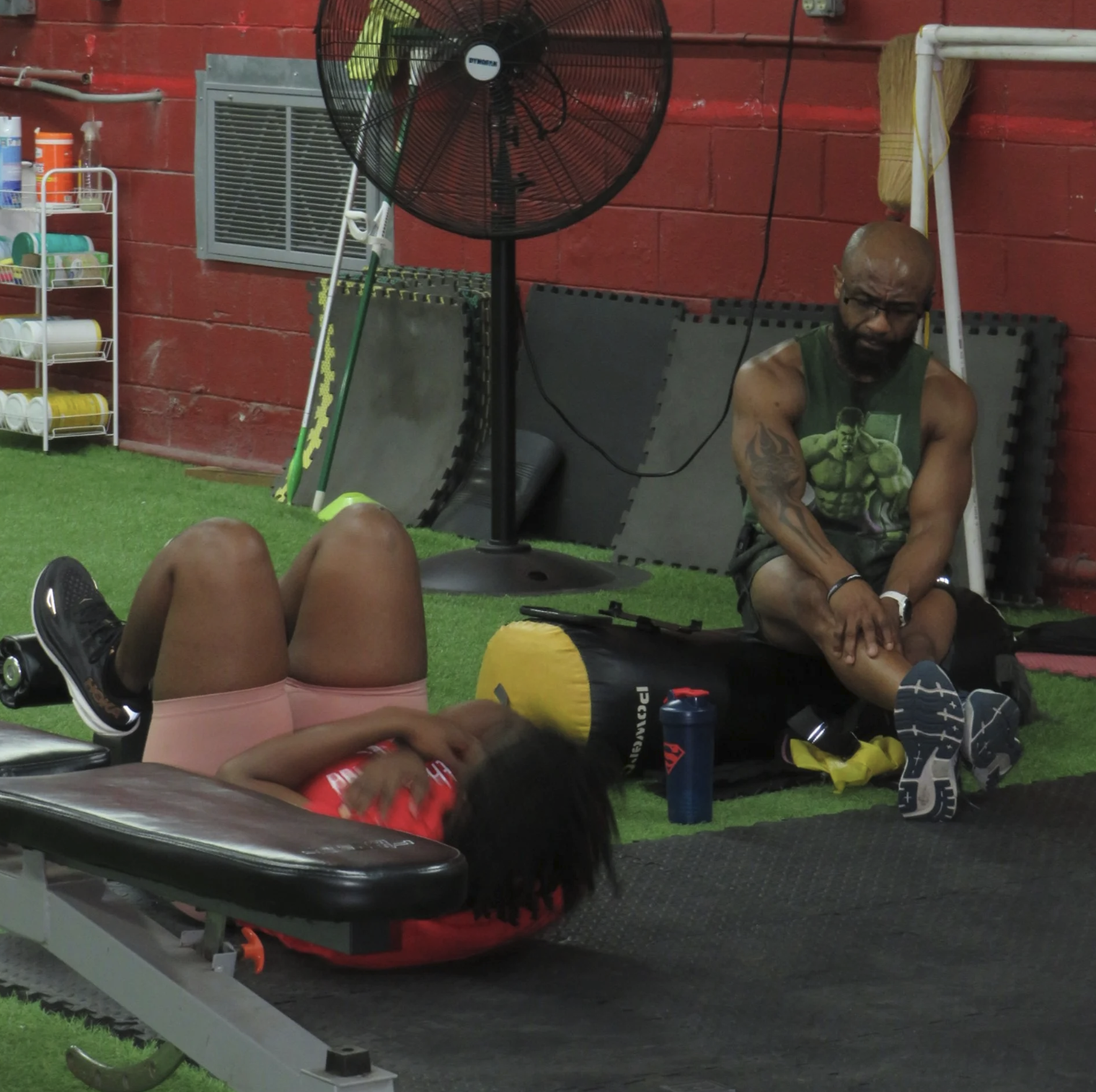
ThaBox is known for circuit-style training, high-energy sessions, and workouts that can be adjusted for different levels. Deberry often trains with a timer. A standard structure may use one minute of work followed by 30 seconds of rest across multiple movements and rounds, creating a focused 30-minute training session. But that is not where every person starts.
For a newer member, the same workout concept can be scaled down: 30 seconds of work with a longer rest period, then 45 seconds of work with 45 seconds of rest, then a more demanding interval if the person is ready. That progression gives members a challenge without making the first experience feel like punishment. It also reveals one of Deberry’s core coaching instincts: intensity has to be earned, not dumped onto people indiscriminately.
He applies the same thinking to movement selection. A burpee, for example, can be modified with equipment so a member can train the pattern at a level that fits their current ability. In his words, there is nothing he does with an elite athlete that he cannot adjust into a version for a novice. That principle is what makes the gym’s work demanding without being exclusionary.
When Deberry talks about results, he does not limit the conversation to weight loss. He names weight loss, muscle development, improved quality of life through movement, better sport performance, better self-image, more confidence, and a stronger understanding of exercise, equipment, and movement. The range matters because ThaBox serves people with different starting points and different reasons for training.
One of his most practical coaching habits is documentation. In one workout example, he tracks reps across movements such as push-ups, squats, and ring rows, then compares performance when the workout returns later. If a member improves, the progress is visible. If the numbers move in the wrong direction, the conversation turns to sleep, nutrition, consistency, weekend behavior, and other variables that may have affected performance.
That is an authority mindset. It treats training as a process that can be observed, adjusted, and improved. It also gives clients something more useful than a vague feeling that the workout was hard. It gives them evidence.
Deberry wants members to have a challenging experience, but not one that defeats them. His goal is to establish where a person is, push them to the edge of that ability, and keep the work demanding enough to create progress without giving them too much too soon. That balance is central to the ThaBox experience.
It is also why Deberry says one of the things he does better than many gyms is knowing his people. Some clients come in with stated goals around fat loss, muscle gain, or athleticism. Others may simply need exercise without having to design their own workouts. Some require more frequent accountability. Deberry adjusts the coaching relationship based on what the person actually needs, not only what they said on day one.
That level of observation is what turns a gym into a coaching environment. It is not only about having equipment. It is about knowing how to use that equipment with the person standing in front of you.
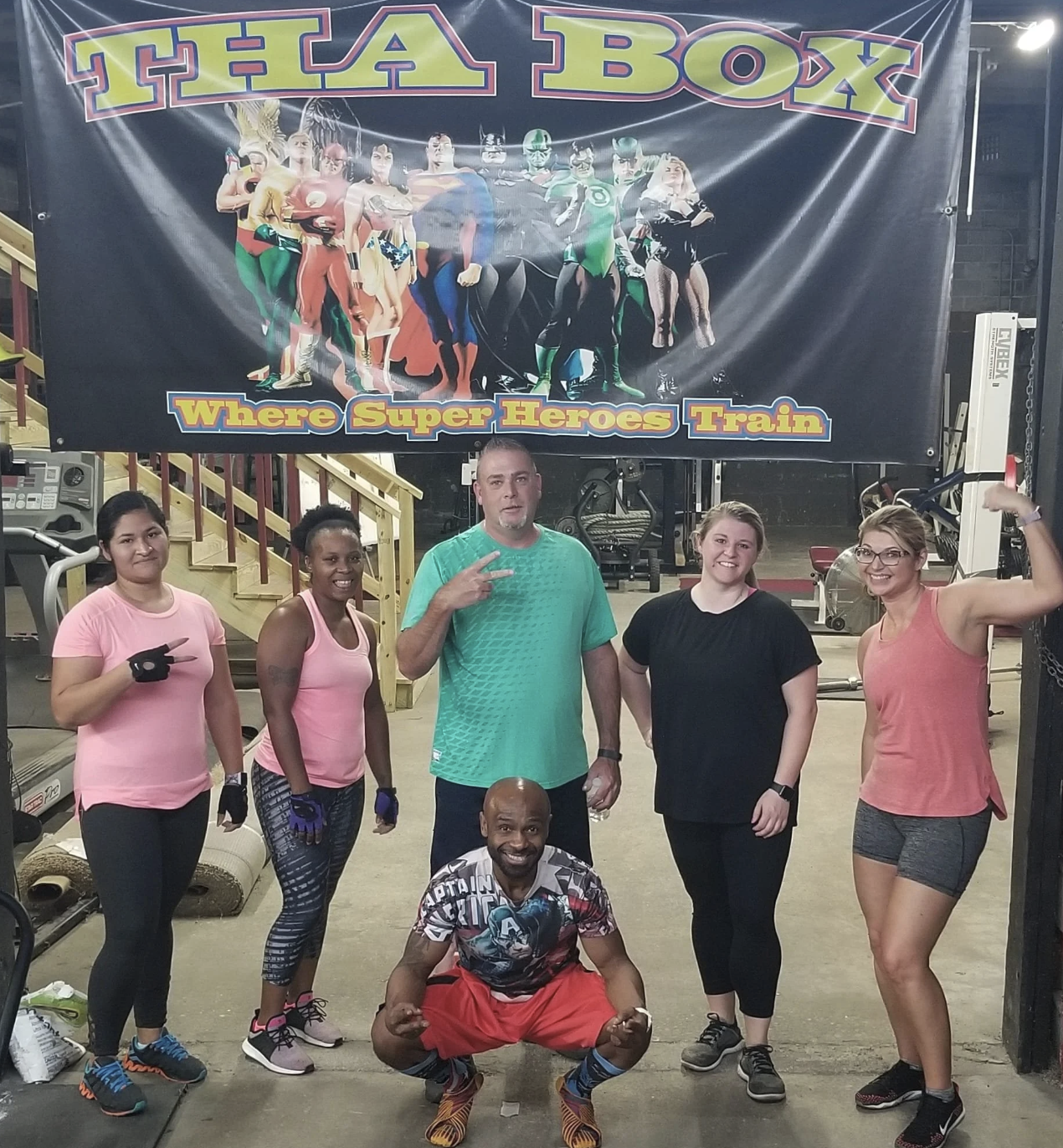
In Deberry’s view, two things separate ThaBox from many training environments: movement assessments and understanding the client. The assessments give him a clearer starting point. The relationship gives him context. Together, they allow him to coach people with more precision than a one-size-fits-all workout can offer.
The gym itself has an old-school feel. Deberry describes it as an old machine shop that was retrofitted into a training space. It has racks, dumbbells, sled work, bags, ropes, machines, mats, recovery tools, conditioning equipment, and a range of strength equipment. It has not always been the polished, mirror-lined environment some modern gymgoers expect. Its identity has been more direct: the work comes first.
That choice has created both a challenge and a distinction. In a local market with brighter, more social gyms nearby, ThaBox has to compete for attention. But its authority comes from what is harder to imitate: coaching presence, accountability, movement literacy, and a training culture that values the process behind the result.
ThaBox matters locally because it addresses a gap that many people feel but cannot always name. Beginners often need structure. Athletes need movement quality and progressive performance work. Older adults need movement that supports quality of life. Busy adults may need accountability as much as a workout plan. Deberry’s approach gives each of those groups a place to start.
His strongest source of new members has been word of mouth, which is often the clearest signal that a gym is doing something specific enough for people to talk about. For ThaBox, that “something” is not simply hard training. It is hard training with context, correction, tracking, scaling, and a coach who is paying attention.
- ThaBox’s method starts with movement assessment before intensity.
- Deberry uses corrective work, re-evaluation, and workout scaling to create better starting points.
- His timer-based circuit structure allows training to be demanding without being reckless.
- Client progress is tracked through work capacity, consistency, and repeated performance markers.
- ThaBox stands out locally through coaching substance, member knowledge, and practical results.
The authority of ThaBox is not based on spectacle. It is based on a coach’s insistence that better training begins with better understanding. Deberry wants members to move well, work hard, build confidence, and see proof that they are improving. His methods are practical, grounded, and built around the belief that progress should be challenging without being careless.
In Latta, that makes ThaBox more than a place to train. It makes it a local example of what fitness coaching can look like when movement quality, accountability, and real-world progression come before noise.
Readers interested in David Deberry’s movement-first coaching, scalable workouts, and results-focused training environment can learn more about ThaBox online.
Visit ThaBoxDavid Deberry leads ThaBox with a coaching philosophy built around movement quality, scalable training, work capacity, and member-specific accountability. His work focuses on student athletes, older adults, and general members who want training that is structured, challenging, and grounded in real coaching.


Write A Comment