
This is a custom HTML / JavaScript Element
In order To See Your Custom HTML/JavaScript Code in Action You Must Click On The Preview Page Button, Your Code is NOT going to be active in the edit mode
Location: East San Jose, California
Owner / Training Philosophy Source: Vanna Truong
Founding Leadership: Vanna Truong and Leonie Solia
Head Coach: Leonie Solia (CrossFit Level 2, pursuing Level 3)
Business Type: CrossFit affiliate gym, boutique strength and conditioning gym, group class provider, and personal training studio
Training Focus: CrossFit methodology, strength and conditioning, metabolic conditioning, weightlifting, gymnastics, high-intensity interval training, fundamentals coaching, scaled programming, measured strength tracking, personal training, and community-centered coaching.
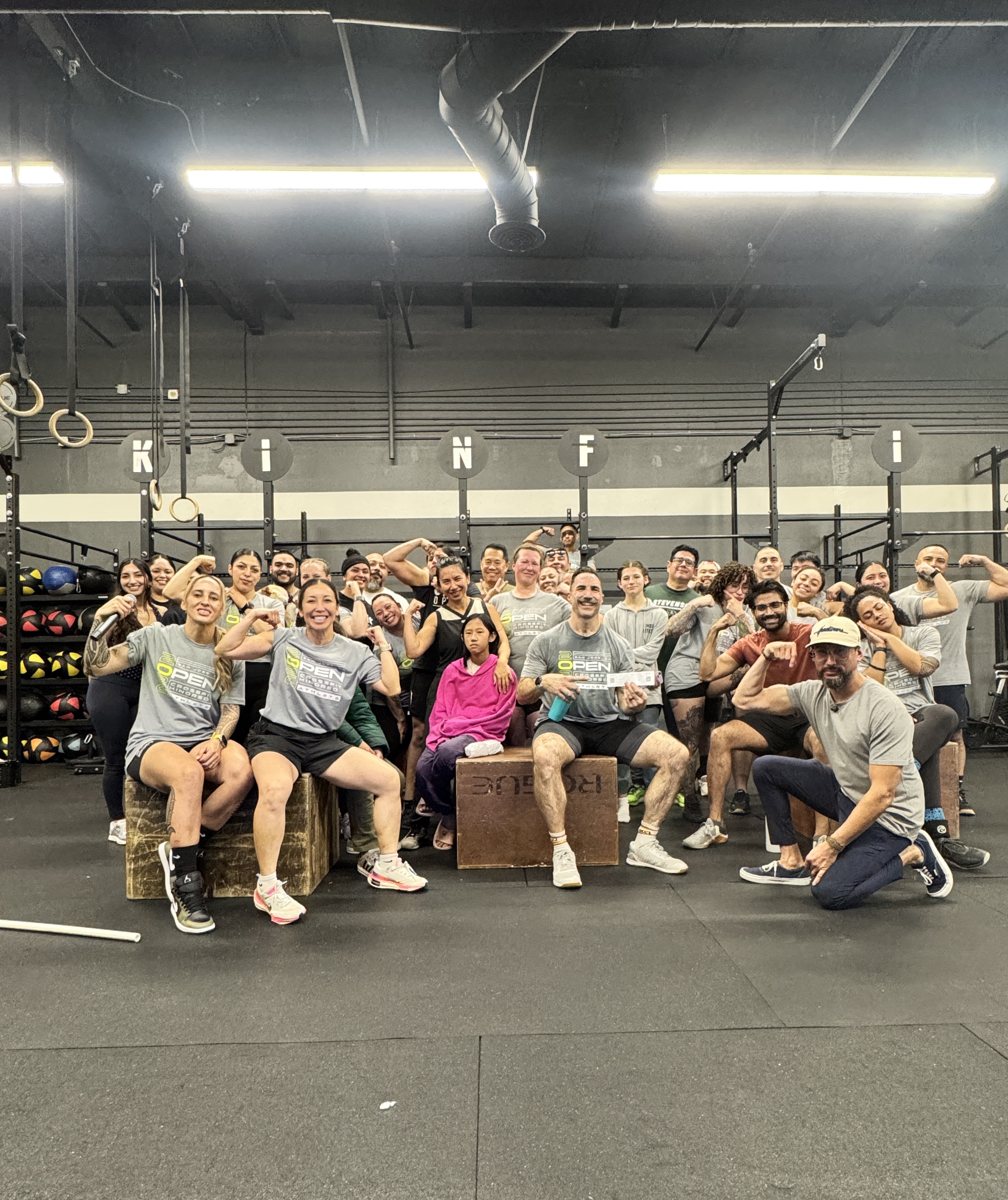
Vanna Truong’s authority as a gym owner comes from a decision most people only talk about. In May 2017, she and Leonie Solia bought a struggling CrossFit affiliate that had shrunk to roughly twenty members and no clear path forward. Truong came from finance and banking, a career she still keeps, and she had once been the overworked professional who assumed CrossFit was only for the athletic. Rather than wait for a better time, the two of them took over the business and set out to rebuild it from the ground up.
Nine years later, CrossFit Kindred is home to about 120 members and stands as the first and only CrossFit affiliate on the east side of San Jose. The gym Truong and Solia built is not organized around spectacle. It is organized around a repeatable method: the CrossFit model scaled to real people, a fundamentals path that brings beginners in safely, strength that is measured and recorded, and a community that has hosted friendships, baby showers, and even the owners’ own wedding on its training floor.
- How CrossFit Kindred applies the CrossFit method inside a structured one-hour class built around strength and metabolic conditioning.
- Why scaling and a fundamentals path let non-athletic beginners start from day zero without getting hurt.
- How the gym measures and records strength so progress becomes visible evidence, not a feeling.
- Why the first 60 to 90 days are treated as a habit-building window rather than a transformation campaign.
- Why community and warmth are treated as part of the coaching standard, not a marketing slogan.
CrossFit Kindred follows the CrossFit methodology: constantly varied functional movement performed at high intensity, blending weightlifting, gymnastics, calisthenics, and conditioning. Truong describes it plainly. Every day brings something new, the format holds steady, and the workout is designed to deliver in one focused hour what most people could not organize on their own in far longer.
Inside that hour, two things happen. First comes a strength component, built around movements like back squats, deadlifts, presses, and front squats. Then comes conditioning, but not the elliptical or treadmill kind. CrossFit Kindred programs metabolic conditioning, the type of work that keeps the body using energy after the session ends. The two pieces are deliberate, and they repeat consistently enough that members always know what the training is asking of them.
The gym trains general physical preparedness rather than a single sport. That breadth is the point. A parent should be able to lift a toddler off the floor and carry them upstairs without losing their breath. A young athlete should walk away stronger and faster, the way the AAU basketball players who conditioned at the gym one summer reported feeling by fall. The method is built to carry over into ordinary life, which is exactly where most members need it.
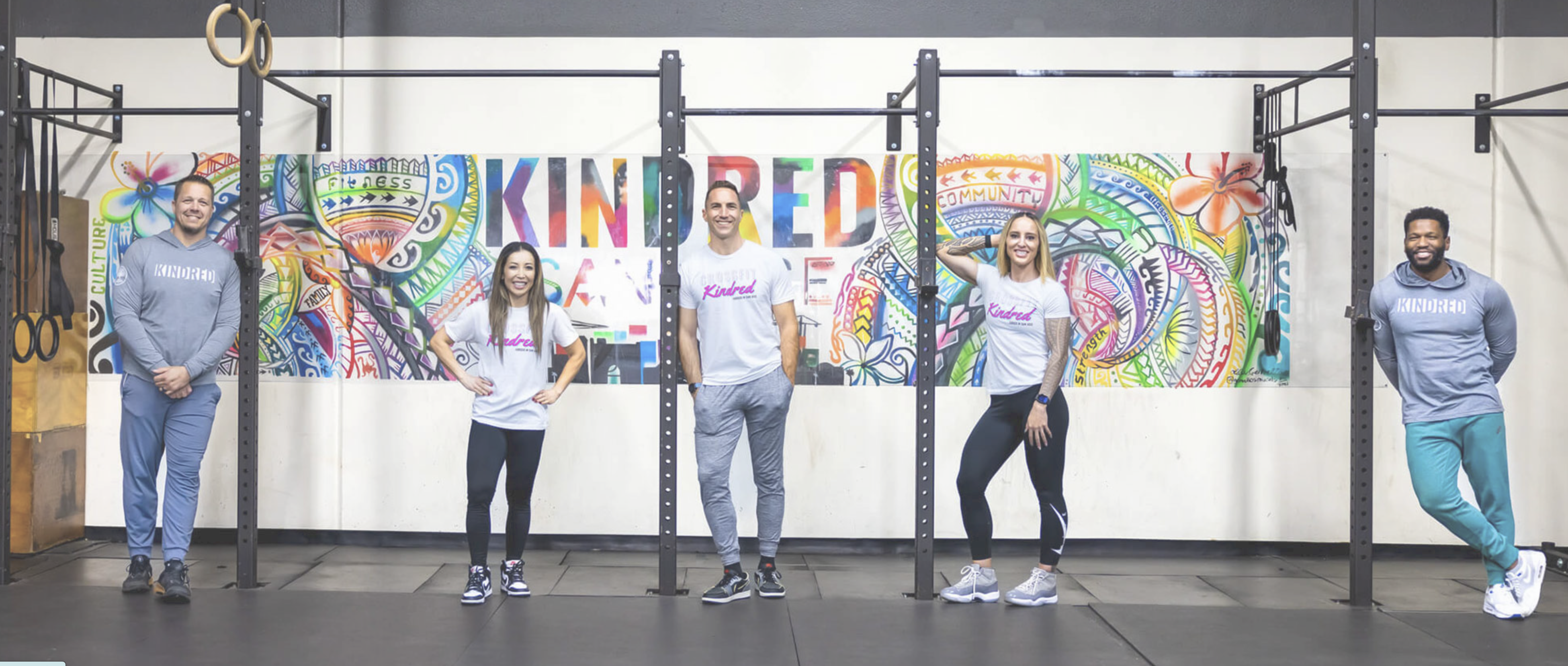
The class is one hour, and CrossFit Kindred treats it as the best hour of a member’s day. That framing is not a slogan. It reflects how the gym solves a real problem: many of its members, Truong included, hold demanding jobs and cannot spend three hours drifting between machines. The hour is designed to be dense, complete, and efficient, so a member can get in, train with purpose, and get on with life.
Truong is also clear that duration is not the measure that matters most. Intensity is. A six-minute effort or a short benchmark like twenty-one, fifteen, and nine repetitions of thrusters and pull-ups can leave a seasoned member as taxed as a far longer session, because output is what drives adaptation. Thirty focused minutes done with real effort can accomplish more than an hour spent moving slowly. The programming decides that, not the clock.
Strength sits at the front of that hour for a reason Truong returns to often. Resistance training becomes more valuable with age, not less, particularly for women, because it works directly against the loss of bone density that comes with the years. CrossFit Kindred does not push cardio for its own sake. It builds strength first, then layers conditioning on top, so members leave more capable rather than merely more tired.
The most common objection Truong still hears is the one she once made herself: I am not fit enough to do CrossFit. Her answer is direct. CrossFit is what helps you get fit. You go to the doctor because you are sick, not because you are already well, and the same logic applies here. The method can be scaled to any level, which means the beginner is exactly the person it was built to serve.
That is why new members do not get dropped into a full class on day one. A coach works with them through the fundamentals first, teaching the basic movements before intensity enters the picture. Through the early weeks, the coaching stays close: watching how a person moves, correcting the pattern, and scaling the load so no one is loading heavy before their body is ready. The common fear of walking in and getting hurt is answered by the process itself.
This is where the model separates itself from a self-directed gym. At a twenty-four-hour facility, a member is largely on their own. At CrossFit Kindred, the same person is coached, corrected, and led, which is precisely what the couch potato, the overworked professional, and the person who never touched a barbell tend to need most.
When Truong says her members get stronger, she does not mean it as a feeling. Strength, she points out, is not subjective. It can be counted. CrossFit Kindred tracks it through a system called Wattify, recording lifts and results from class to class. Day zero, a member starts with an empty barbell. Weeks later, the same member has a deadlift and a back squat written down as proof. Attendance is tracked alongside the numbers, and the correlation is consistent: the members who show up are the members who progress.
The gym measures conditioning the same way. Certain benchmark workouts serve as checkpoints, so a member who once ran a given time can see, a year on, that the time has come down. Members have access to their own records through an app, which turns training into a personal ledger. A personal record is not a private moment either. When someone hits one, the coach rings the PR bell, and the whole class stops to celebrate. Progress at CrossFit Kindred is written down, and it is shared.
Truong is careful about how she frames results beyond the numbers on the bar. She has seen members lose forty, fifty, even a hundred pounds when they trained consistently and improved their nutrition, and she respects those outcomes. But she deliberately avoids reducing health to aesthetics. Losing even ten pounds meaningfully lowers a person’s risk of diabetes and chronic disease, and members report better cardio, better blood pressure, improved health markers, and more energy through the day. The scale is one signal among many, and rarely the most important.
Truong’s view of the first 60 to 90 days is unusually grounded. She does not sell it as a dramatic transformation window. She treats it as the period where a member builds the habit of coming. Her phrase is blunt: the program only works if you work the program. A membership means nothing without attendance, so she asks members to aim for four to five days across the six the gym is open, and to treat showing up as the one variable they fully control.
Nutrition comes in small, actionable pieces rather than a full overhaul. In the first month, the ask is to cut back on processed sugar and processed food, one realistic change at a time. Drop the daily candy bar this week; trade refined bread for something better the next. Truong knows that change is hard and that overnight dramatic plans tend to scare people off. Small, doable swaps are the ones that survive contact with real life.
The gym also watches the calendar closely. If a new member has not appeared in the first two weeks, Truong or Solia reaches out directly to ask what is going on. They know from experience that the first 30 to 60 days decide whether a membership holds, so they stay on people during the window that matters most. It is a small, unglamorous discipline, and it is one of the reasons members become regulars instead of statistics.
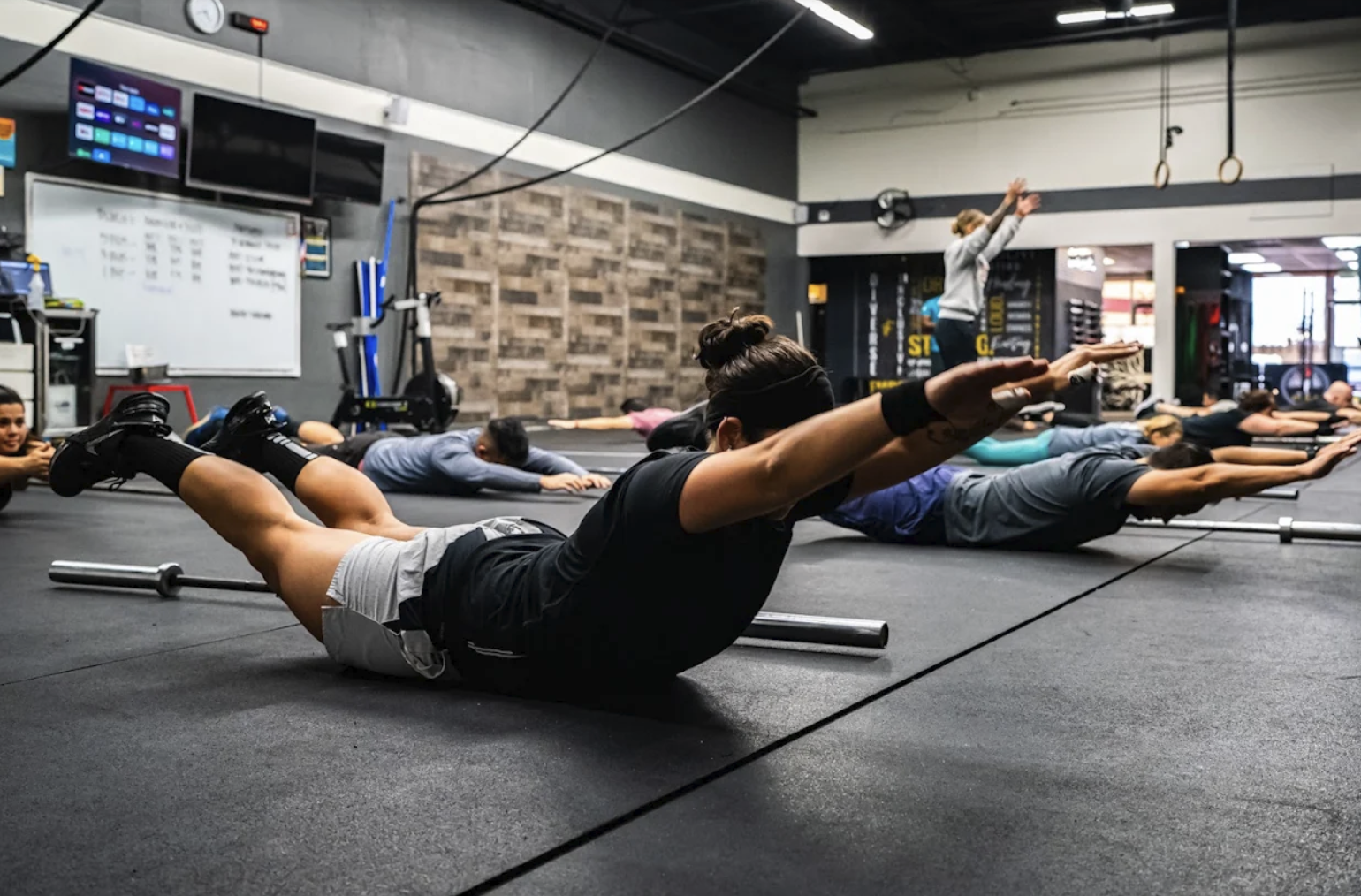
The method explains the results. The community explains the retention. CrossFit Kindred serves about 120 members, and Truong is candid that in a crowded, saturated fitness market, what sets the gym apart is not the equipment, which any box would recognize. It is the belonging. Members here have met and married. Best friendships have formed. The gym has hosted baby showers, and the owners held their own wedding on the floor. When people walk in, Truong says, they can simply feel the culture.
That warmth is deliberate, and it starts in the first sixty seconds. Coaches learn who is coming in, introduce new members by name, and make sure a newcomer is welcomed before a single word about the workout is spoken. Truong teaches her coaches a principle she keeps returning to: nobody cares what you know until they know that you care. Technical expertise matters, but people remember warmth. By the end of the first week, a new member is already being asked how work is going and how life is treating them.
The community also carries its own texture from hour to hour. The regulars in the early morning class differ from the crew who train in the evening, and each group brings its own energy to the same programming. That, in Truong’s telling, is part of why members stay. They could find a cheaper drop-in gym anywhere. What they cannot easily find is a place that feels like coming home.
CrossFit Kindred stands apart because it pairs two things that gyms often treat as separate: a measured, coached training method and a genuine community. The numbers keep the training honest. The culture keeps the members present. Truong brings a business and finance background to how the gym is run, while Solia brings the coaching depth, holding a CrossFit Level 2 credential and working toward Level 3, along with the communication skill to reach members who arrive intimidated.
Their resilience is part of the story too. They bought a struggling gym, rebuilt its membership, and then navigated a pandemic that forced training outdoors and pushed them to relocate. They turned that disruption into a larger, better-designed space at a comparable cost, with Truong handling much of the hands-on construction while Solia ran classes outside. Where many affiliates closed during those years, CrossFit Kindred not only survived but consolidated its standing as the only CrossFit affiliate on the east side of San Jose.
There is restraint in how Truong talks about the future. She is honest that sales and marketing are the areas she most wants to strengthen, precisely because she believes the product is already strong. The ambition is not to dilute what works but to reach more of the right people in the local area, so more members can find the coaching, the tracking, and the community the gym has spent nearly a decade building.
- CrossFit Kindred is an East San Jose CrossFit affiliate led by owner Vanna Truong and head coach Leonie Solia, grown from about 20 members to roughly 120 since 2017.
- The training model applies the CrossFit method inside a structured one-hour class that pairs strength with metabolic conditioning, scaled to each member’s level.
- A fundamentals path and close early coaching bring complete beginners in safely, answering the common fear of walking in and getting hurt.
- Strength and attendance are tracked and recorded, turning progress into visible evidence and celebrating personal records in class.
- The gym is described as the first and only CrossFit affiliate on the east side of San Jose, distinguished by measured coaching and a genuine community.
CrossFit Kindred has built its authority on something simple to describe and hard to sustain. The method is coached and scaled to the person. The progress is written down, so effort turns into proof. And the community is real enough that members celebrate one another’s milestones inside the gym and outside it. Those three things, held together over nearly a decade, are what turned twenty members into a hundred and twenty.
What stays with you after the profile is how practical it all is. The workout is scaled so a beginner can start, the numbers are logged so improvement becomes undeniable, and the room is warm enough that people keep returning to chase the next one. Strength, habits, and belonging are not treated as separate goals here. They are the same standard, built one recorded session at a time.
For readers who see themselves in this story, the first step at CrossFit Kindred is not to prove anything on day one. It is to begin with the fundamentals, where a coach teaches the movements, scales the loads, and builds the base before any class intensity enters the picture.
For readers in the East San Jose area, Truong extends a standing courtesy of ten percent off the first month for those who mention this feature. The clearest next step is to reach the gym through its official website and start the conversation about where to begin.
Explore CrossFit Kindred
At CrossFit Kindred, Vanna Truong and Leonie Solia hold two ends of the same standard: the business discipline that keeps the gym running and the coaching leadership that shapes what happens on the floor. Truong’s background in finance supports how the gym is structured and sustained, while Solia, as head coach with a CrossFit Level 2 credential and Level 3 in progress, decides how the method is scaled, taught, and carried into each member’s experience. Together they built the model this feature examines: workouts scaled to the person, progress recorded so it can be seen, and a community that gives members a reason to keep coming back.
Muscle & Authority Magazine™ prepared this authority feature using a recorded interview with Vanna Truong, business-provided context for CrossFit Kindred, the official CrossFit Kindred website, and supplied image and logo assets. The review centered on the gym’s CrossFit method, its one-hour class structure, its fundamentals and scaling approach, its strength-tracking system, and its community-focused member experience in East San Jose.
This article is editorial in nature. It is not medical, rehabilitation, nutrition, or individualized training advice. It does not make medical claims, guarantee outcomes, fabricate credentials, rely on unsupported testimonials, or present unsupported transformation promises.
- Recorded editorial interview with Vanna Truong, owner of CrossFit Kindred, with head coach Leonie Solia present.
- Official CrossFit Kindred website: https://crossfitkindred.com/
- Business-provided CrossFit Kindred context and supplied visual assets.
- Standard of Membership and First Step details extracted from Vanna Truong’s interview.
- Location reference: East San Jose, California.


Write A Comment