

This is a custom HTML / JavaScript Element
In order To See Your Custom HTML/JavaScript Code in Action You Must Click On The Preview Page Button, Your Code is NOT going to be active in the edit mode
A-Team Health and Fitness: Inside the Training Methods Driving Real Results
Location: Sunnyvale, California
Founder / Coach: Alesha Garcia Jardin
Training Focus: One-to-one personal training, small group personal training, customized programming, progressive overload, total-body strength sessions, movement quality, nutrition guidance, habit support, and sustainable fitness.
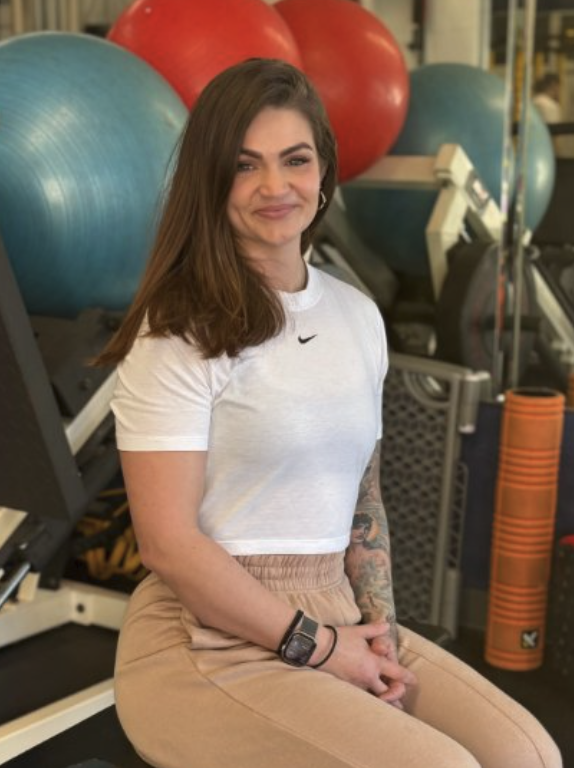
In a fitness market where intensity is often marketed as the product, A-Team Health and Fitness has chosen a different position. The Sunnyvale gym is not built around spectacle. Its strongest argument is process: personal training, small group coaching, individualized programs, and a standard of care that asks trainers to understand the person before deciding how the work should be applied.
For Garcia Jardin, “real results” are not limited to a scale number or a before-and-after photograph. The transcript points to a broader definition: more strength, better skill in the gym, more energy, greater confidence, less fear around movement, improved consistency, and a stronger ability to keep up with the demands of family, work, recreation, and aging well.
- How A-Team Health and Fitness uses customized programming inside one-to-one and small group personal training.
- Why Garcia Jardin’s system emphasizes movement preparation, compound lifts, progressive overload, and recovery capacity.
- How performance goals help clients stay focused when aesthetics are only one part of the larger objective.
- What quality control looks like inside a small training business with high coaching standards.
- Why A-Team’s sustainable fitness model matters for parents, professionals, seniors, and clients who want strength they can use.
A-Team Health and Fitness is small by design and serious by standard. Garcia Jardin described a 1,500-square-foot facility in Sunnyvale serving roughly 130 to 150 people on a weekly basis, including a small online community. At the time of the interview, the business had grown to nine trainers on staff after starting from Garcia Jardin’s own client base and eventually moving into a commercial space.
The gym’s footprint is not the point. Its operating philosophy is. A-Team does not present itself as a big-box alternative with endless amenities. It presents itself as a training business where people are known, programs are written for the individual, and the coaching relationship is treated as the center of the product.
That matters in Silicon Valley, where Garcia Jardin described many people working long, aggressive hours and needing a place that helps them advocate for their own health. The local relevance of A-Team is not only that it exists in Sunnyvale. It is that its model speaks to people who need structure, accountability, and a practical reason to keep training when life is crowded.
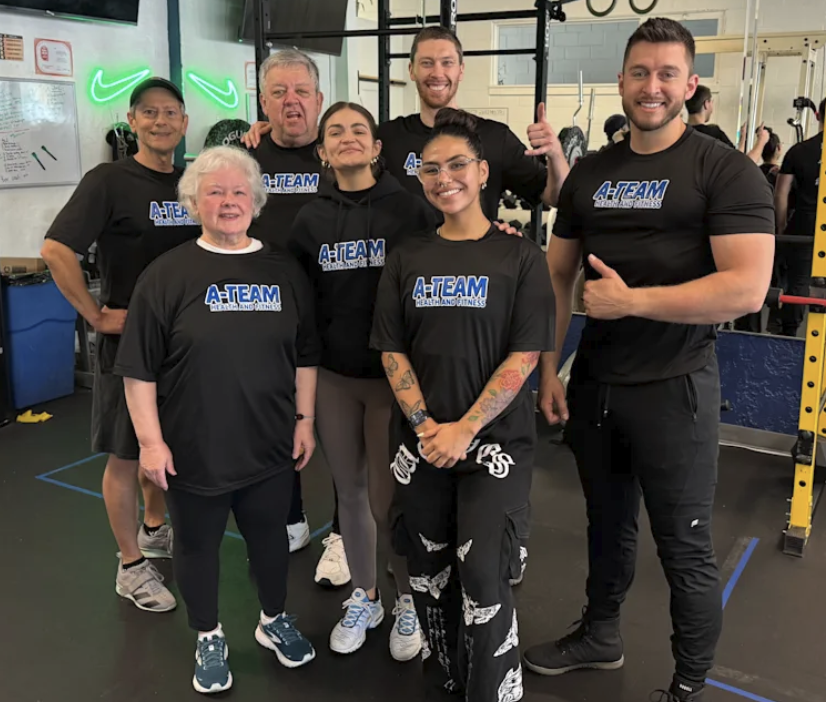
Garcia Jardin’s language around training is unusually clear. A-Team is not trying to be the loudest gym in the market. It is trying to be the place for people who value quality, longevity, and a training environment that makes them want to come back. In the interview, she contrasted A-Team’s “sustainable fitness vibe” with a culture that can sometimes feel too focused on bodybuilding, filming, flexing, or external display.
That distinction shapes the coaching. The emphasis is not on avoiding hard work. A-Team clients are still expected to train, progress, and tolerate the discomfort that comes with appropriate effort. But the discomfort is meant to be productive. The work is meant to build a body that feels more capable, not a routine that simply exhausts someone for the sake of proof.
Garcia Jardin’s own history helps explain the standard. She came into fitness through sports, personal health challenges, weight loss, CrossFit, a severe back injury, years of training experience, and eventually business ownership. The result is a coaching philosophy that respects intensity, but does not worship it. Quality, recovery, consistency, and readiness all have a seat at the table.
Garcia Jardin described a general session architecture that is organized without becoming needlessly complicated. For general population clients who often train about twice per week, A-Team frequently uses total-body workouts. The session may begin with light cardio at a manageable effort, then move into a dynamic warmup designed to prepare the body for the session ahead.
From there, the method becomes more specific. Clients may work through primer activities to activate the core or glutes and prepare the nervous system for the movement pattern. Some clients may use kettlebell swings or light, fast-twitch movements as neuromuscular primers. Not everyone does the same thing, because not everyone needs the same stimulus.
The main work then moves into compound movements, followed by training elements that may include lower-rep strength work, hypertrophy-focused ranges, and higher-repetition endurance work. The finish may involve circuits, mobility, core work, or additional conditioning depending on the client’s goals and recovery capacity. The point is not to fill the session with volume. The point is to put the right work in the right order.
One of A-Team’s most important method decisions is how it uses small group personal training. Garcia Jardin said the small group format is capped at four people or fewer. That limit matters because the service is not positioned as a generic group class. Each client receives a customized program, whether they are training one-to-one or in a small group setting.
Programs are placed in Trainerize so clients can keep their routine when they travel, train outside the gym, or need to lift more days than they see a trainer in person. This is a meaningful detail. It shows that A-Team is not treating the appointment as the entire method. The system is meant to extend beyond the hour.
Progressive overload is part of that system, but Garcia Jardin does not describe it as blind escalation. A-Team applies progressive overload “to the best of our abilities” in a way that supports muscle, strength, skill, and consistency. The standard is progression with judgment, not progression as a slogan.
Garcia Jardin’s approach also includes a subtle but important coaching move: she asks clients to set performance goals regardless of their original motivation. Many people arrive wanting weight loss, more muscle, or aesthetic change. Garcia Jardin still wants a performance target attached to the process, because it gives the client something concrete to pursue when visual change feels slow.
For some women, that goal may be pull-ups. For some men, it may be a compound lift, speed, jumping, or another measurable ability. The specific target changes by person. The principle does not: progress becomes easier to sustain when the client can see skill improving, not just hope the mirror changes fast enough to keep them motivated.
This is where A-Team’s method becomes more sophisticated than a standard workout plan. It understands the psychology of consistency. A person is more likely to remain engaged when training gives them proof that they are becoming more capable.
When Garcia Jardin talks about client results, the language returns to function. She described clients noticing that they can lift a child more easily, keep up on a hike, walk down a wedding aisle feeling proud, move with less pain, and experience more confidence within the first 60 to 90 days of consistent effort. The examples are ordinary in the best sense: they are the kinds of wins that make training relevant to life.
The strongest case study from the interview was a client named Kylie, who came to Garcia Jardin after breaking her thumb and also dealt with hypermobility. Garcia Jardin described stripping movement patterns down and building them back up over time. Kylie later competed in powerlifting meets, made major strength gains, and, while focusing on nourishment and performance rather than aesthetics alone, lost 50 pounds.
That story is useful because it illustrates the method rather than merely the outcome. The result was not framed as a quick fix. It came through coaching, patience, skill development, strength work, nutrition attention, and finding joy in movement again.
A-Team’s authority is also visible in how Garcia Jardin describes trainer standards. She said the gym does not put clients on cookie-cutter programs or pre-written plans. She also described a team with veteran trainers, required certification, encouragement of continued education, and program review by Garcia Jardin and Coach Dylan.
This is one of the more important details in the interview because it moves the conversation from personality to system. A small training business can rely too heavily on the charisma of one owner. A-Team’s stated ambition is different: to create a culture where multiple fitness professionals share values, standards, and a commitment to the same principles.
That is what makes the business more than a collection of sessions. It is an attempt to protect consistency across the client experience — from the first conversation to the program in the app to the way trainers think about progression, support, and the human realities that interrupt a linear path.
Garcia Jardin said that when someone walks through the doors, she wants the experience to feel welcoming and inclusive. Even if the workout is hard, she wants the client to leave with a sense of accomplishment. That matters because a training plan can be technically sound and still fail if the person does not feel safe enough, seen enough, or supported enough to continue.
The gym’s personal training model creates a one-to-one relationship with the trainer, while the small facility and recurring schedule allow members to build community with other people in the room. Garcia Jardin said clients often value the thoroughness of the training, the positive environment, and the way the staff helps reframe real-life struggles while supporting the client’s next step.
This is not a minor point. For many clients, the gym is not just a place where exercises happen. It is a setting where consistency is made more possible because the person is known, the program is explained, the community feels familiar, and the work is connected to a larger reason.
Garcia Jardin is candid that A-Team is not trying to win on price. She described the business as leading through differentiation rather than cost leadership. That difference shows up in the service model: customized programs, small groups, one-to-one communication, higher trainer standards, and a gym environment designed for people who value quality more than amenities.
The local market has plenty of large fitness options. A-Team’s distinction is its refusal to behave like one. Garcia Jardin described a small business feel, a clean space, heart, and the kind of personal touches that can disappear inside corporate fitness settings. Members may see Garcia Jardin’s children at the gym. Some may bring children at appropriate times. The culture is humble, low judgment, and oriented around people enjoying what they do.
That does not make the gym casual about training. It makes the environment more human around serious work. A-Team’s advantage is that it can combine disciplined programming with the warmth of a small business.
Sunnyvale does not need another vague promise that fitness will change everything quickly. What A-Team Health and Fitness offers is more grounded: a structured place to train, a coach-led process, and a method that treats health as something built through repeated decisions. That is especially relevant for people who have achieved professionally but struggle to protect time and energy for themselves.
For parents, that may mean rebuilding a routine while managing family demands. For seniors, it may mean staying consistent and capable. For general fitness clients, it may mean learning to train without intimidation. For people who have been injured or inconsistent, it may mean beginning again with more guidance than guesswork.
- A-Team Health and Fitness centers its model on customized personal training rather than cookie-cutter programming.
- Garcia Jardin’s workout structure emphasizes preparation, compound movements, progressive overload, recovery capacity, and client-specific adjustments.
- Performance goals are used to keep clients focused on skill, strength, and capability, not aesthetics alone.
- The gym’s small group training is capped at four people or fewer while still providing individualized programs.
- A-Team’s local distinction comes from combining serious coaching standards with a welcoming small-business environment.
A-Team Health and Fitness’s authority is not built on noise. It is built on the quieter disciplines that tend to matter more over time: writing the program, watching the movement, setting the goal, adjusting the plan, helping the client return after life gets complicated, and keeping training connected to the body someone actually lives in.
In Sunnyvale, that gives A-Team a clear editorial position. It is a personal training gym for people who want more than access to equipment. They want a method, a coach, a standard, and a practical path toward strength that supports the rest of their life — delivered with the heart of a small business that still knows people by name.
Readers interested in Alesha Garcia Jardin’s personal training model, small group coaching, sustainable fitness philosophy, and customized approach to strength can learn more about A-Team Health and Fitness online.
Visit A-Team Health and FitnessAlesha Garcia Jardin leads A-Team Health and Fitness with a coaching philosophy built around sustainable fitness, customized personal training, progressive overload, movement quality, and client support beyond the workout itself. Her work serves people who value quality, longevity, and a training environment where strength is connected to everyday life.


Write A Comment