
This is a custom HTML / JavaScript Element
In order To See Your Custom HTML/JavaScript Code in Action You Must Click On The Preview Page Button, Your Code is NOT going to be active in the edit mode
Location: Santa Clara, California
Co-Owner / Strength Coach / Interview Source: Steve Babcock
Ownership: Owned and operated by Steve Babcock and his wife, Rebekah, who leads the gym's boot camp classes
Coaching Staff Referenced: Steve Babcock (powerlifting, strength and conditioning, youth and sport-specific work), boot camp instruction led by Rebekah, and Gwen (rehabilitation and mobility focus)
Business Type: Independently owned strength gym equipped to powerlifting standards, with personal training, group boot camp classes, mobility support, monthly clinics, memberships, and day passes
Training Focus: Free-weight strength training, individually written programs, powerlifting coaching, compound-lift instruction, split programming, bodyweight and core work drawn from gymnastics, youth and athletic training, and rehabilitation and mobility work.
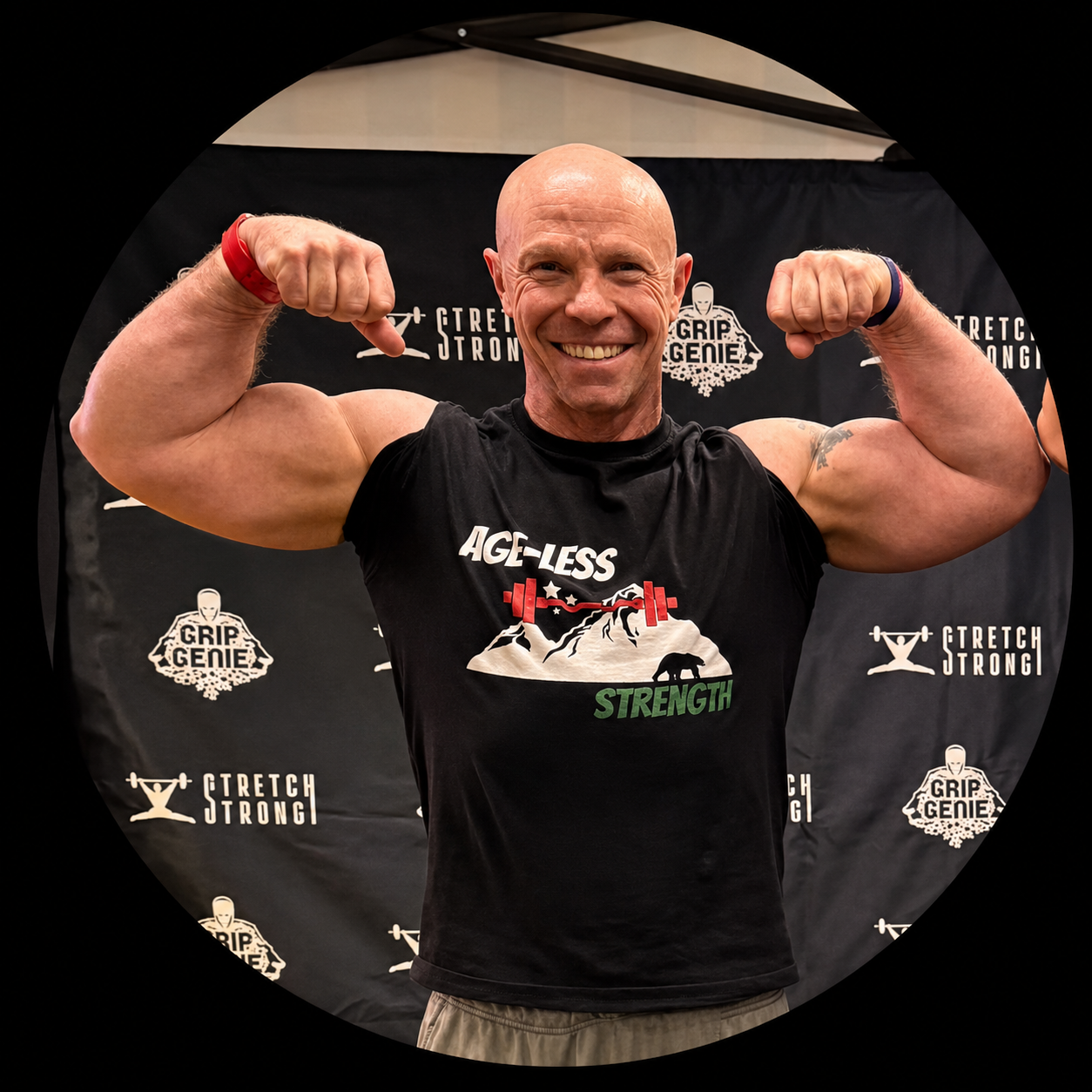
Steve Babcock arrived at coaching through two doors that rarely open into the same career. The first was competitive gymnastics, a sport he trained in as a child, competed in through college, and began coaching at fourteen. The second was the classroom. He earned a degree in kinesiology and a master's in physical education, then spent fourteen years teaching middle school physical education before opening a gym of his own.
Both doors show up in the way Age-Less Strength Gym operates. The gymnastics years produced a coach who can teach a bodyweight core progression from memory. The teaching years produced a coach who sets individual goals rather than uniform standards, a habit formed when he declined to grade students against a fixed mile time and instead asked each one what improvement would look like for them. The kinesiology training produced a coach who can explain the biomechanics under any exercise he prescribes.
- Why Babcock programs free weights and classic compound lifts instead of chasing new exercise trends.
- How a single floor supports competitive powerlifters, general members, young athletes, and people returning after injury.
- Why a program is held for four to eight weeks before it is adapted, and what that discipline is meant to produce.
- How strength gain is used as an honest progress marker when the scale refuses to move.
- Why the gym's five-to-one female membership ratio has become part of its stated ambition.
Babcock describes himself as a traditionalist. His position is that the best training results still come from free weights and from exercises that have stood the test of time. If a member wants a stronger chest, the answer is a bench press and its variations, not a novel apparatus. His critique of the modern fitness industry is direct: too much of it recreates the wheel and makes training more complicated than it needs to be.
The reasoning behind that stance is instructional rather than nostalgic. A new member has to understand the basics before advanced work will make any sense to them. Skip that layer, and the more dynamic exercises never land. Babcock has watched the industry assemble sessions that look exciting, generate enthusiasm for a few weeks, and lose the person anyway, because nothing was ever taught well enough to be repeated.
So the friction he most often encounters from members is not that the work is too hard. It is that the work is familiar. A client will notice they did this last week. His answer is that this is the point. Results live inside a routine and a program. The program is not permanent, but it stays in place for four to eight weeks, long enough to produce a change, and only then is it adapted.
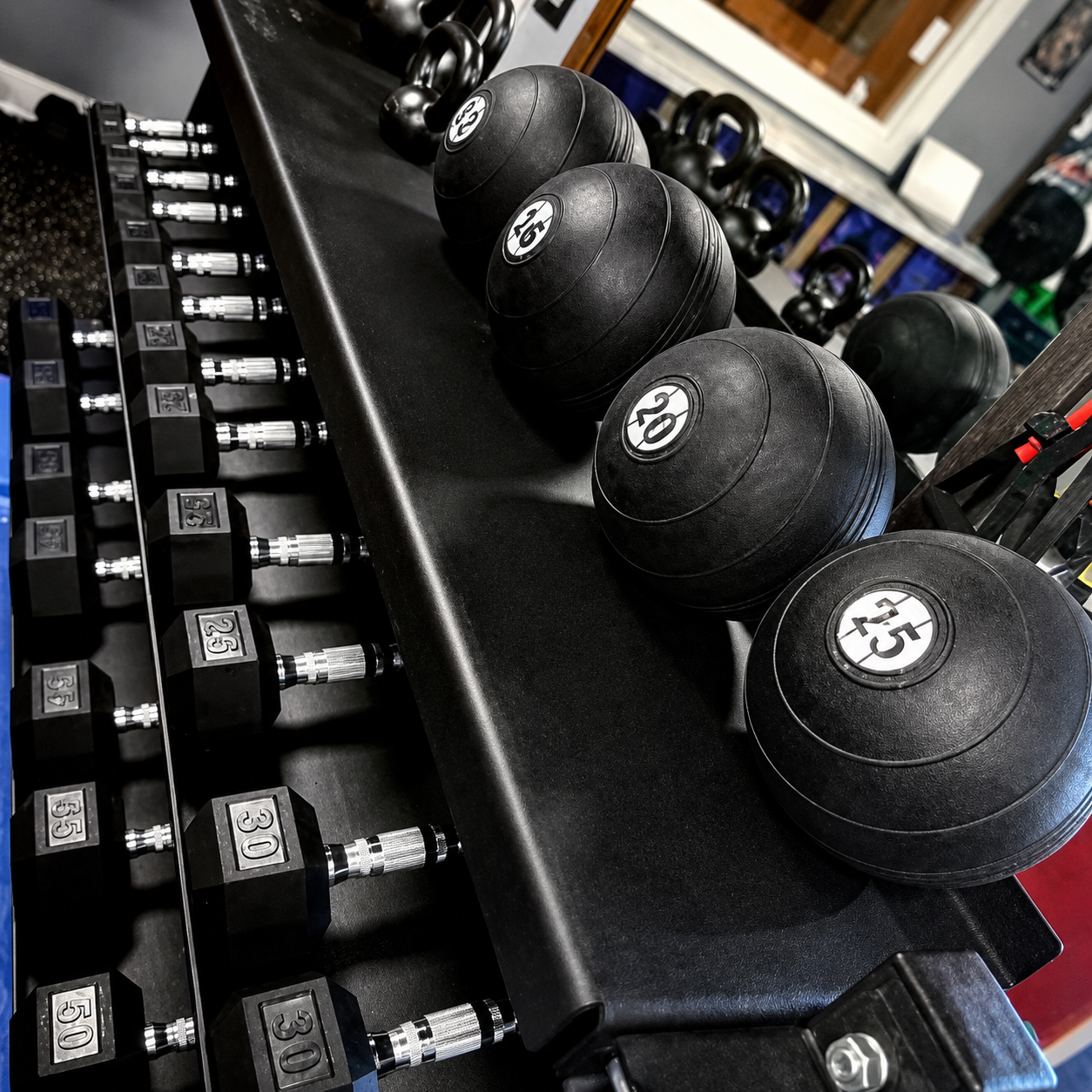
Ask Babcock to compress his philosophy and it arrives in one clause: fix the mental approach to health and fitness, and almost everything else becomes available. He is careful not to dismiss genetics. He admires talented athletes. But given the choice between raw ability and a person willing to do the work, he takes the second candidate every time.
Powerlifting is where he first saw the proof. Some of the strongest people he has coached were never athletes. They did not enjoy school physical education, had no sporting background, and had never set foot in a gym. They simply committed to a standard and held it. That observation is why he treats mindset as trainable rather than innate.
It also explains how he handles ambitious goals. A member who has never touched a bench press might name a 225-pound target. Babcock will not promise a timeline, and he says so plainly. What he will commit to is the work required and the honest possibility that the goal arrives three years out rather than one. The pull-up gets the same treatment. He sets it as a target for nearly every client, because he believes it is reachable, and because it is a goal that cannot be faked.
The room is laid out like a powerlifting gym, which makes the membership figure surprising. Only about ten percent of members are actual powerlifters. Everyone else trains for general fitness inside equipment built for heavy work, which turns out to be an advantage rather than a barrier once someone has been taught how to use it.
Babcock's own coaching load reflects that spread. He prepares the strongest lifters in the building. He runs agility work with his son and his son's hockey teammates. He starts beginners who have never trained. Rebekah leads the boot camp classes, which serve members who need a group, a friend, and an instructor pulling the room forward. Gwen covers rehabilitation and mobility, which gives the gym a path for someone arriving with an injury or an unfinished recovery.
The result is a business with several entry points and one shared programming philosophy. Whichever door a member uses, the underlying logic stays the same: structure first, then consistency, then load. Babcock is direct about the consequence of skipping that order. Without consistency and routine, even members who enjoy training eventually fall off.
A large share of Babcock's newest clients arrive hesitant. That is a demographic many strength facilities lose in the first month. His approach is unusually low-tech: he tells the person the pace belongs to them, and then he keeps the room relaxed enough that the pace becomes believable.
He is not a drill sergeant and does not pretend otherwise. He jokes that members probably consider him the meanest trainer alive because he spends most of the session laughing. Underneath the humor is a firm coaching rule. Suggestions and corrections are constant. Diminishment never happens. For someone who has spent years assuming a gym would judge them, that distinction is the entire difference between a first session and a second one.
The same principle governs how programs are written. Babcock rejects the idea of a cookie-cutter person. He has watched trainers, and teachers, fall into the trap of reusing a plan because the plan already exists and only the numbers need adjusting. His position is that when a member can see the program was built for their goal rather than pulled from a folder, they stay.
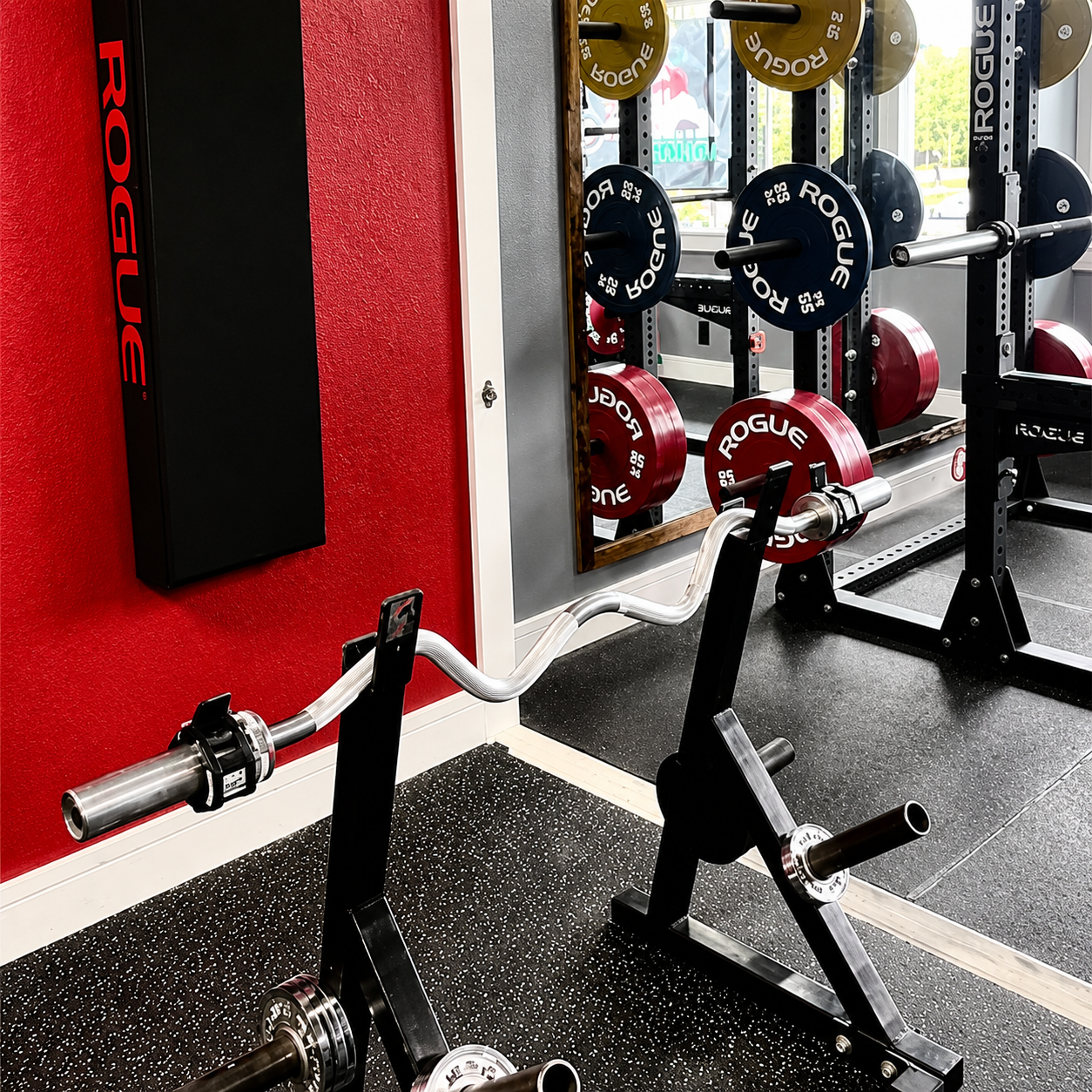
Babcock has a complicated relationship with the bathroom scale. He works constantly to move members off it, because the number rarely tells the story of what training is doing to a body. When a client is discouraged by a stalled weight, his response is to redirect the question toward how they look, how they feel, and what the body is restructuring beneath the surface.
The replacement metric is load. He described clients who began with two-and-a-half-pound dumbbells and eventually pressed ten, a jump that means nothing to an experienced lifter and everything to the person who never expected to reach it. That is the moment he uses to make his case: the scale has not changed, but you have.
He also frames it as a long-term health argument rather than a vanity one. In his framing, skeletal muscle strength is what stands between people and the falls and injuries that come with age. That reasoning is the clearest link between the gym's method and the name over its door, and it is why a strength number carries more weight in his coaching than a weight-loss number ever will.
The demographic detail Babcock returns to most is one he did not engineer. For every five members, roughly one is male. The imbalance runs through the powerlifting team as well, and it happened organically rather than through positioning or marketing.
He has since made it part of what he wants the business to stand for. His observation is that women already enjoy broad acceptance in running and swimming, while a stigma still lingers around women in a weightlifting room and around visible muscle on a female frame. He describes the notion that lifting will make a woman look like a man as a myth, and sets it beside a second belief he considers equally mistaken, that resistance training stunts growth in children.
Both beliefs point in the same direction. Babcock wants younger people finding the weight room before their twenties and older members treating strength work as a normal part of aging. The gym's name was chosen to say exactly that. Age should not decide who trains, and neither should gender.
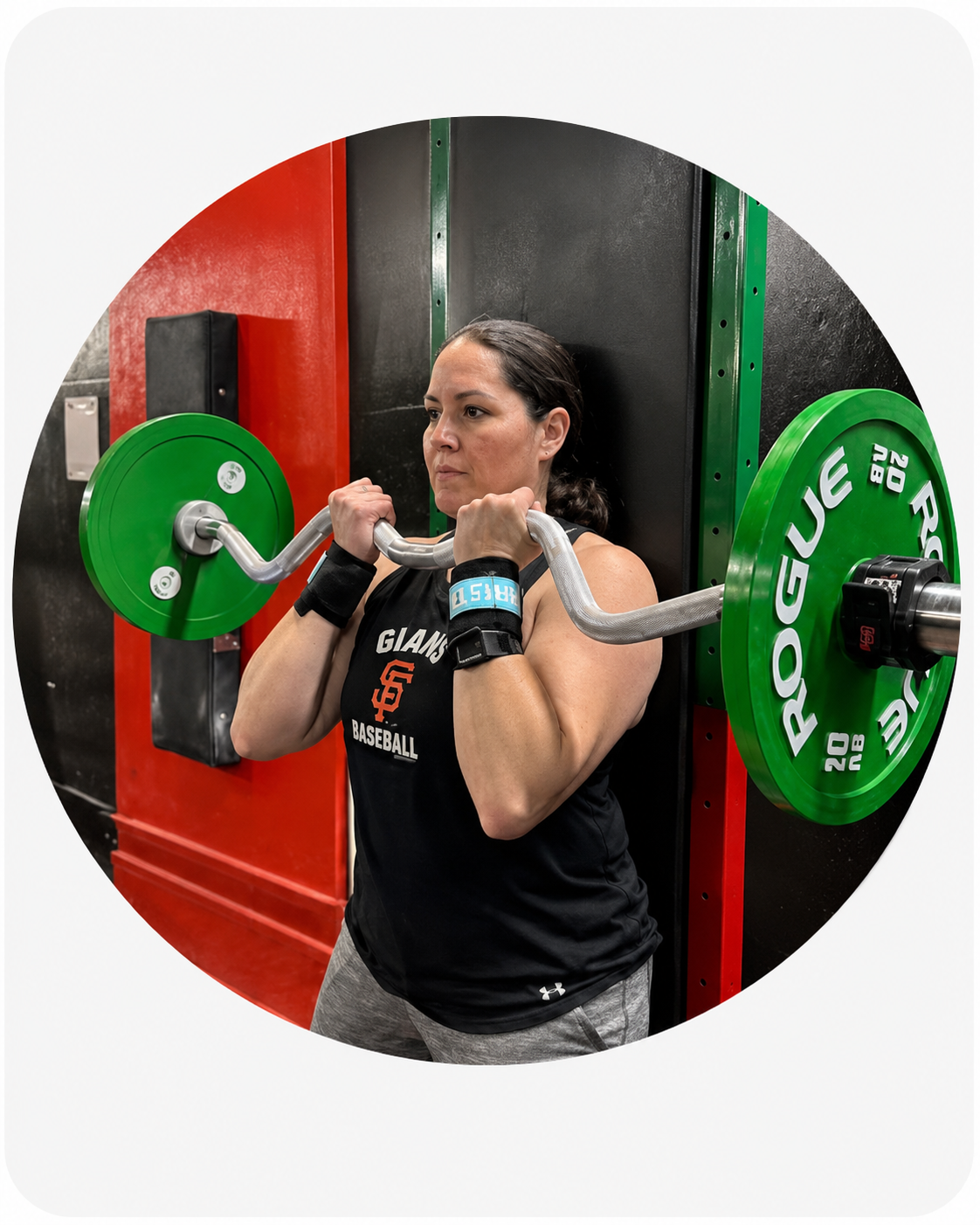
Asked why someone chooses him over another Santa Clara option, Babcock names his teaching background first. Years of talking children through problems built a patience and an empathy that transfer directly onto a gym floor. It is a credential most trainers do not hold and cannot manufacture.
Second is range. Because of gymnastics, he can teach a bodyweight core progression with authority. Because of powerlifting, he can move the same client into a strict curl, a deadlift, or a squat in the following minute. Because of kinesiology, he can explain what each movement is doing and why it belongs in the program. Twenty-plus consecutive years working in a gym sits underneath all of it.
There is also a credential he did not plan on. Three years ago Babcock ruptured his left bicep tendon on a deadlift and required surgical repair. His surgeon told him he had never treated anyone quite like him and could not predict whether he would compete again. Since that surgery, Babcock reports setting a masters world record in the strict curl and placing among the top fourteen curlers lifetime in the lift.
He raises it for one reason. Members who arrive after an injury often defeat themselves before they have tested anything. Having gone through the surgery, the uncertainty, and the return, he can speak about getting the mind right from the inside rather than from a textbook.
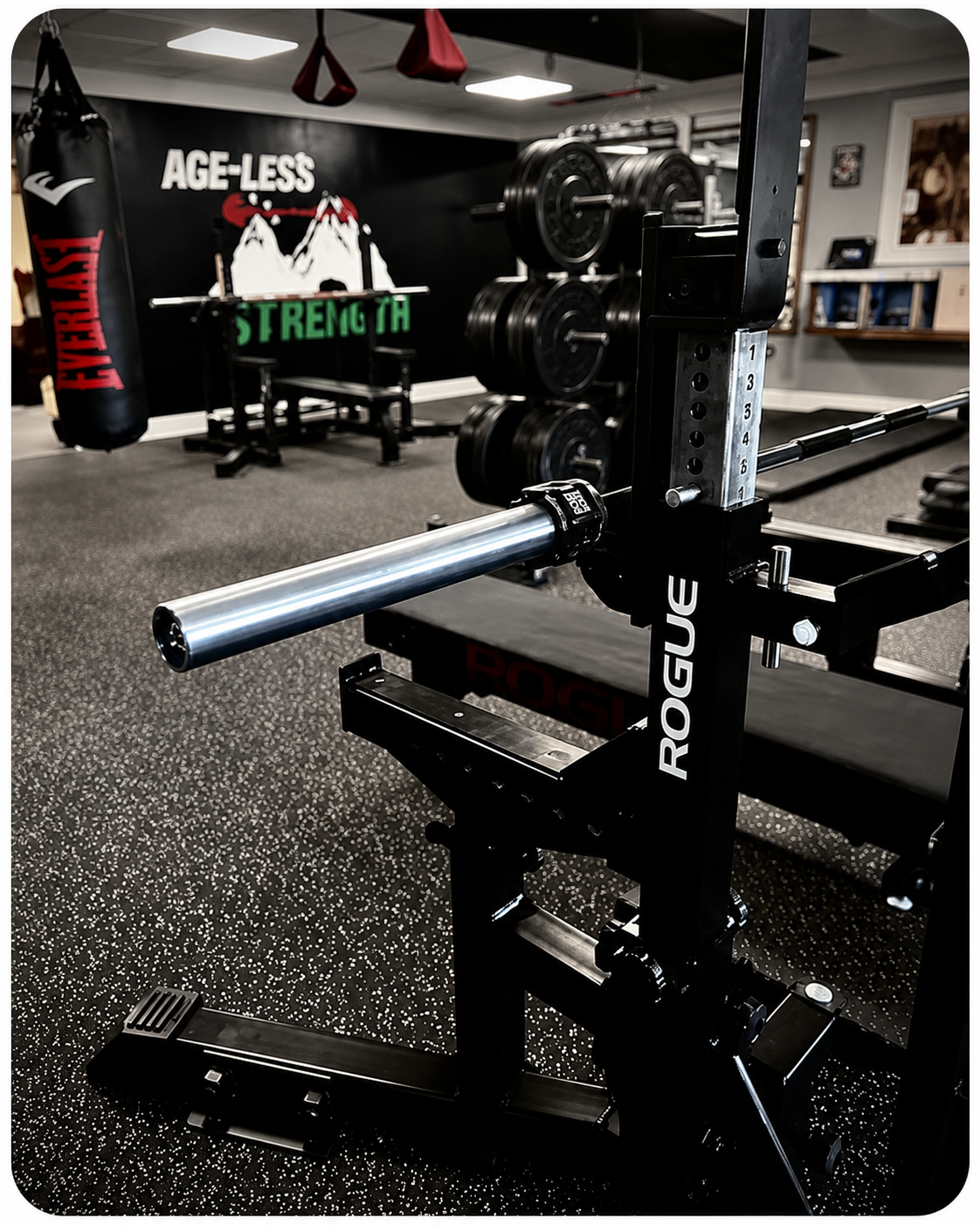
- Age-Less Strength Gym in Santa Clara is owned and operated by Steve Babcock and his wife, Rebekah, with Babcock leading strength, conditioning, and powerlifting coaching.
- The method is deliberately traditional: free weights, classic compound lifts, and instruction in the basics before anything advanced is introduced.
- Programs are written individually and held for four to eight weeks before adaptation, because consistency and routine are treated as the mechanism, not the constraint.
- Babcock's coaching authority combines a kinesiology master's degree, fourteen years teaching physical education, a competitive gymnastics background, and a competitive return to the platform after surgery.
- The gym's stated purpose is written into its name: strength belongs to every age and every gender, and the floor is meant to prove it.
The name over the door is not branding. Babcock chose it because he objects to the idea that there is a correct age at which a person is permitted to train, and he applies that objection in both directions. A ten-year-old belongs in a weight room. So does an eighty-eight-year-old. The programming changes. The premise does not.
What makes the business worth studying is how ordinary the method looks once it is written down. Classic lifts, taught properly. A program left alone long enough to work. A coach who corrects without diminishing, and who can point to his own repaired tendon as evidence that a setback is not a verdict. There is nothing fashionable in any of it, which is exactly the argument.
Babcock points readers to the website first, then to a call or a text. He is on the floor most of the day, which means a prospective member is speaking with an owner rather than a sales desk.
Each trainer offers a complimentary opening session, including Babcock's personal training, Rebekah's boot camp, and Gwen's mobility work. A day pass and a floor tour are available to anyone who simply wants to look, and the monthly squat, bench, deadlift, and strict curl clinics are open to people who are not members.
Explore Age-Less Strength Gym 
Steve Babcock leads training at Age-Less Strength Gym in Santa Clara, California, the business he owns with his wife, Rebekah, who runs the gym's boot camp classes. His coaching draws on a kinesiology degree and a master's in physical education, fourteen years teaching middle school physical education, a competitive gymnastics background that began in childhood, and more than twenty consecutive years working in gyms. He coaches the gym's powerlifting team, writes programs for beginners and general members, runs agility work with young athletes, and continues to compete, describing in interview a masters world record in the strict curl set after surgical repair of a ruptured bicep tendon.
The reporting behind this feature draws on a recorded editorial interview with Steve Babcock, business-provided context for Age-Less Strength Gym, the official Age-Less Strength Gym website, and image and logo assets supplied for publication. Editorial attention was given to the gym's free-weight programming, its four-to-eight-week program standard, its powerlifting and general fitness coaching, its mobility and boot camp support, and the coaching manner described by the owner.
Competitive results and coaching credentials are reported as described by the owner in interview. Photographs supplied by the business are described according to what they visibly show, and members shown training are not identified by name. This article is editorial coverage and is not medical, rehabilitation, nutrition, or individualized training advice. No medical claims, guaranteed outcomes, fabricated credentials, unsupported testimonials, or unsupported transformation promises are made.


Write A Comment