
This is a custom HTML / JavaScript Element
In order To See Your Custom HTML/JavaScript Code in Action You Must Click On The Preview Page Button, Your Code is NOT going to be active in the edit mode
Location: West side of Santa Cruz, California
Founding Leadership: Deana Rabiah and Sally Larter
Interview Source: Deana Rabiah and Sally Larter
Business Type: Small boutique fitboxing and strength development studio
Training Focus: Heavy-bag fitboxing technique, cardio and impact work, weight and mat training, Core Power Strength as a Pilates-inspired core and full-body class, taught form, injury-conscious modifications, and cross-training support for local sport.
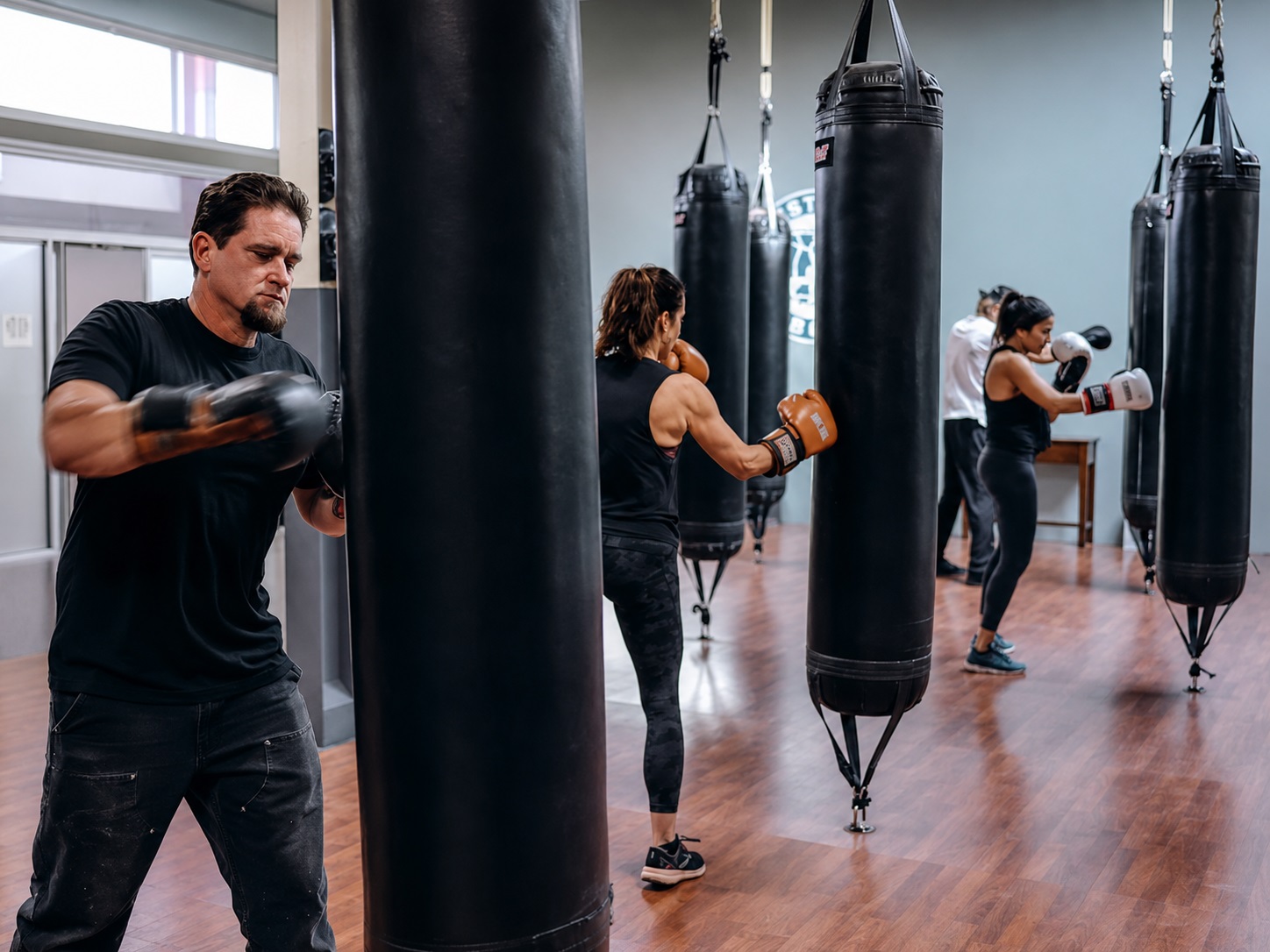
Sally Larter's credentials on a studio floor are technical before they are anything else. She came to fitness kickboxing through martial arts rather than through group exercise, trained in Muay Thai, and holds a fourth-degree black belt earned across years of study. Her original use for fitness kickboxing was conditioning that kept her ready for martial arts training. That order of operations still shapes how she teaches: strike mechanics are treated as a skill to be transmitted correctly, not as a cardio prop.
Deana Rabiah arrived from a different direction. A former soccer player, she was looking for a way to stay fit that was genuinely enjoyable and surrounded by people she wanted to be around. The two had been training together since their children were small. When the studio space where they had both worked closed during the COVID period, they opened Westside Fitboxing together, keeping the fitness kickboxing and adding Rabiah's Core Power Strength program as the studio's second format.
- How the studio's free how-to session functions as an instructional gate rather than a marketing offer.
- Why the choice of anchored heavy bags over freestanding bags is presented as a training decision.
- How the fitboxing hour is divided between bag work and loaded work, and why nothing is programmed as a split day.
- What Core Power Strength contributes that the bag cannot, and how the two formats are meant to be combined.
- Why modifications are treated as standing policy rather than as an accommodation granted on request.
The first thing a newcomer encounters at Westside Fitboxing is not a workout. It is a lesson. Larter runs free how-to sessions on Saturday mornings and holds them to four participants at a time, because the point is individual correction rather than volume. Anyone who cannot make Saturday can arrange another time during the week. Larter is direct about why she protects this: proper form keeps people from getting hurt, and it makes the workout itself better.
The same instructional care extends to the ordinary logistics of a first visit. New participants are encouraged to arrive ten to fifteen minutes early so the space can be explained, wraps can be fitted, and mats and weights can be pointed out before anything begins. Rabiah and Larter both make a habit of being present in the room even when they are not the ones teaching, and instructors are told in advance when someone new will be in class so that person gets attention before and after the session.
None of this is complicated. It is simply sequenced correctly. Where many striking environments assume competence and let newcomers work it out, this studio treats competence as something the business is responsible for supplying.
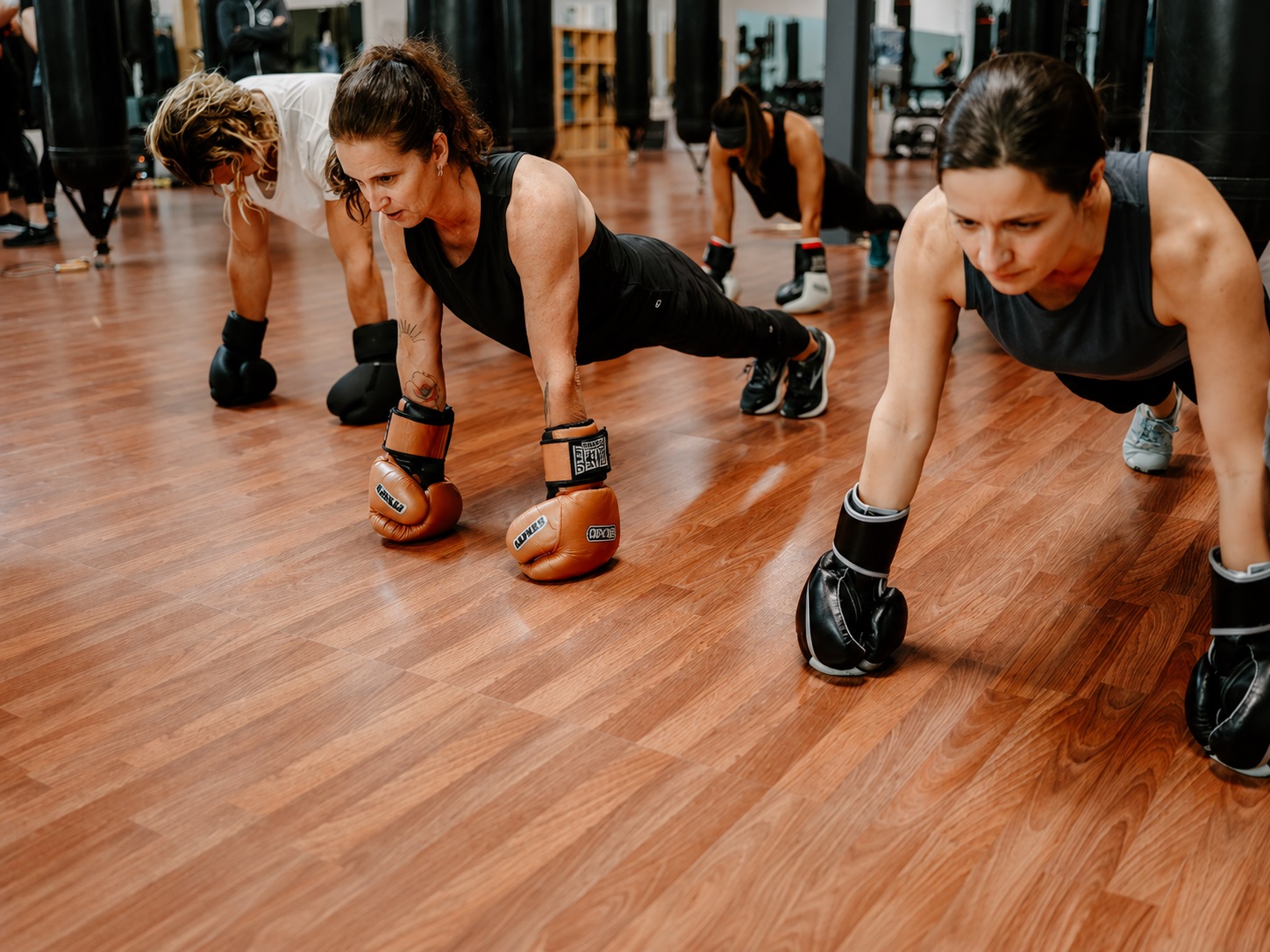
Ask Larter what actually distinguishes the studio and she goes straight to equipment. Westside Fitboxing runs all of its fitboxing classes on heavy bags suspended from the ceiling and secured to the floor. She is not aware of another studio in the area doing the same. The common alternative, a freestanding water-filled base bag, moves under contact, and in her assessment a moving target does not deliver an adequate workout and increases the chance of striking the wrong surface.
Two other choices follow from the same reasoning. The studio does not spar, which removes the single most common reason people say they wanted to try kickboxing but did not. And it does not run classes on shared focus mitts, where participants alternate between working and holding. Larter has mitts and respects mitt work, but for a fitness hour she wants continuous output rather than a queue.
The result is thirty to forty minutes of uninterrupted contact work per participant. Larter also points to what she believes real impact contributes, including upper-body loading and, in her account, bone strengthening, both of which she considers increasingly relevant as people age.
The studio does not program split days. Rabiah puts it plainly: every day is an all-body day. That has a practical consequence for people whose schedules are unpredictable. A participant who can only make one session in a given week has not missed the part of their body that was scheduled for Tuesday. They have trained everything.
Within that constraint, the owners deliberately vary the work. Larter describes mixing sessions up so that muscles do not settle into a pattern and participants stay challenged. The variation is not decorative. It is the mechanism that keeps an hour-long format productive over months rather than weeks.
Instructors are given genuine latitude inside that structure. Sessions are not choreographed for them from above. The owners' position is that different instructors bring different strengths, and that letting them build their own classes within an agreed framework produces more creativity than a scripted template would. Participants, they report, respond to that.
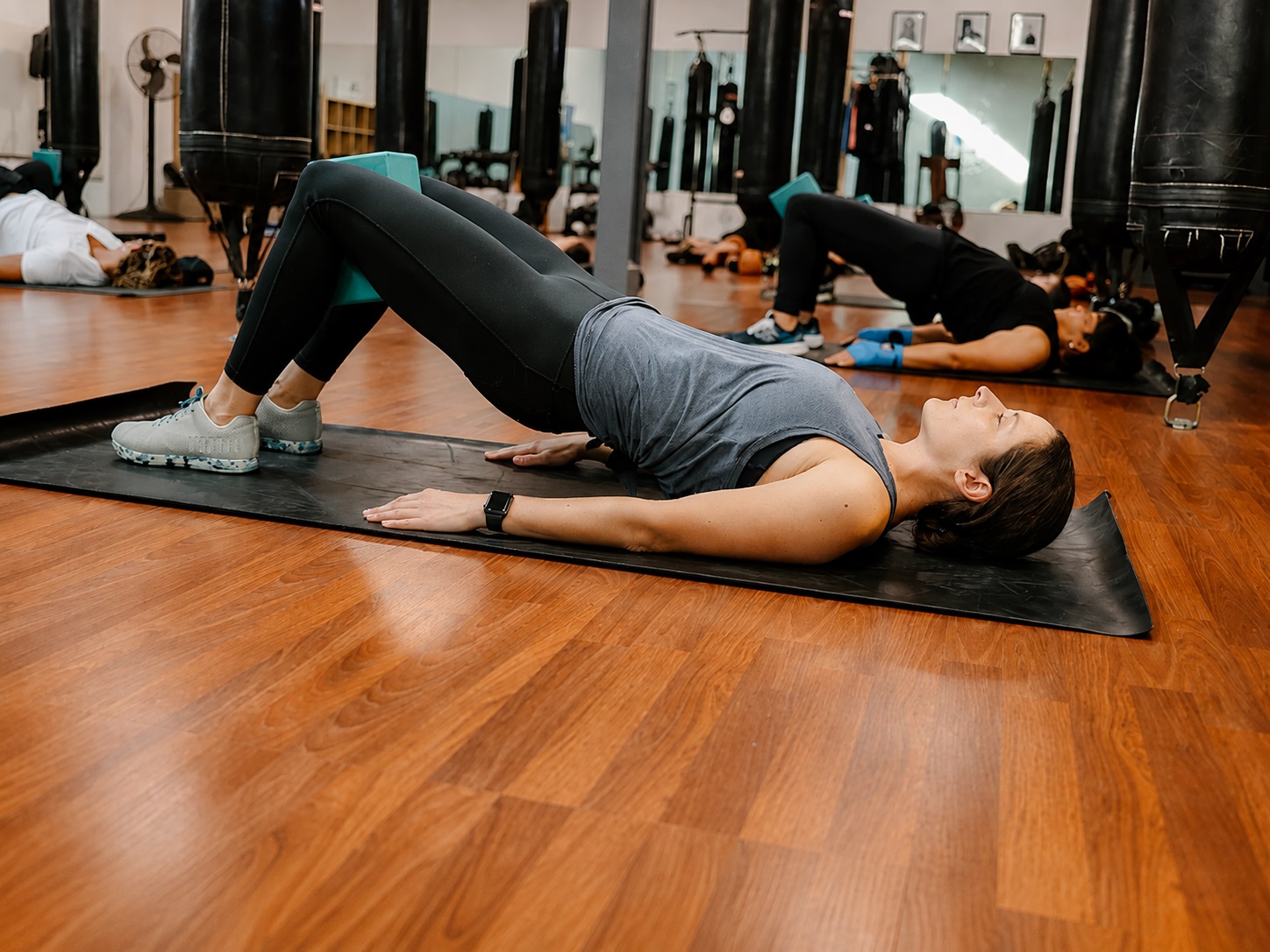
Rabiah's Core Power Strength class runs on mats stationed among the bags, but the work is independent of them. It is Pilates-inspired, centered on core strength and overall body strength, and carries more weight work than the fitboxing hour. Its emphasis is functional: learning to engage the core, learning to bend and lift something heavy without paying for it later.
Rabiah is also candid about a coaching behavior she considers part of the method. Many of her participants, and in her observation particularly women, underestimate their own strength. So she watches during class and encourages people to go a little further than they would have on their own. Nothing dramatic, and never at the cost of safety, but enough to close the gap between what a person believes they can lift and what they can actually lift.
That, she notes, is difficult to replicate alone. An instructor who has watched the same person across weeks can see progression the person cannot see in themselves. The two formats are designed to complement one another, and while some participants combine them, either one on its own is built to deliver a complete session.
Asked what changes when someone trains consistently, both owners named the same thing before anything physical: empowerment, and the confidence that follows it. Larter describes watching a participant arrive timid and, within weeks, hit the bag hard. Rabiah calls out the smile that appears when someone lands a kick they could not land before.
The physical markers they cite are equally concrete. Endurance builds, so the breaks a newcomer needs early on become less frequent. Weights get heavier. Upper body and shoulder strength develop, which Rabiah notes matters especially for women. Larter adds mobility as a companion to that strength, because a strong body that cannot move well is only half useful.
Larter's proudest measure is audible. When a participant has trained long enough for form and strength to arrive together, the kicks and punches can be heard across the room. Everyone present hears it. So does the person throwing them.
The participant range at Westside Fitboxing runs from college students to senior citizens, and the owners regard that spread as one of the studio's better outcomes. A frequent question they field comes from people in their fifties who have not trained in years and want to know whether the class is appropriate for them. The answer is yes, and the reason it can be yes is the design: work at your own pace, take the rest you need, use the modification when you need it.
Rabiah points to a hesitation that keeps many people out of group classes entirely, which is the fear of not being able to finish, or of not being good enough to be in the room. A format where nobody is watching anyone else's bag, and where the instructor has already offered three ways to do the movement, dissolves a good deal of that.
The social result is one the owners did not engineer but clearly value. Participants stay in the parking lot after class talking. Friendships form across generations. Rabiah mentions the small practical exchanges that follow, the offer of a truck to help someone move, the ordinary reciprocity of a small community. The owners are also explicit that the studio is a welcoming place for everyone, including the substantial LGBTQ community in Santa Cruz, and that their instructors reflect the community they serve.
One of the more unusual positions the owners hold is that they do not want to win participants away from anyone. Larter says directly that she would never tell someone to train only at her studio, and that the us-versus-them posture she sees in parts of the local fitness scene bothers her. There are enough people to fill every space, and people need to find the training that resonates with them.
That position is commercially unusual and methodologically consistent. The studio's participant base includes surfers, mountain bikers, and other athletes who come specifically to cross-train, and a studio that wanted exclusivity would be at odds with the people it serves best. Rabiah adds the local reality with some humor: in Santa Cruz the real competition is the surf and the trails.
There is also a broader position underneath it. Rabiah is critical of an industry that has taught people they must already look a certain way to walk through the door, and that markets a body type as a prerequisite for participation. She and Larter set the studio against that. The stated aim is strong, fit humans, whatever else those humans happen to look like.
- Westside Fitboxing is a small boutique fitboxing and strength development studio on the west side of Santa Cruz, California, owned by Deana Rabiah and Sally Larter.
- Technique is taught before intensity is asked for, through free small-group how-to sessions capped at four participants.
- All fitboxing runs on ceiling-anchored heavy bags with one bag per participant, chosen for impact quality and reduced injury risk, with no sparring and no shared mitt rotation.
- Every session is programmed as a full-body day, and modifications are offered as standard practice rather than on request.
- The stated goal is capability rather than appearance, described by the owners as building strong, fit humans who can take care of themselves over a lifetime.
The clearest evidence of this studio's method is not a number on a wall. It is the sound of a well-thrown kick landing on a bag that does not move, thrown by someone who could not throw it six months earlier and was taught how by the woman running the class.
Everything Rabiah and Larter have built points toward that moment and then past it, toward the kind of capability the owners say they are actually training for: shoulders that keep working, a core that handles the ordinary heavy things, an instinct to protect the head that arrives without thinking about it. The studio is small on purpose, taught on purpose, and unwilling to tell anyone they must train nowhere else. What it promises is narrow and honest: an hour that was designed, and an instructor who is watching.
Larter and Rabiah point readers first to the studio website, where the class descriptions, the schedule, what to bring, and the membership options are laid out in one place. Their view is that a person should understand what the hour actually involves before committing to it.
From there, two doors are open. Anyone who would feel more comfortable learning the mechanics before joining a class can sign up for a free how-to session, held in small groups on Saturday mornings and limited to four participants, with weekday times arranged when Saturday does not work. Anyone ready to simply train can take the first class free. The studio also offers a new client special that includes gloves, wraps, and three classes, usable across either format.
Explore Westside Fitboxing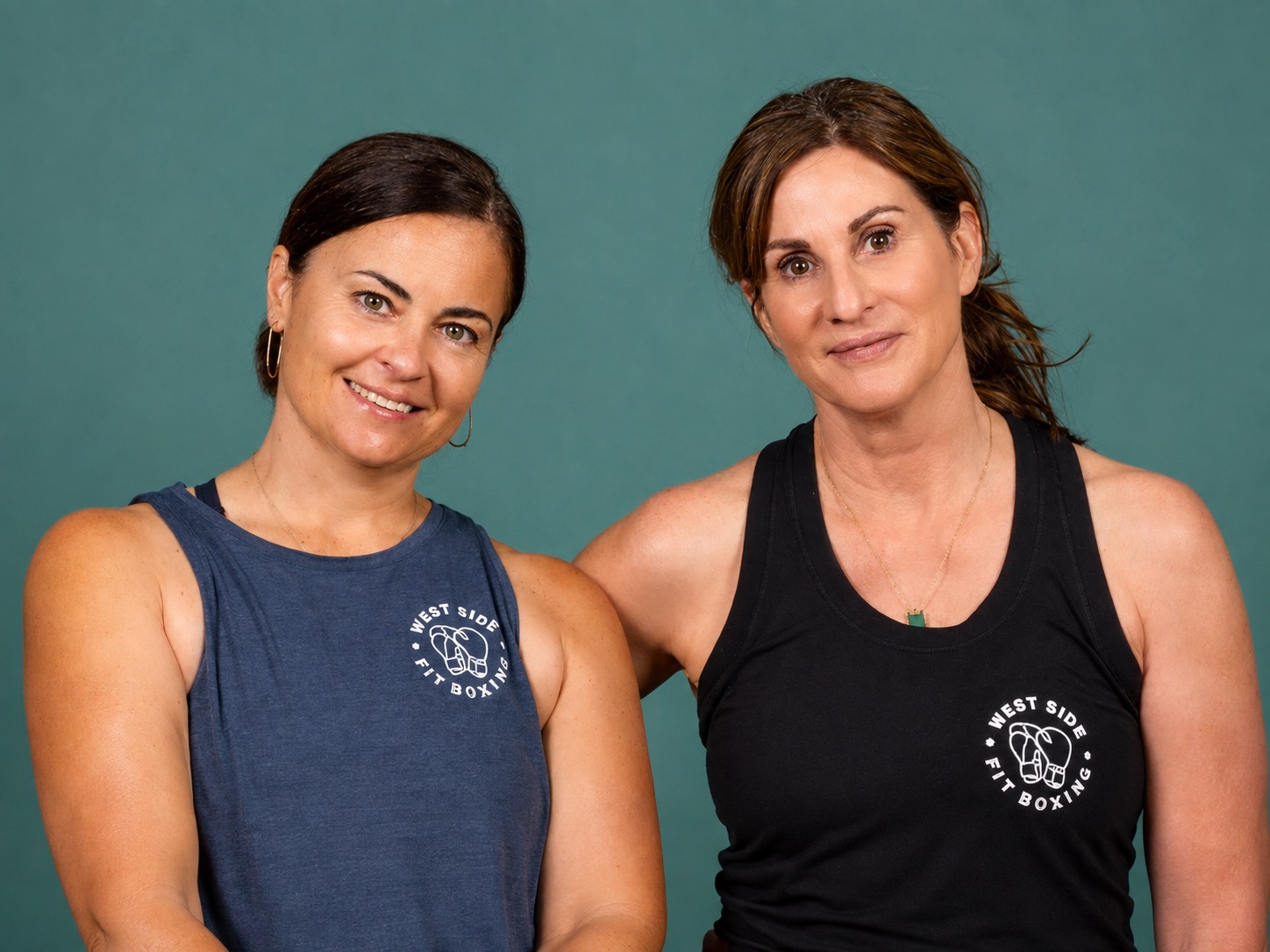
The two women who own Westside Fitboxing cover different halves of the same standard. Larter carries the technical side: a martial arts background including Muay Thai and a fourth-degree black belt, responsibility for the fitboxing classes, and the free how-to sessions where new participants learn to strike correctly. Rabiah leads Core Power Strength, the studio's Pilates-inspired core and full-body class, and coaches progressive load with an eye on participants who underestimate what they can do. They had trained together for years before opening the studio, and both describe the same operating aim: a safe, welcoming room where people of any age or background can build a body that serves them.
Reporting for this authority spotlight came from a recorded editorial interview with Deana Rabiah and Sally Larter, business context the owners supplied during that conversation, the public Westside Fitboxing website, and the studio images and logo provided for publication. The editorial review concentrated on the studio's two class formats, its equipment standard, its approach to teaching striking technique, its use of modifications, and the range of participants it serves.
Participant counts, class timings, and access options are reported as the owners described them. This is an editorial feature and not medical, rehabilitation, nutrition, or individualized training advice. No medical claims, guaranteed outcomes, fabricated credentials, unsupported testimonials, or unsupported transformation promises are made.
- Recorded editorial interview with Deana Rabiah and Sally Larter, co-owners of Westside Fitboxing.
- Official Westside Fitboxing website: https://www.westsidefitboxing.com/
- Business-provided Westside Fitboxing context and visual assets.
- Standard of Membership / First Step response extracted from the recorded interview.
- Location reference: west side of Santa Cruz, California.


Write A Comment