
This is a custom HTML / JavaScript Element
In order To See Your Custom HTML/JavaScript Code in Action You Must Click On The Preview Page Button, Your Code is NOT going to be active in the edit mode
Location: Torrance, California, in the South Bay
Owner / Training Lead / Interview Source: Ian Johnson
Ownership: Ian Johnson and his wife
Opened: February 2021
Business Type: Private personal training studio built around resistance technology, corrective exercise, and one-on-one coaching
Training Focus: Corrective exercise, progressive overload strength work, foot and ankle mechanics, bone density and muscle mass development, body composition measurement, and time-efficient programming delivered in one to two sessions per week.

Torrance is where Ian Johnson grew up, and the studio he opened sits roughly two blocks from the house he was born in. That proximity is not sentiment alone. A private studio serving about a hundred clients a week cannot compete with a larger facility on equipment volume, operating hours, or price. It has to compete on something a bigger operator cannot replicate. Johnson decided the differentiator would be precision: what the studio selects, how it verifies execution, and what it can prove afterward with recorded numbers.
Johnson began training professionally in 2013 and spent roughly seven years as a personal trainer and fitness manager at Bay Club before opening Top Tyr Training with his wife in February 2021. He describes himself as the show pony, the one on the floor coaching and representing the business, while his wife carried much of the administrative work during the opening period. Five and a half years in, the studio is preparing to take down a wall, absorb the neighboring unit, and roughly double its footprint.
- Why Johnson abandoned high-frequency training after seven years of recommending it.
- How the studio sequences corrective work from the foot upward rather than from the hips outward.
- What ARX resistance equipment, CAROL bikes, and InBody scanning each contribute to the model.
- Why the studio can serve a twelve-year-old, a ninety-year-old, and a client with Parkinson's inside the same system.
- How enjoyment and injury avoidance function as retention mechanics rather than as marketing language.
Johnson's method begins with a question most training environments skip: does the body in front of him move correctly before it is asked to move heavily. If the glute does not fire, he does not load the leg press. That sequencing is not a philosophical preference. It is a gate. Movement quality has to clear a threshold before load is added, and if it does not clear, building that capacity becomes the work itself.
Where the studio departs from most corrective models is the entry point. Johnson noted that many programs he has studied begin at the hips and radiate outward. Top Tyr Training starts lower. Most clients spend part of their first day barefoot on a table or mat while the coaching staff works foot and ankle mechanics, then moves up the chain into hips, lumbar spine, thoracic spine, and neck. His reasoning is structural: the foot is the body's contact point with gravity, and if that connection is compromised, everything stacked above it inherits the error.
Above that corrective layer sits conventional progressive overload, delivered through compound multi-joint work, with bone density and muscle mass named as explicit targets. Johnson describes the process using a puzzle metaphor he returns to repeatedly. Some clients arrive as hundred-piece puzzles with large, obvious pieces. Others arrive as thousand-piece puzzles in the dark, flipped face down. The programming does not change in principle. The reassembly time does.
The studio's most contrarian position is its session frequency. Johnson calls the one-day-a-week workout the studio's bread and butter, and he is direct about the fact that he once believed the opposite. At Bay Club he told clients that more contact time meant better results and tighter quality control. He no longer argues that, because the equipment changed what a single session can accomplish.
Johnson first encountered ARX in roughly 2017 when a client asked whether he knew what it was. He did not, so the two of them carpooled to the nearest studio that had the machines. His description of the aftermath is unusually candid for someone who had already spent years evaluating fitness trends. He did not immediately understand the mechanism, but he knew the stimulus was unlike anything he had trained through before. What followed was three years of investigation: books, podcasts, and cold calls to every ARX studio he could find on Google, asking operators whether the technology performed as advertised.
The practical consequence for clients is a schedule that fits a working life. Johnson frames the trade openly. Rather than requesting four to six hours a week, the studio requests 30 to 90 minutes. He describes that as giving people their lives back, and the framing matters commercially as much as physiologically, because the clients he serves most often are professionals whose primary constraint is time rather than motivation.
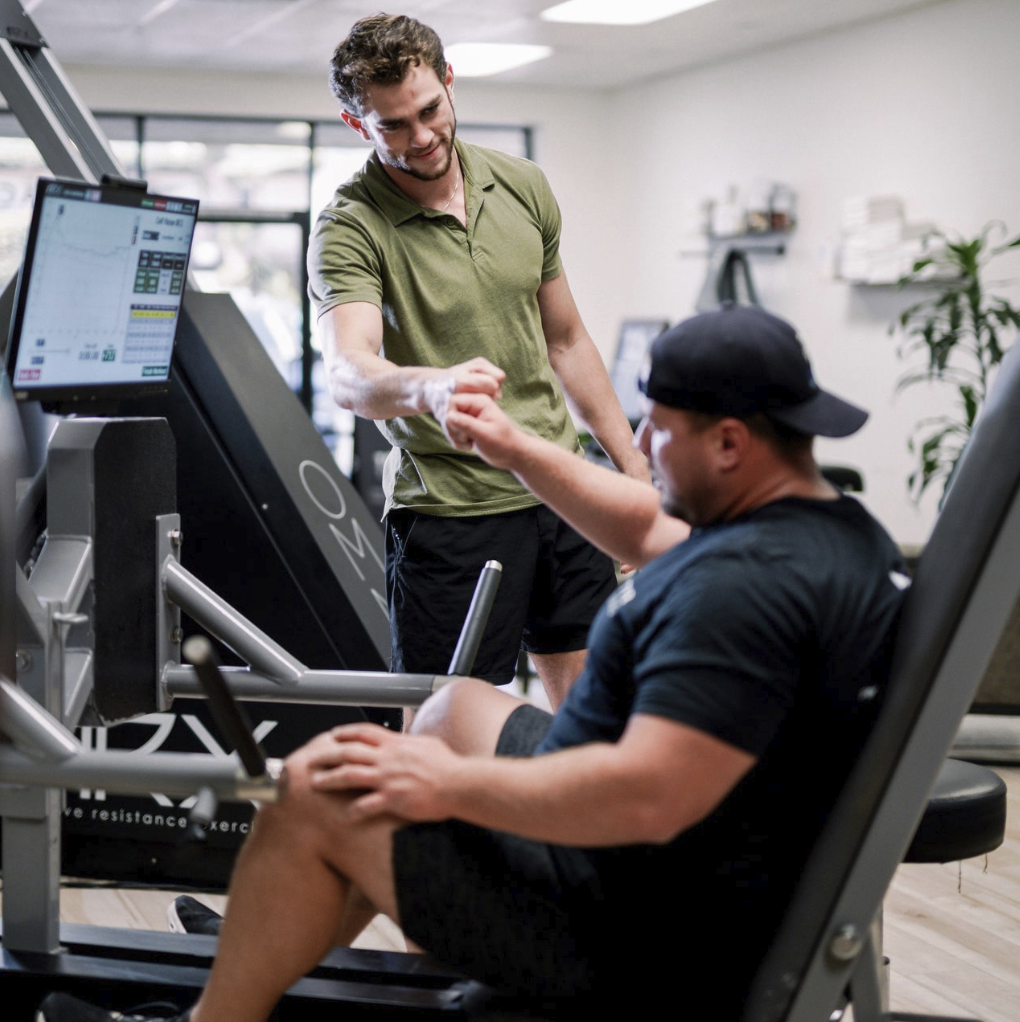
Johnson is emphatic that Top Tyr Training does not evaluate progress subjectively. Nobody is pinching skin with a caliper. Nobody is asking whether pants fit better. Machine output is recorded, body composition is scanned, and the previous session's figures are available before the current one begins. That discipline gives the studio something most training environments lack: a defensible record of what changed and when.
Against that baseline he offers a comparison drawn from his own career. In a big-box setting, moving a client 25 to 30 percent on the leg press across a year represented solid work. In the studio, he reports year-over-year increases well beyond that range, and he notes that several clients have had case studies written about their bone density increases. Those figures are Johnson's account of his own client data rather than independently verified findings, and they are presented here as such. What is editorially notable is not the size of the numbers but the fact that numbers exist at all.
Johnson's broader argument sits underneath this. Technology has been absorbed almost everywhere else in daily life, he observes, while a great many people still train according to conventions that predate any of it. He is not dismissive of traditional lifting. He is skeptical of the assumption that measurement should remain optional.
The studio's core client is the professional between roughly 40 and 60 who understands the stakes of aging well but has found that conventional gym work no longer fits around family, career, or accumulated wear. That group Johnson expected. The group he did not expect has become one of the more consequential parts of the business.
Top Tyr Training now serves clients on the autism spectrum, clients with Parkinson's, and clients with Down syndrome, alongside a twelve-year-old who has never lifted and a ninety-year-old in the same position. Johnson attributes that range to the way the equipment constrains the movement. Because the machine governs the resistance rather than the client governing a free weight, the studio can deliver meaningful loading in situations where a traditional floor would present real difficulty. He describes the risk of injury on the machines as extremely low, a characterization drawn from his operating experience rather than from clinical trial data.
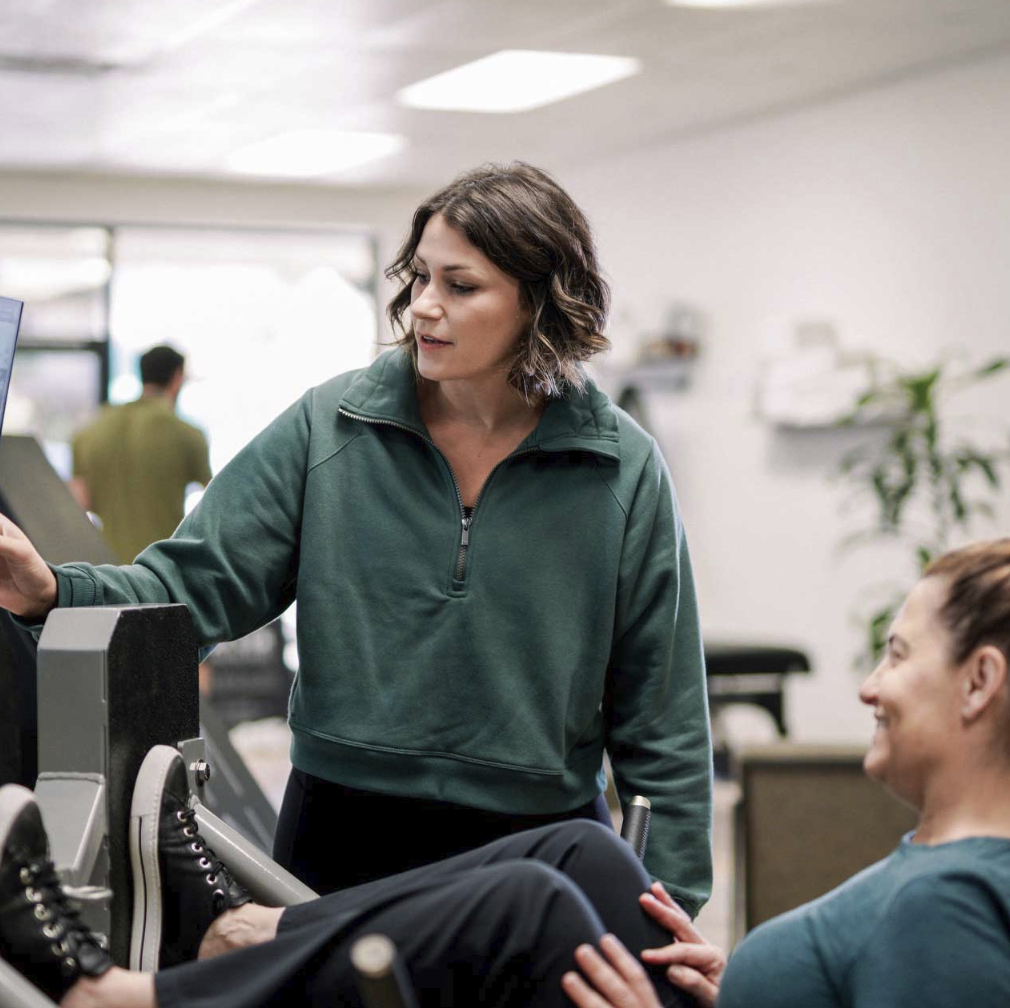
There is a second effect worth noting. Because the movement pattern on the equipment looks broadly similar regardless of who is performing it, the intimidation dynamic that keeps many people out of gyms largely dissolves. Johnson frames the resulting comparison as internal rather than social. The only relevant question is whether the client is ahead of where they were last month.
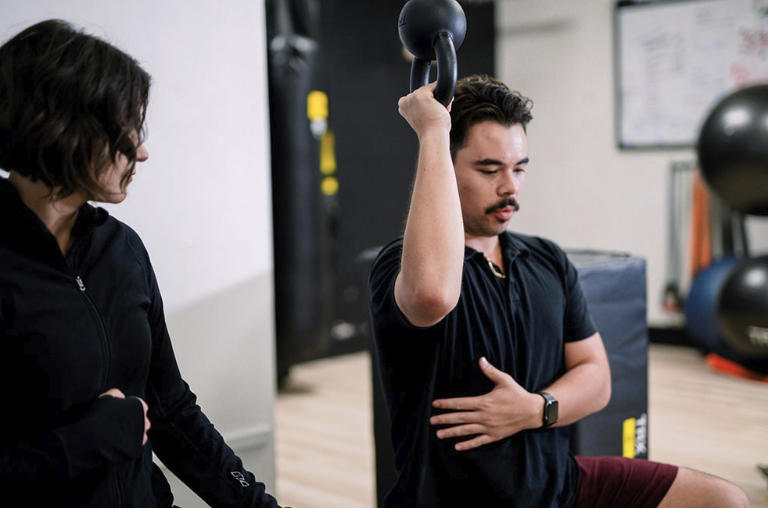
Asked which client achievements he holds highest, Johnson does not name a lift or a body composition figure. He names the clients who arrived defeated. The ones who had cycled through chiropractors, acupuncturists, and physical therapists, and who came in prepared for the attempt to fail again.
One example returns the article to the studio's foot-first thesis. Johnson described a client who had spent roughly two decades consulting specialists about low back and lumbar pain. The session focused on the arch and on overpronation, and he recounted that afterward she told him it was the first time in twenty years she had been without that pain. He described a second client who feared he would have to stop driving because he could no longer turn his head adequately, and who, following thoracic spine mobility work, felt confident enough to continue. Both accounts are Johnson's own, offered as illustrations of the outcomes he values most. Neither is presented here as a clinical result.
The account Johnson keeps saved on his phone is a photograph of a mountain summit. A client had hiked it annually with his two sons before losing the ability, and had abandoned the goal roughly two decades earlier, well before he began training at the studio. Johnson did not know it was a goal. The text simply thanked him. He points to that message as the clearest statement of what the studio exists to produce.
Johnson is refreshingly unwilling to claim the equipment as the decisive factor. He acknowledges it is the easy answer and notes its limitation: most prospective clients do not know ARX exists, so they are not searching for it. They are searching for a personal trainer. Whatever brings them through the door, it is not the technology.
What he believes closes the decision is authenticity, and he means it operationally rather than aspirationally. The studio does not perform a version of itself for prospects. Johnson and his staff talk at length, go down what he cheerfully calls weird rabbit holes about toe spacers and arch mechanics, and make no attempt to appear more polished than they are. Clients text him from hotel gyms on vacation and receive a written workout in return. He is candid that his clients know him well enough to see both the appealing parts and the less appealing ones.
The expansion now underway will test how much of that survives scale. Doubling the footprint, adding small group formats of six to ten and potentially twelve to fifteen, and introducing new modalities all pull against the intimacy that currently defines the place. Johnson is clear-eyed that the next phase involves experimentation, and equally clear that he intends the personal texture to remain the constant rather than the casualty.
- Top Tyr Training is a private studio in Torrance, California, opened in February 2021 by Ian Johnson and his wife.
- The method gates load behind movement quality and sequences corrective work from the foot upward through the ankle, hip, lumbar spine, thoracic spine, and neck.
- ARX resistance equipment allows the compound strength stimulus to be compressed into one or two weekly sessions of 30 to 90 minutes.
- Progress is tracked quantitatively through recorded machine output and InBody body composition scanning rather than through subjective assessment.
- The client range extends from busy professionals and returning athletes to special populations who are difficult to serve safely in a conventional training setting.
Ask Johnson what he wishes the South Bay understood about his work and he answers in four words: fitness is not aesthetic. He is not interested in what a client sees when looking at their midsection in the mirror. He is interested in what they see when they look at their own eyes. That distinction is the reason a saved photograph of a mountain summit carries more weight in this studio than any body composition report.
What Top Tyr Training offers the market is therefore narrower and more demanding than a membership. It is a diagnostic process, a compressed and heavily measured strength stimulus, and a coaching environment built on the premise that people continue doing what they enjoy and abandon what injures them. Johnson would put it more plainly. Enjoy the ride. We only get one.
Johnson is not interested in explaining the studio from a distance. His view is that anyone genuinely curious about how Top Tyr Training works should experience the process rather than read about it, because the diagnostic sequence is the part that is difficult to convey in conversation.
The recommended entry point is the fitness consultation, scheduled through the official website. Johnson describes it as running roughly 75 to 90 minutes and covering training history, current needs and limitations, nutrition, and recovery. In his words, give the studio that hour and a half and you will not leave wondering what it is about.
Explore Top Tyr Training
Ian Johnson has trained professionally since 2013, including roughly seven years as a personal trainer and fitness manager at Bay Club before opening Top Tyr Training with his wife in the Torrance neighborhood where he was born. He is the primary training voice behind the studio's corrective sequencing, its resistance technology standard, and its insistence on quantified measurement, and he works alongside a coaching staff held to the same reading and floor requirements. The method described throughout this feature is his, drawn directly from the recorded editorial interview conducted for this spotlight.
Reporting for this feature drew on a recorded editorial interview with Ian Johnson, business-provided context for Top Tyr Training, the official Top Tyr Training website, and image and logo assets supplied for editorial use. Editorial review concentrated on the studio's corrective exercise sequence, its resistance technology and measurement standard, its session frequency model, and the client populations it serves in Torrance and the wider South Bay.
Performance figures and client outcomes described here reflect Johnson's own account and are attributed accordingly rather than presented as verified findings. The piece is editorial coverage. It does not supply medical, rehabilitation, nutrition, or individualized training advice, and it contains no medical claims, guaranteed outcomes, fabricated credentials, unsupported testimonials, or unsupported transformation promises.



Write A Comment