

Add Post Title Here ..
In order To See Your Custom HTML/JavaScript Code in Action You Must Click On The Preview Page Button, Your Code is NOT going to be active in the edit mode
Cave Training: Inside the Strength, Conditioning, and Community Standard Built for Real Life
Location: Santa Clarita, California
Founder / Owner / Head Coach: Nikki Adams
Training Lead / Interview Source: Nikki Adams
Business Type: Strength and conditioning micro gym
Training Focus: Functional fitness, strength training, conditioning, boxing, progressive overload, core and trunk stability, prenatal and postpartum training, youth athletes, team culture, community accountability, and sustainable real-life movement.
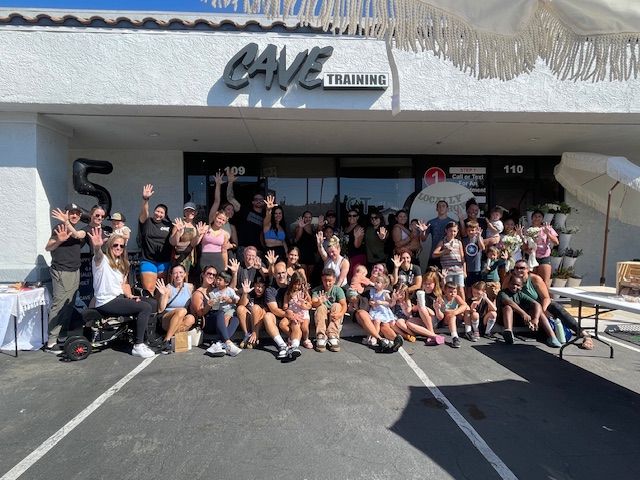
Nikki Adams-Herrera leads Cave Training with the authority of a coach who understands both athletic performance and life transition. Her background runs through soccer, softball, personal training, small-group coaching, boxing, strength and conditioning, CrossFit-influenced functional fitness, and a deep specialty in prenatal and postpartum support.
What gives Cave Training its identity is not one exercise modality alone. It is the way the gym joins programming, coaching, community, behavior change, and human care into one standard. Nikki Adams does not describe the work as a simple class schedule. She describes it as a structure — one that asks clients to change habits, build strength, develop capacity, and belong to something that makes the work more sustainable.
- How Cave Training builds strength through six- to eight-week training blocks, progressive overload, and measurable benchmarks.
- Why Nikki Adams begins with the whole person: goals, history, habits, pain points, capacity, and life season.
- How functional fitness, core and trunk stability, conditioning, boxing, lifting, and nervous system regulation fit into the gym’s method.
- Why prenatal and postpartum clients, women, high school athletes, and everyday fitness clients require different coaching sensitivities.
- How the first-step process keeps the offer simple: share goals, connect with the team, and come in for a first class on the house.
Nikki Adams’ training philosophy begins with the whole person. When a client enters the Cave Training system, the question is not simply what workout they should do. The question is what they are carrying into the room: their habits, background, goals, stress, sleep, movement experience, pain points, pregnancy or postpartum season if applicable, and their current relationship with strength.
From there, the method becomes structured. Cave Training works in training blocks, often six to eight weeks, with progressive overload and repeated foundational patterns. Hinge. Squat. Push. Pull. Carry. Stabilize. Breathe. Condition. The repetition is not accidental. It creates recognition, measurable progress, technical skill, and confidence.
The workouts are demanding, but the deeper standard is not intensity for its own sake. Nikki Adams described training that begins with nervous system regulation, core and trunk stability, then moves into a main lift and typically finishes with conditioning. That sequence reveals the operating idea: prepare the body, build strength, challenge capacity, and help the client leave with more agency than they arrived with.
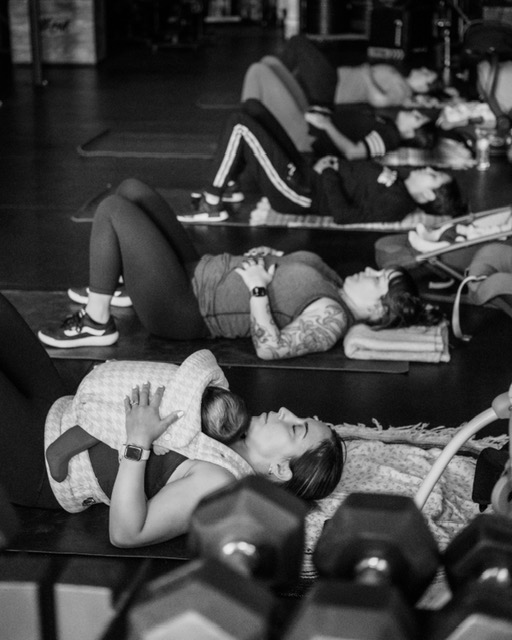
Nikki Adams’ coaching language repeatedly returns to the same themes: habits, behavior, nervous system regulation, agency, routines, and capacity. For her, a client’s first result may not be a number on a scale. It may be a changed relationship to the work itself — the shift from “I have to” into “I get to.”
That distinction matters because Cave Training’s program asks more than attendance. It asks clients to change the systems around the workout. Sleep, food, stress, preparation, confidence, breathing, and recovery all influence how a person can show up to a demanding strength and conditioning session. The work inside the gym is connected to the way the client lives outside it.
For prenatal and postpartum clients, that whole-person lens becomes even more important. Nikki Adams’ background in BirthFit, pelvic-floor-aware coaching, and holistic nutrition gives Cave Training a particular authority with women who need strength without being treated generically. The goal is not simply to return to exercise. It is to help the person feel capable, supported, and connected to the body again.
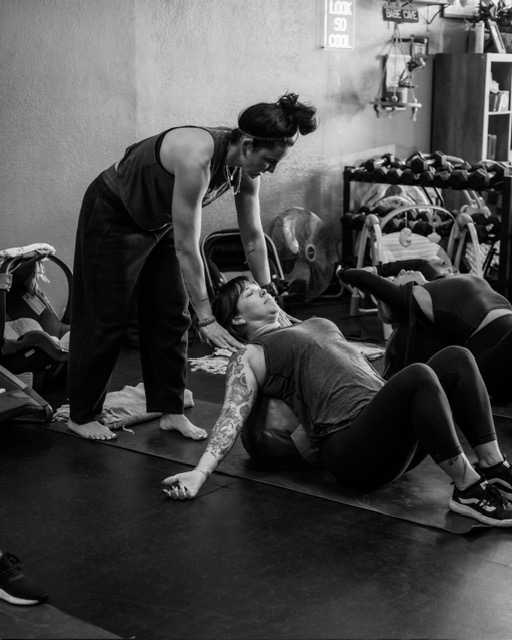
Cave Training’s workouts sit at the intersection of functional fitness and strength and conditioning. The official class mix includes General Physical Preparedness, SHRED, boxing, endurance work, yoga, and BabeFit. In the interview, Nikki Adams framed the underlying system in more precise coaching terms: training blocks, progressive overload, benchmarks, documented loads, accessory work, trunk stability, conditioning, and skill progression.
That means a Cave Training workout is expected to make sense. The patterns are intentionally repeated because the body learns through repeated exposure. A deadlift pattern is revisited. A squat pattern is revisited. A run pace can be measured. A load can be written down. A client can see that a number, a skill, or a level of confidence has changed.
The programming is also meant to transfer. Nikki Adams wants clients to hinge, squat, push, pull, carry, grip, stabilize, condition, and move with better awareness because real life demands those qualities. The training may happen inside 1,200 square feet, but the standard is larger than the room.
When asked what results clients begin to see, Nikki Adams did not begin with before-and-after language. She began with changed behavior. Clients start looking forward to training. They start building new habits. They start noticing that the same routine that once felt impossible now has a place in their week.
The physical markers follow. Strength increases. Endurance grows. Skills improve. A client who once moved at one load can see a higher load. A client who ran a mile at one pace can compare it to a later benchmark. That visible proof matters because it turns the training process from a feeling into evidence.
For young female athletes, the result may be confidence in the weight room that transfers to a field, mat, or court. For a postpartum client, the win may be feeling ready to move again, feeling stronger through recovery, or feeling supported during a vulnerable season. In each case, the result is not reduced to one metric. It is capacity, confidence, and connection becoming visible.
Cave Training’s local distinction is not built on being the largest or most polished facility. Nikki Adams is direct about that. The facility is a true micro gym, not a luxury club built around showers, towels, and high-volume traffic. The point is the coaching environment: positive, growth-oriented, structured, and intentionally relational.
That is also why staff standards matter. Nikki Adams described being selective about who joins the leadership culture because the room itself depends on the people holding it. Clients may be pregnant, newly postpartum, rebuilding confidence, training for sport, navigating stress, or simply trying to build a sustainable fitness life. The coach has to understand the human context.
Quality control, in that sense, is not only the workout written on the board. It is the way a new client is welcomed, the way a movement is modified, the way a load is selected, the way a mother is supported, the way a high school athlete is challenged, and the way the community reinforces the standard.
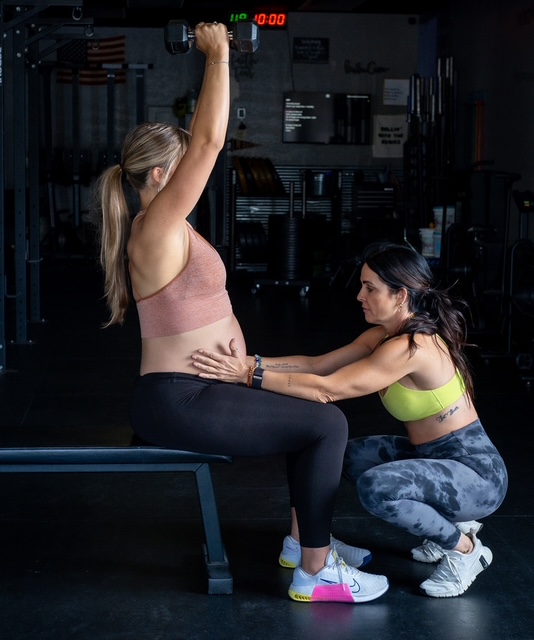
Cave Training stands apart because it has chosen depth over convenience. Nikki Adams explained that the gym has grown largely through word of mouth, relationships, community partnerships, and monthly free community workouts rather than a transactional model built around discounted traffic.
That decision clarifies the ideal client. Cave Training is for people who want to be coached. They want real training, not only access to equipment. They want a room where someone can help them understand what to do, how to move, how to adjust around an injury or life stage, and how to keep showing up with accountability.
The gym’s mission language captures that lane: community, purpose, fitness, wellness, accountability to self, and accountability to others. For a local fitness business, that is a serious position. It means Cave Training is not merely selling classes. It is protecting a culture.
Cave Training matters locally because it gives Santa Clarita a model of fitness that is both disciplined and human. The workouts are not soft. The standards are not vague. But the room is built around people who may be becoming stronger in very different seasons of life.
A high school athlete may need confidence and performance transfer. A mother may need movement that respects the prenatal or postpartum body. A busy adult may need structure and consistency. A client working through stress or low confidence may need the habit of showing up before the measurable strength number arrives.
For readers, the takeaway is straightforward. Cave Training is for people who want real coaching, real structure, and real community — and who are willing to build strength brick by brick.
- Cave Training is a strength and conditioning micro gym in Santa Clarita, California.
- Nikki Adams leads the business as founder, owner, and head coach.
- The training method emphasizes functional fitness, progressive overload, measurable benchmarks, trunk stability, conditioning, boxing, and sustainable movement.
- The gym has a distinct authority in prenatal and postpartum-informed training, while also serving women, high school athletes, and everyday strength clients.
- The recommended first step is to connect through the website, share goals and background, and come in for a first class on the house.
Cave Training’s authority comes from the alignment between its programming and its culture. The work is structured enough to measure. The coaching is personal enough to adapt. The community is close enough to matter. That combination is difficult to build because it cannot be manufactured by equipment alone.
For Nikki Adams, the Cave is not simply a place to train. It is a place where people learn to return to themselves through strength, community, accountability, and purpose. That is the standard that gives the business its local authority.
For a new client, Nikki Adams’ recommended first step is intentionally personal. Prospective members can visit the Cave Training website, share a profile or inquiry, and allow the team to understand their goals, training background, current needs, and life stage before pointing them toward the best entry point.
From there, Cave Training typically invites the person in for a first class on the house. The purpose is not pressure. It is fit. Nikki Adams wants the client to experience the coaching, the culture, and the training environment so they can feel whether the Cave is the right place for the work they want to do.
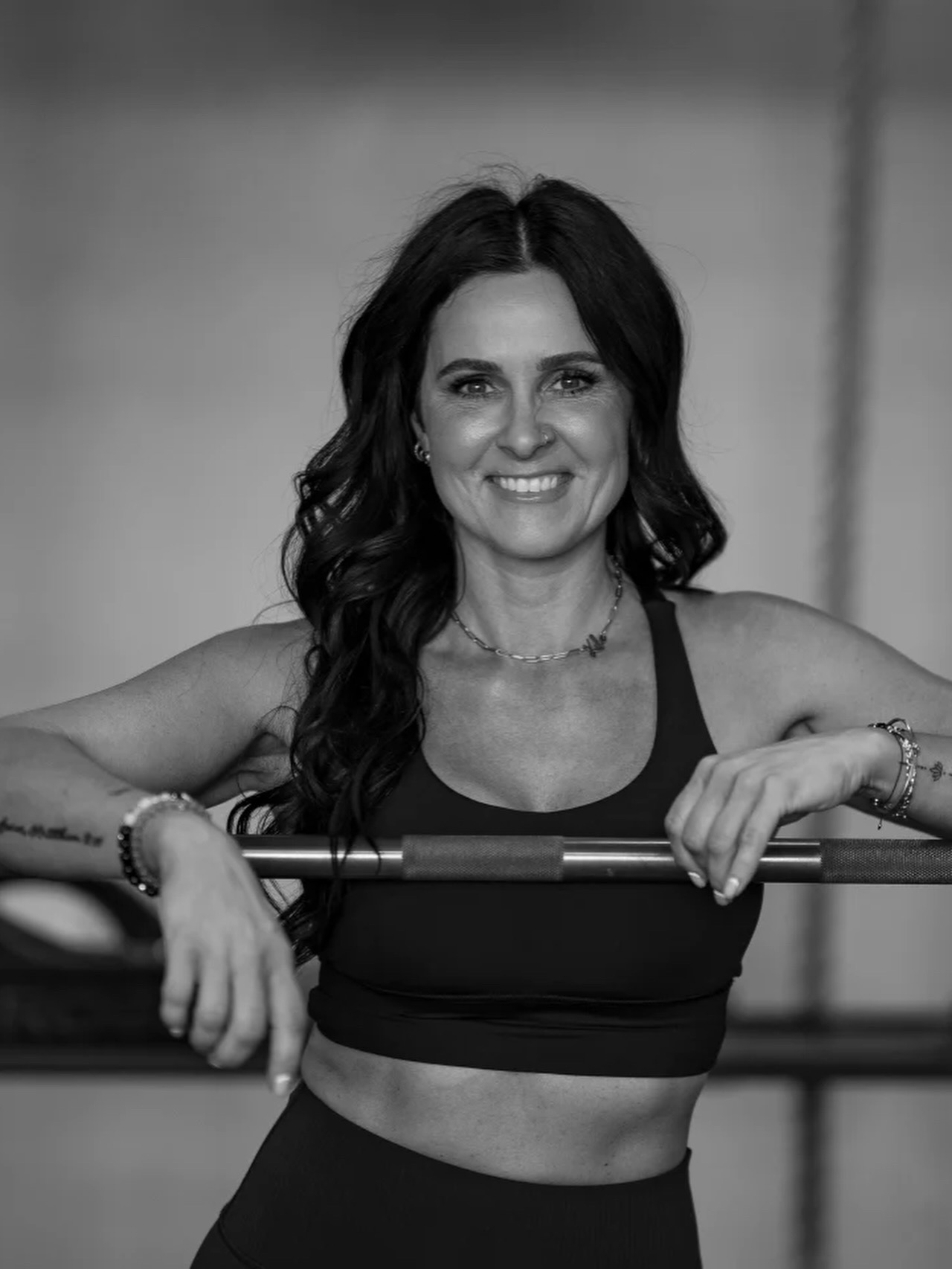
- Fitness Living Magazine™ source interview with Nikki Adams.
- Official Cave Training website: https://www.cavetrainingfit.com/
- Official Cave Training team page and class information.
- Business images and leadership image provided for editorial use.


Write A Comment