

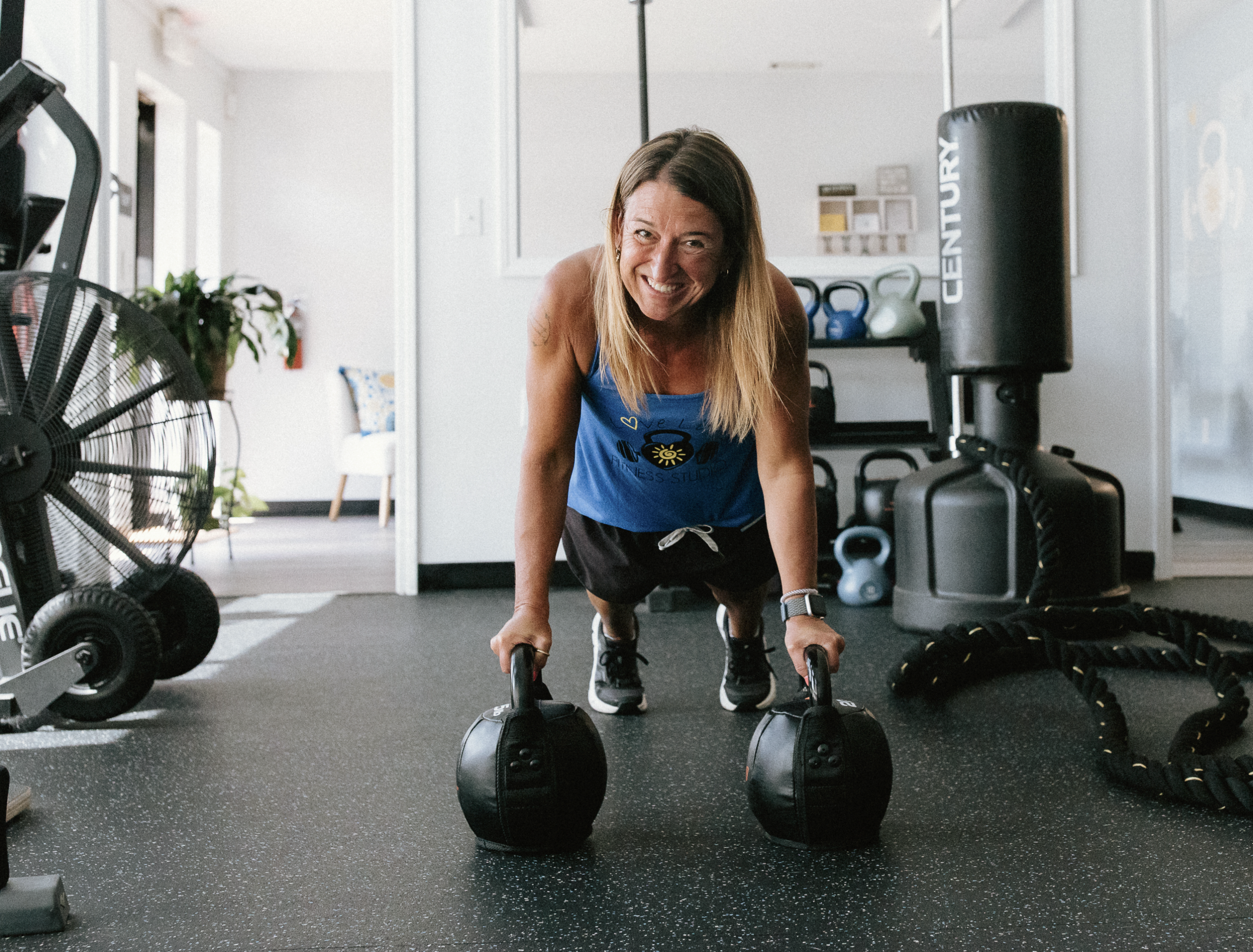
Kay Baker leads a Fort Mill women-only gym with a training model that becomes more serious the closer it is examined. She does not describe coaching as a matter of simply putting weights in front of people and asking them to keep up. Her approach begins with evaluation, respects the starting point of the client, and advances only when the movement quality supports the next step.
That distinction matters because Baker works with women across a wide range of experience, including women who have never lifted weights and women training toward demanding endurance goals. In her system, real progress is not reduced to a number on a scale. It can appear as stronger muscles, better body composition markers, looser clothes, improved confidence, better sleep, better mood, stronger friendships, and the real-life ability to get up from the floor with grandchildren without struggling.
Two strength days a week shift between core and glute emphasis, fuller-body work and an anterior or posterior focus, and a third day is given to cardio, with boxing elements, burpees and box-ups worked in. Sessions last 45 minutes, and Baker logs the reps and weights of newer clients in an Excel spreadsheet, so each increase in load is a measured step rather than a guess.
Love Life Fitness: Inside the Training Methods Driving Real Results
Location: Fort Mill, South Carolina
Founder / Interview Source: Kay Baker
Business Type: Women-only gym and fitness studio
Training Focus: Small-group training, personal training, strength and cardio programming, and form-first coaching
Primary Clients: Women from their 20s to their 70s, with many members in their 40s, 50s, and 60s
M&AView Contents
A structured guide to the training methods, coaching philosophy, progression system, client experience, and evidence examined in this Authority Spotlight.
Baker’s training structure is deliberately understandable. The gym is known for strength and cardio, with a weekly rhythm she described as two days of strength work and one day of cardio. The strength days are not treated as interchangeable. One session may be more core and glute heavy, another may shift toward fuller-body work, and Baker described organizing training around anterior and posterior emphasis.
The third day is typically cardio, and Baker’s background helps explain why. She described herself as an endurance athlete, with running as one of her long-standing training loves. She also noted that she is U.S. boxing certified, and boxing elements are part of what happens inside the gym. In practice, the model is not strength-only, and it is not cardio-only. It is a practical blend built for women who need strength, conditioning, core stability, and confidence in the same training environment.
What gives the system its discipline is the way Baker frames progression. She is direct about not throwing weights at clients, especially women who are new to the gym or returning to training later in life. A client lifting with compensation does not need ego-driven loading. She needs a correction, a manageable weight, and enough repetition to build the pattern correctly.

Baker’s philosophy is especially relevant to the women she described most often: women in midlife, women who have never trained, women who feel intimidated by gyms, women who want to feel stronger, and women navigating the physical seasons around perimenopause, menopause, and postmenopause. Her answer to that range is not a one-size-fits-all intensity culture. It is a coached system that starts slowly enough to be trusted.
In practical terms, that means watching the movement. If a client is using her body to force a lift that should be controlled, Baker described reducing the load rather than rewarding the struggle. That is not a softer standard. It is a stricter one. It treats the quality of the repetition as part of the result.
Core work receives particular emphasis. Baker connected core strength to injury prevention, back support, balance, and the functional demands that become more important as clients age. In her language, core work is not primarily about appearance. It is about the center of the body doing its job so the rest of the training can become safer, stronger, and more useful.
The program is organized around repeatable weekly exposure. Two strength days create the foundation. The third day brings conditioning into the week. Inside that structure, Baker adjusts emphasis: core and glute work, full-body training, anterior and posterior days, boxing elements, and cardio movements such as burpees and box-ups.
That matters because many clients do not need novelty as much as they need continuity. Baker’s model gives them enough variety to stay engaged, but enough structure to understand what they are building. Strength is not treated as random effort. Cardio is not treated as punishment. Both are placed inside a larger aim: create stronger, more capable women who can feel progress inside and outside the gym.
For newer members, Baker also described keeping track of weights and repetitions. That detail gives the method a practical accountability layer. A client may not remember what she used last month, but the record gives the coach a reference point. Progress can then be made by measured steps rather than guesswork.
The gym is not presented as a place where every member receives a completely separate private program every session. The strength of the model lies elsewhere. It comes from Baker’s ability to coach women with different needs in the same protected environment while still respecting where each person starts. One member may be training for a serious running goal. Another may be touching weights for the first time in her life.
Baker described women who start with very light weights and fatigue quickly, then later walk in and pick up 20-pound weights. The value of that progression is not simply the number on the dumbbell. It is what the progression means: the client learned how to stay, how to repeat, how to trust the room, and how to become stronger without being rushed out of her own starting point.
This is where accountability becomes part of the training system. Baker described texting members when they do not show up and being willing to hold them to the expectation of participating rather than quietly taking payment from absent members. In that sense, accountability is not merely emotional support. It is a coaching mechanism that protects consistency.
Baker’s results framework is notably broader than weight loss. She spoke about clients feeling stronger, feeling better in their bodies, sleeping better, improving mood, fitting into clothes differently, and experiencing what she calls non-scale victories. Those outcomes are difficult to fake because they show up in the way a person lives, not only in the way a person measures.
The gym also uses an InBody 570, which Baker described as breaking the body into segments for muscle and fat, while also showing measures such as visceral fat. In her interview, she emphasized that this can help clients see a more tangible picture when the scale does not tell the full story. For women who may be building muscle while watching the scale move in unexpected ways, that context can matter.
The more meaningful marker, however, may be functional. Baker described grandparents who want to get up and down from the floor with their grandchildren. When that becomes easier, the workout has moved beyond the gym. It has become real-world strength, and that is where the method earns its relevance.
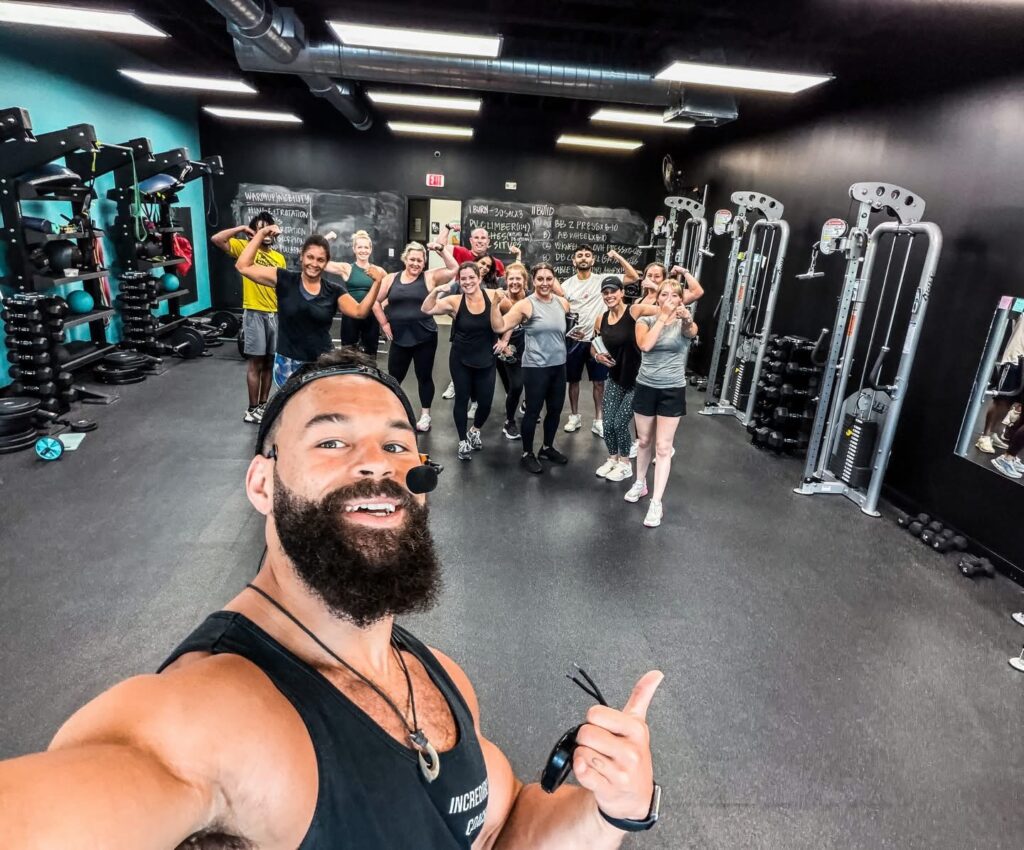
When Baker describes the room, the word that keeps returning is not intensity. It is belonging. She wants members to walk through the door and be themselves. That is not a decorative part of the business. For women who feel intimidated by fitness spaces, the ability to enter without having to perform confidence first can determine whether the training ever becomes consistent.
She described training women who have never worked out beside women preparing for high-level running goals. The point is not that every woman does the same thing at the same level. The point is that the room is organized around mutual respect. There are no egos. Everyone had a first day. Everyone starts somewhere.
That environment gives the programming room to work. A client who feels judged may quit before she learns the movement. A client who feels coached can return, ask questions, accept corrections, and experience enough training repetitions to change what her body can do.
Quality control is not limited to what happens during a set. It includes the way members are received, the way accountability is handled, and the way the training environment is protected. Baker described a women-owned, women-only model with women trainers and only women in the gym. For her audience, that distinction is part of the promise.
She also described being invested in members beyond the 45-minute workout. Nutrition conversations, texts, reminders, encouragement, and practical redirection all appear in her version of coaching. A member who feels pulled toward a second plate of food can text. A member who misses a workout can expect to be noticed. The relationship is not passive.
That kind of involvement can only work when it feels sincere. Baker’s own phrasing makes clear that she does not view the gym as a volume business. She describes it as changing lives, giving back, and being a cheerleader for women who may have spent years feeling uncomfortable in their own skin.

When Baker was asked what usually tips the decision in her favor, she pointed to several factors: her story, her age, the women-only environment, the women trainers, and the level of personal investment. Those are not surface differentiators. They shape who feels safe enough to enter and who feels understood enough to stay.
The business also occupies an important category for women who do not want a large, impersonal gym experience. Baker described her model as a niche for women who want a community that builds them up and sees them for who they are. The training may be strength and cardio, but the business model depends on the member feeling known.
That is not an argument against other gyms. Baker said plainly that her gym is not for everyone and that she promotes other gyms and trainers when she believes they may be a better fit. That confidence is one of the strongest signals of local credibility. A serious coach does not need to claim every client. A serious coach needs to know who she serves best.
The studio matters locally because it serves a common but often underserved fitness reality: women who know they need movement, strength, and consistency, but do not feel at home in a typical gym setting. Baker’s answer is not to make training less serious. Her answer is to make the environment more personal and the coaching more precise.
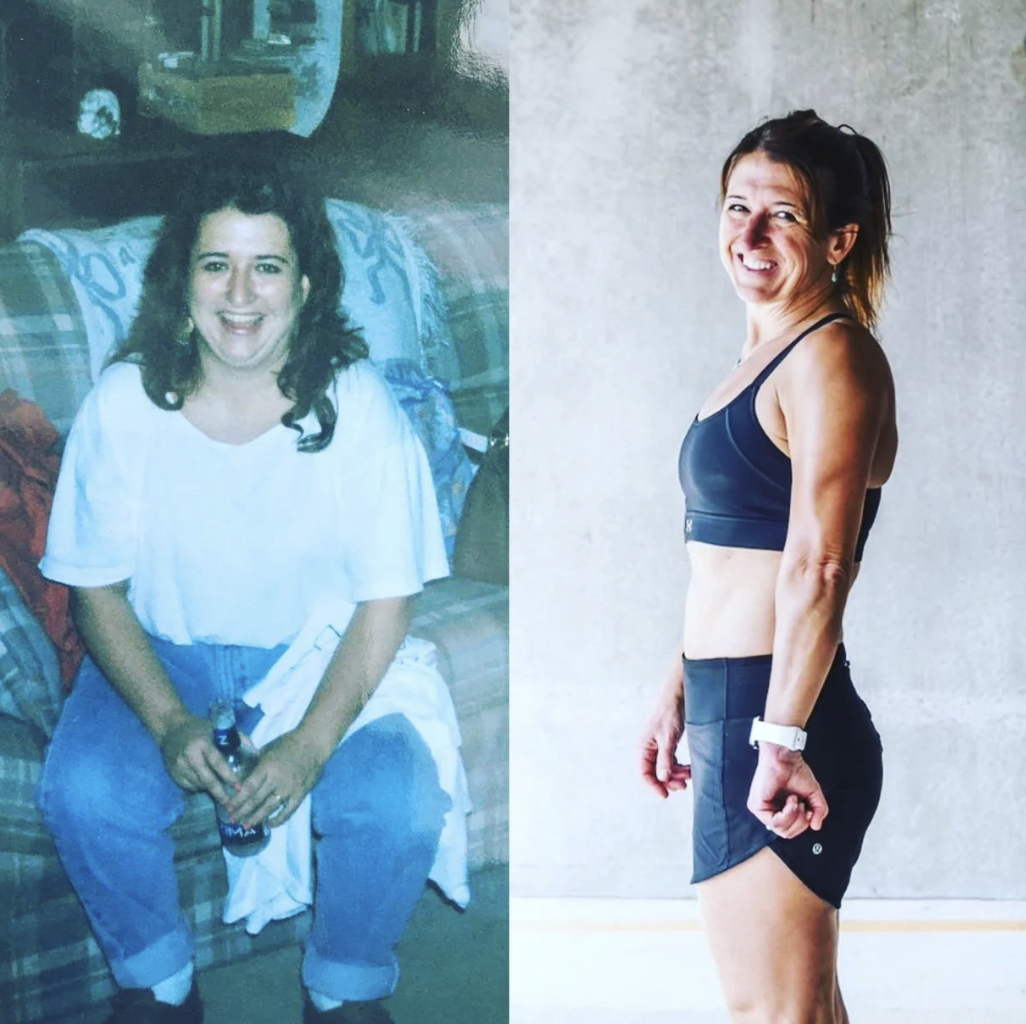
Her own history gives the work an additional layer of credibility. Baker spoke openly about losing herself after her father died, gaining significant weight, and later returning to movement, running, faith, and purpose. That experience does not replace professional expertise, but it deepens the way she sees the woman walking through the door on day one.
For readers, the practical takeaway is direct. This is a training business built for women who want a system with structure, but also a room where they do not have to apologize for their starting point. The character of the business is expressed in the small decisions: the evaluation, the weight selection, the correction, the text message, the spreadsheet, the InBody report, the friendship, and the member who keeps coming back.
- Love Life Fitness is a women-only gym and fitness studio in Fort Mill, South Carolina.
- Baker’s training model emphasizes two strength days and one cardio day, with core work, attention to form, gradual progressions, and conditioning.
- She described tracking reps and weights for new clients and using an InBody 570 to help review body composition markers.
- The women-only, women-trainer environment is central to the local position and member experience.
- The method’s strongest promise is consistency: members are coached to keep showing up, build strength, and recognize progress beyond the scale.
Real Results Require a Real Method
Baker’s method is not complicated for the sake of sounding advanced. It is built from the basics that often decide whether training works: assess the person, choose the right load, prioritize form, train strength consistently, include conditioning, build the core, track progress, and hold the member accountable when motivation fades.
That is why her work deserves attention beyond a local business listing. The Fort Mill gym represents a specific model for women’s training: serious enough to build strength, personal enough to reduce intimidation, and disciplined enough to define progress by what a woman can do, how she feels, and whether she keeps choosing the life that training makes possible.
For readers who connect with Kay Baker’s coaching philosophy and believe Love Life Fitness may be the right environment, the best first step is to connect directly with the studio and learn how its women-only training model supports strength, cardio, accountability, and long-term consistency.
Prospective members can ask about the current new-member starting option, review the training structure, and decide whether the studio’s form-first coaching, small-group accountability, and women-only environment are the right fit for their next season of training.
Explore The Studio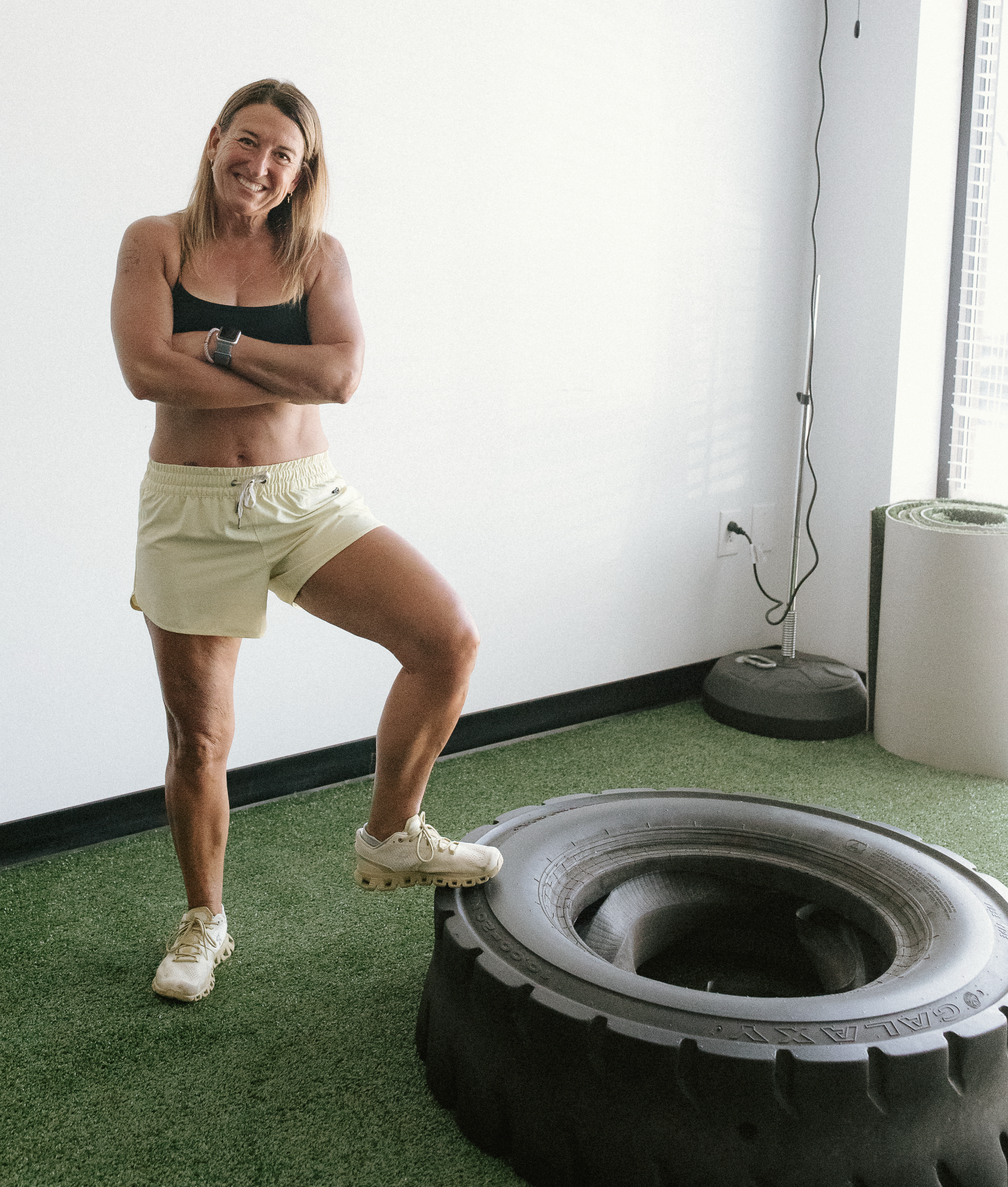
Kay Baker is the founder of Love Life Fitness. The training philosophy featured in this article reflects the model she described in her interview: strength and cardio programming, form-first coaching, gradual progression, core work, accountability, non-scale victories, and a protected women-only environment designed for members at different ages and fitness levels.
This feature is based on a recorded interview with Kay Baker, founder of Love Life Fitness, conducted May 8, and on business source material and photographs provided by the studio. The official Love Life Fitness website is also cited as a source. Details on training philosophy, workout structure, the women-only environment, member experience, accountability practices, InBody 570 use, and online training come from the interview transcript.
Statements about methods, member progress, and results are attributed to Baker’s account and kept to what the source material supports, rather than presented as guarantees. This article is editorial; it does not provide medical, rehabilitation, nutrition, or individualized training advice, and it does not guarantee individual outcomes. Readers should consult a qualified professional before beginning or changing a fitness program.
- Recorded interview with Kay Baker, founder of Love Life Fitness, May 8, covering training philosophy, workout structure, the women-only environment, member experience, accountability practices, and progress tracking.
- Business source material, photographs and logo artwork provided by Love Life Fitness.
- Love Life Fitness website: lovelifefitnessstudio.com, the studio’s official website.
- Book reference from the source material: Baker contributed the chapter “Put Your Faith Into Action” to Unveiling Legends: Dr. Andrena Phillips & The Legendary Collective.
Related training methods
Explore how other coaches combine training, support and consistency.