

This is a custom HTML / JavaScript Element
In order To See Your Custom HTML/JavaScript Code in Action You Must Click On The Preview Page Button, Your Code is NOT going to be active in the edit mode
Myrtle Beach Strength Gym Built for Strength and Confidence
Locations: Myrtle Beach and Conway, South Carolina
Founder / Training Lead: Mike Tilberry
Business Type: Strength and conditioning gym, group fitness community, personal training provider, and family-friendly fitness environment
Training Focus: Strength training, conditioning, group fitness, personal training, kids fitness, wellness coaching, habit change, consistency, accountability, and community-centered coaching.
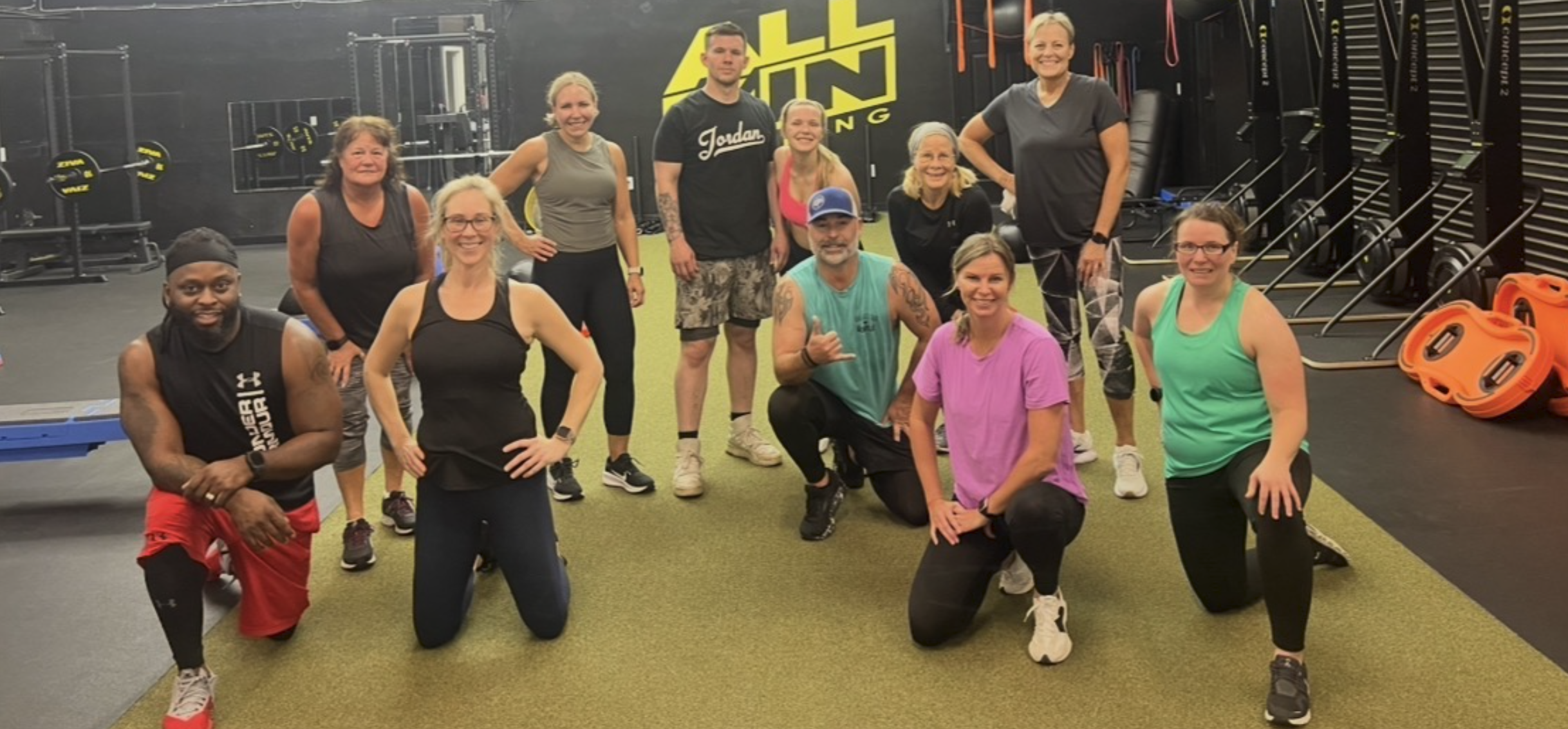
Mike Tilberry’s authority as a fitness professional comes from more than a certification or a polished gym floor. It comes from lived experience. He described growing up as the overweight kid, getting picked on, finding football, discovering the weight room, and realizing that strength was not only physical. It gave him a sense of accomplishment, belonging, and identity.
That early connection to strength explains much of what All In Training has become. This is not a gym built only around sweat. It is a training community built around the feeling of being part of something bigger, the way a team can make effort feel meaningful, and the way consistent coaching can turn a workout into a larger personal standard.
- Why All In Training has shifted toward a strength-first model while still preserving conditioning and endurance.
- How the gym uses group training and personal training to support different member needs.
- Why the first 60 to 90 days are treated as a habit-building window, not simply a before-and-after period.
- How coach flexibility allows workouts to stay aligned while still adapting to the group in front of the coach.
- Why member care, family, community, and being “seen, heard, and loved” are central to Tilberry’s operating standard.
Tilberry’s training philosophy has evolved over time. Earlier in his coaching career, he associated fitness progress more heavily with cardio and weight loss. Today, his view is broader and more durable. At All In Training, strength and resistance training sit at the center of the model, with conditioning used as part of a complete training experience rather than the entire identity of the workout.
The distinction matters. A workout can exhaust people and still fail to build long-term capacity. Tilberry’s model is more interested in helping members become stronger, more consistent, more confident, and more capable in daily life. That is why the gym’s authority is not tied to one narrow result. It is tied to a system that can support different goals inside the same environment.
For one member, success may mean increasing the dumbbells used in a shoulder press. For another, it may mean keeping a consistent schedule for the first time in years. For someone else, it may mean feeling better at home, having more energy for family, or building the confidence that comes from doing hard things consistently.
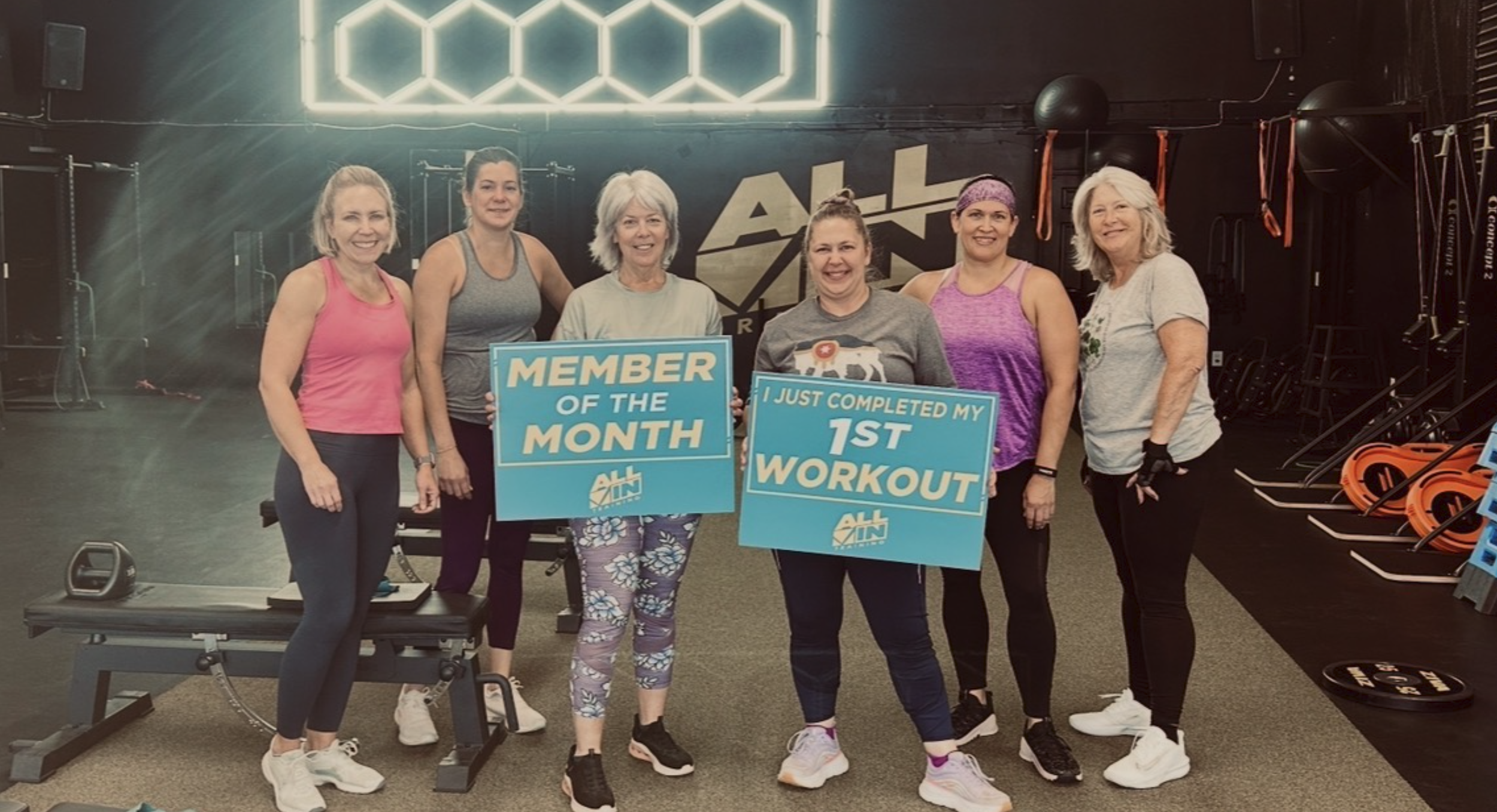
In Tilberry’s current approach, strength is not treated as something reserved for advanced athletes or experienced lifters. It is treated as a foundation. Members still condition. They still move. They still work hard. But the emphasis has shifted toward building a body that can become stronger, more durable, and more capable over time.
That shift has had a practical effect inside the gym. Tilberry described members becoming more engaged and more consistent as the training leaned more toward strength. The reason is straightforward: strength gives people something they can feel, measure, and carry into daily life. A heavier dumbbell, a better movement pattern, a more confident session, or the ability to keep showing up can become evidence that the work is working.
All In Training’s authority comes from that balance. It does not abandon conditioning, but it refuses to make fatigue the only metric. The goal is not merely to make people tired. The goal is to help them become more capable.
All In Training’s workouts are built around a 45-minute training window. That structure matters because it forces the session to have intent. The gym is not asking members to wander through a room of equipment without direction. The session has a focus, the coach has a plan, and the group works inside a shared rhythm.
Tilberry also gives coaches enough freedom to adjust the session. If the day’s focus is upper-body strength, the morning version and evening version may not be identical. The principle remains the same, but the coach can shape the session to the people in front of them. That flexibility is not a lack of structure. It is a sign that coaching is active, not mechanical.
This is where the model separates itself from a generic class template. The workout is standardized enough to create consistency, but human enough to remain responsive. Members are not simply following a screen. They are being coached.
Tilberry’s view of the first 60 to 90 days is especially revealing. He does not describe that early period as a dramatic transformation window or a marketing promise. He describes it as a habit-building period. The first objective is to help members change the behaviors that make long-term progress possible.
That may mean committing to a certain number of workouts per week. It may mean improving nutrition in a simple, realistic way. It may mean building a rhythm that fits around family and work. It may mean giving oneself grace after a difficult week instead of quitting because life became imperfect.
This makes the All In Training model more mature than a quick-fix program. The gym is not trying to make every member chase the same goal. It is trying to help each member build the habits that support the reason they came in.
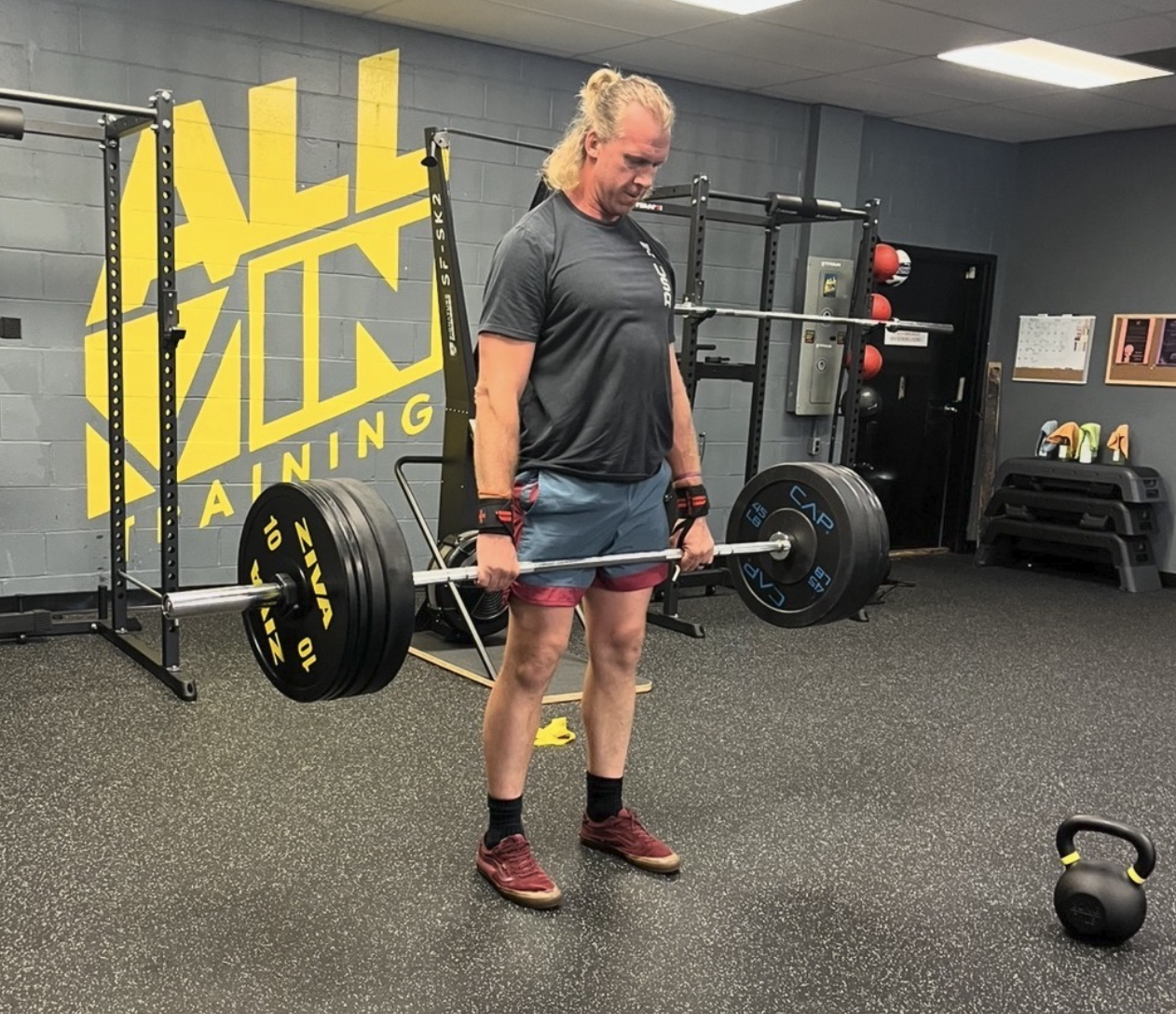
Tilberry’s understanding of results has changed with experience. Earlier in his career, he might have identified a major weight-loss number as the clearest win. Today, he still respects those outcomes when they matter to the member, but he speaks with equal conviction about quality-of-life changes.
A member having more energy for family, feeling more capable in ordinary movement, or gaining the confidence to keep going can be just as meaningful as a number on a scale. That does not make the work less serious. It makes the standard more human.
The best fitness environments understand that most people are not training for a stage, a scoreboard, or a photo shoot. They are training to live better. All In Training’s authority comes from serving that reality with structure and care.
All In Training serves roughly 120 members across two locations, according to Tilberry’s interview, and the business intentionally keeps sessions smaller. That detail matters because it speaks to the experience the gym is trying to protect. Smaller training environments allow coaches to notice people, remember details, and build relationships that are difficult to maintain in a purely high-volume model.
The facilities themselves reflect a strength-and-conditioning environment: rubber flooring, athletic flooring, turf, squat racks, dumbbells, kettlebells, battle ropes, sleds, loud music, and enough variety to keep the experience engaging. The business offers group training and personal training, giving members different ways to access coaching depending on their needs.
The culture is also explicitly family-minded. Tilberry speaks about family often, not as a branding device, but as the reason many people train in the first place. The work inside the gym is connected to the life outside of it.
All In Training stands apart because it does not present fitness as a transaction. Tilberry repeatedly returns to experience, not sales. He wants the business to feel real, human, and personal. The gym’s growth is not meant to dilute the identity of the community. It is meant to support it.
That standard was shaped by his earlier career. Before opening All In Training, Tilberry helped grow a local group fitness gym into a national brand and eventually served in an operations role. That experience gave him a clear understanding of scale, systems, and growth, but it also clarified what he values most: being with his people, coaching, and protecting the experience that made fitness meaningful to him in the first place.
His long-term vision reflects that restraint. Rather than chasing expansion for its own sake, he described a desire to deepen the two existing locations, create full-time opportunities for fitness professionals, add services that make sense for members, and preserve the member-centered identity of the business.
- All In Training is a Myrtle Beach and Conway fitness business led by Mike Tilberry.
- The training model emphasizes strength and conditioning, group fitness, personal training, habit change, and member accountability.
- Tilberry’s philosophy has shifted toward strength-first training while still preserving conditioning, endurance, and energy inside the workouts.
- The gym’s culture is intentionally personal, family-minded, and community-centered, with a strong emphasis on members feeling seen and cared for.
- The core promise is not generic fitness. It is helping people build strength, consistency, confidence, and habits that support the life they are training to live.
All In Training is not merely a place where people complete workouts. It is a strength-and-conditioning community built around the idea that fitness should help people become more capable, more consistent, and more connected to the life they want to live.
For readers looking for a serious but welcoming local fitness environment, the message is clear. The workouts have structure. The coaches have standards. The culture is personal. And the goal is not simply to train harder, but to build strength and habits that last beyond the session.
For readers who feel connected to All In Training’s method, the first step is not to evaluate the gym from a distance. It is to experience the coaching standard, the energy of the room, the structure of the workout, and the way the community supports people who are trying to build better habits.
The official All In Training website currently directs new visitors to begin with a 7-day free trial. From there, prospective members can choose a first session, arrive ready to train, and get a closer look at whether the gym’s strength-first, community-centered environment is the right fit for their next season of training.
Visit All In Training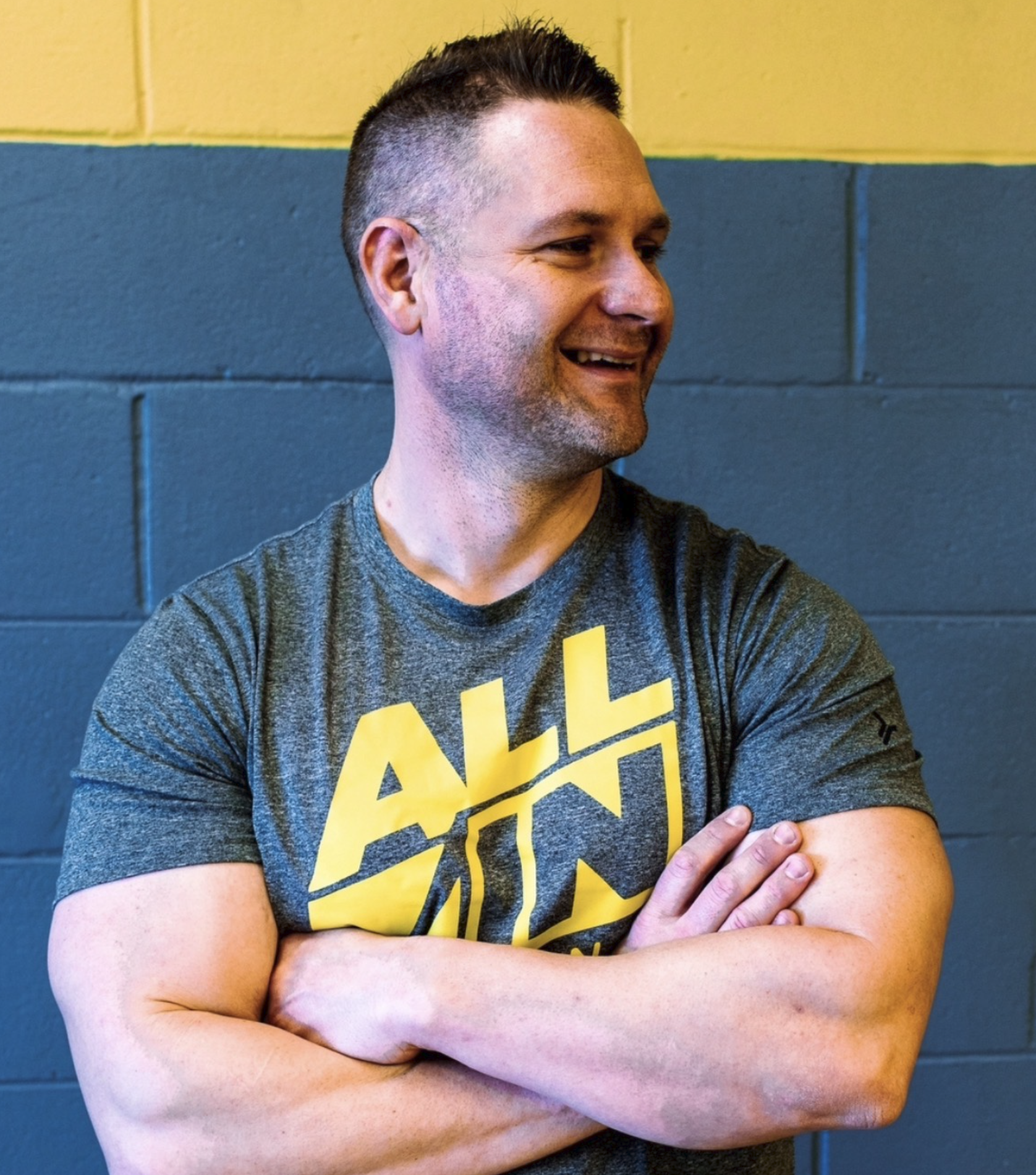
Mike Tilberry is the founder and training lead behind All In Training in Myrtle Beach and Conway, South Carolina. His training philosophy reflects a model built from personal experience, group fitness leadership, strength and conditioning, member care, family-centered values, and the belief that people are more likely to stay consistent when they feel supported by a real community.
This Muscle & Authority Magazine™ feature was editorially prepared from a recorded Fitness Living Magazine™ interview with Mike Tilberry, official All In Training source material, the official All In Training website, and provided visual assets. The article focuses on training philosophy, coaching standards, member experience, program structure, and local authority.
Training descriptions, coaching philosophy, member-experience details, program references, and first-step recommendations reflect the interview, the business-provided context, and public-facing website information reviewed for editorial clarity. This article is editorial in nature and does not provide medical, rehabilitation, nutrition, or individualized training advice. No medical claims, guaranteed outcomes, fabricated credentials, fake testimonials, or unsupported transformation promises are made.


Write A Comment