


Also Operates As: True to You Fitness
Location: 7900 Balboa Boulevard, Van Nuys, California, with an additional location in Arizona
Owner / Training Philosophy Source: Ditanyon Demps
Operating Since: 2009, and nine years at the current Van Nuys facility
Business Type: Bootcamp-style group training gym with barbell programming, hybrid race preparation, and one-on-one coaching support
Training Focus: Station-based interval conditioning, foundational and barbell strength, hybrid endurance preparation, heart rate zone training, nutrition coaching, structured orientation, and coach-led follow-up.
M&AView Contents
A structured guide to the training methods, coaching standards, progression system, client experience, and evidence examined in this Authority Spotlight.
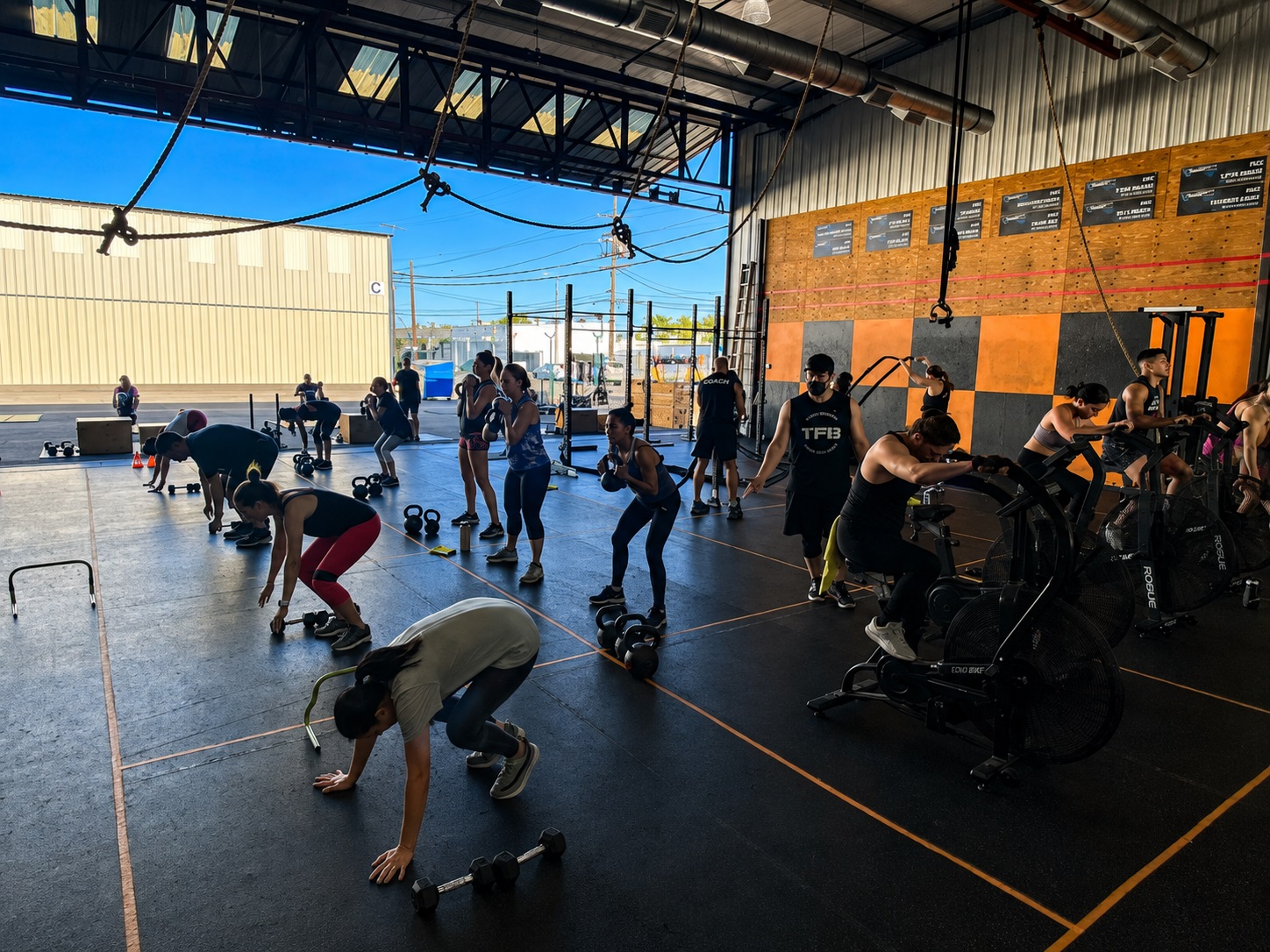
Ditanyon Demps coaches out of an airplane hangar. The address is 7900 Balboa Boulevard in Van Nuys, California, the bay is at Delta One, and the program has occupied that space for nine years, though the business itself opened in 2009. The setting is memorable, and it is also beside the point. What matters editorially is that the training happening inside that hangar follows an order Demps can articulate precisely, and that the order has not changed in more than fifteen years of operation.
The credentials behind that order are worth naming, because each one maps to a specific part of the model. Demps earned his first certification through ISSA. He later certified in brain-based psychology, and then in nutrition for health and wellness and weight loss management. Three certifications, three pillars, and a coaching structure that addresses them in that sequence. He is direct about why: he watched his father, a diabetic, understand exactly what he should not eat and eat it anyway. That gap between knowledge and behavior became the problem Demps set out to solve professionally.
- How the three program tiers at TruFit Bootcamp move a member from dumbbell fundamentals to barbell power to hybrid race preparation.
- Why Demps refuses to let a training block start before the nutrition conversation has happened.
- What the orientation workout is actually designed to reveal, and why it happens before a new member enters a class.
- How heart rate targeting through MyZone gives each session a number instead of a mood.
- Why Demps treats a member’s change in self-belief as the outcome most likely to survive after they stop training with him.
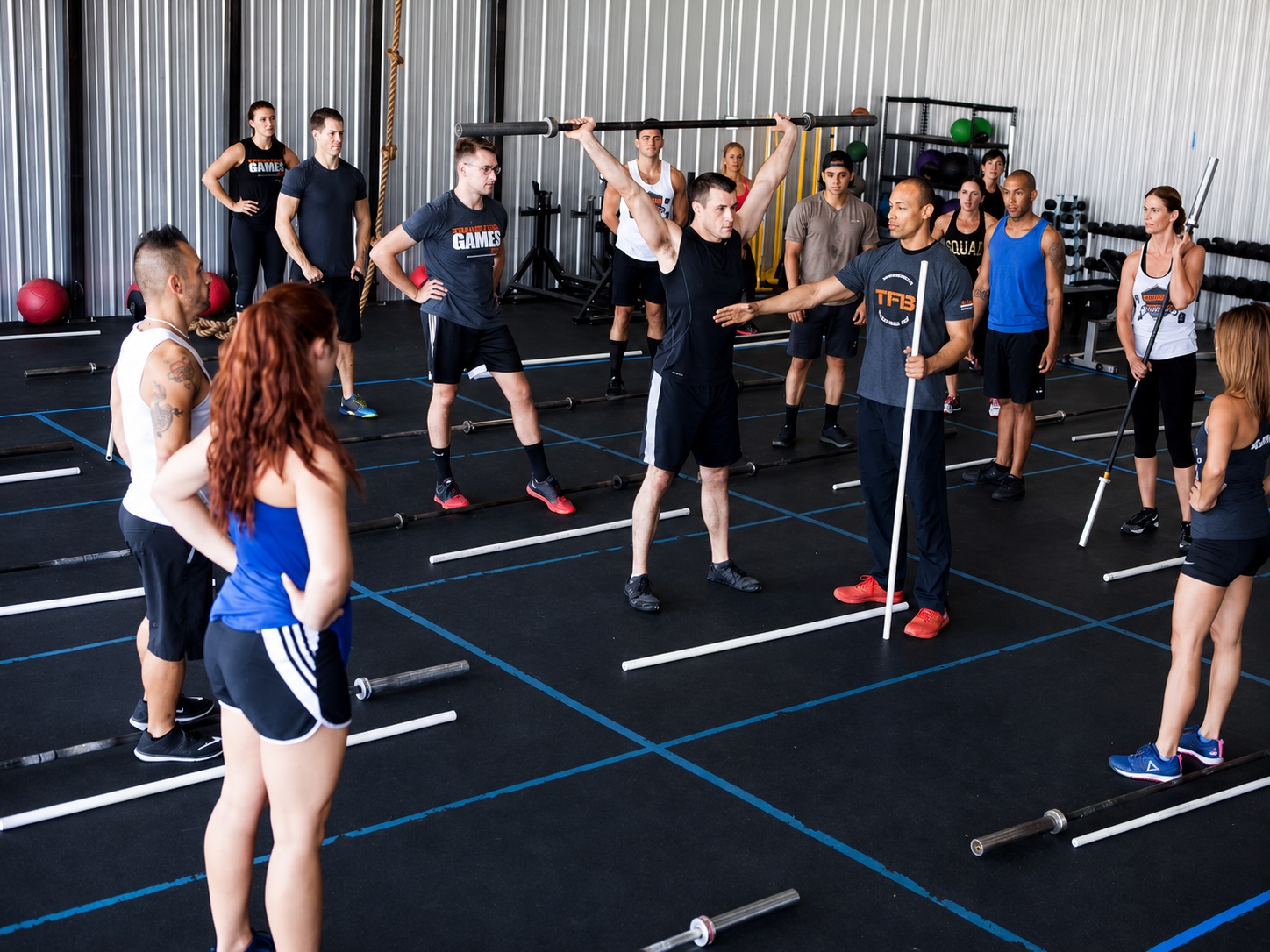
The entry tier is called Burn and Build. It is written for the person who has not trained in years, or who has never trained at all. The format is station-based interval work, typically one minute of effort followed by fifteen seconds of transition, rotating through six exercises across roughly forty-five minutes. Underneath the conditioning, the tier is teaching movement vocabulary. Squat, bench press, deadlift, taught with dumbbells first, so that load is introduced only after the pattern is stable.
The second tier is Power and Performance, and this is where the barbell enters. Demps described explosive work including cleans and jerks, delivered inside high-intensity conditioning rather than as isolated strength sessions. The tier exists for members who want to lift heavier and move faster, and it functions as the natural destination for anyone who has stopped finding the dumbbell format difficult.
The third tier is hybrid. It was added as members began entering hybrid fitness competitions and endurance races, formats such as HYROX and DEKA, along with marathons, half marathons, and ten kilometer events. Demps described the hybrid class as high-endurance and all-inclusive, built to prepare members for those start lines while remaining useful to anyone chasing general fitness and performance. Three tiers, one roof, and no requirement that a member leave the gym in order to progress.
Ask Demps what produces the best results and he does not begin with a workout. He begins with the statement that a member cannot outwork a bad diet. In his framing, nutrition is the foundation, and every training decision made on top of an unmanaged diet is a decision that will not hold. If a member does not understand their calories and their macronutrients, the quality of their programming becomes largely irrelevant.
He has watched the alternative play out often enough to describe it precisely. A member joins, changes nothing outside the building, and then attempts to solve the shortfall with volume. Two classes in a day. A run afterward. More effort applied to a variable that was never the constraint. Demps called it trying to wrestle the problem to the ground, and the outcome he reported is predictable: the work goes in and the change does not come out.
The correction is sequential. Nutrition first, mind second, body third. That is the order Demps described as the greatest denominator for success, and it is notable that the body sits last. He is not saying the training does not matter. He is saying the training is the part that finally works once the two preceding conditions have been met.
Nobody walks into a TruFit Bootcamp class cold. The entry point is an orientation session, and it does more work than the name suggests. Paperwork is handled, the facility is toured, and then the conversation turns to what the person is trying to accomplish, what brought them in, and, critically, what has already failed them. Demps and his staff then take the new member through a workout, which serves a diagnostic function. It shows the coaching team the faults they will need to address before that person enters a group setting.
Orientation is also deliberately social. Sessions typically run with three to five people, which means a nervous newcomer meets other nervous newcomers before meeting the room. Demps described that as one of the most effective anxiety reducers available, because hearing another person voice the same hesitation removes the sense of being uniquely unprepared.
What follows is two weeks of unlimited access. That window is not a promotional gesture in Demps’ description. It is a search process. The member samples formats until they identify which program actually fits them, and the gym gets two weeks of observation before anyone commits to a lane. For someone who is intimidated, staff will pair them with an experienced member, and outreach arrives after the first class and again after the first week from a coach or from the client liaison team.
Many of the classes are run with heart rate monitors, tracked through MyZone. Demps described the purpose plainly: each member should be hitting a specific target each day, determined by what that member is training toward. The instruction is not to work hard. The instruction is a zone, and the zone differs between the person building a base and the person sharpening for a race.
This solves a problem that group training rarely admits to having. In a room of twenty people running the same circuit, effort is invisible. Two members can complete an identical session and receive entirely different stimulus, and without measurement, neither the coach nor the member knows which one actually trained. A zone target converts a shared workout into an individual one without requiring an individual program.
It also supports the progression principle Demps described as the requirement for getting strong. The body has to be stressed, stimulated, and advanced week over week and month over month, and the same session repeated indefinitely stops qualifying. Measurement is what makes that progression auditable rather than assumed.

Demps was specific about what he has observed among members who follow the program consistently. He described most people losing somewhere in the range of five to ten pounds within a first month, and, during the gym’s structured challenge periods, reductions of roughly twenty to twenty-five pounds for women and around thirty pounds for men across an eight week to ninety day span. He tied those figures to a clear condition: training three to five days per week and following the nutrition guidance the coach provides.
Those numbers are reported here as the owner’s account of what he has seen inside his own program. They are not a guarantee, a projection, or a promise made to any reader, and individual outcomes vary with health status, adherence, and circumstance.
More telling is which results Demps counts as the proudest, because they are not the ones on the scale. He described a member who joined a functional fitness competition largely because friends pressured her into it, performed far beyond what she expected of herself, and used that single data point to revise her estimate of her own capacity. She now leads inside the gym. Demps’ summary of why that case matters was direct: wherever the mind goes, the body will follow.
There is a quiet honesty in how Demps evaluates his own results. He acknowledged that he has, in his words, wrestled people to the ground into fitness, driving physical change through sheer coaching pressure while the person’s underlying beliefs stayed exactly where they started. He also acknowledged what happened next. When the pressure lifted, the weight returned.
That is an uncommon admission from a gym owner, and it functions as the logic behind the whole model. If the coaching only produces change that requires the coach to be present, then the coaching has produced a dependency rather than a capability. The standard Demps set for himself is different: change the person’s belief about what they can do, and the training decisions after they leave him become theirs.
The origin of that conviction is easy to trace. As a college student, Demps wrote a nutrition and training program for an overweight roommate to follow over a summer. The roommate returned having lost more than forty pounds, and, in Demps’ account, having become an entirely different person in bearing and confidence. He has spent the years since attempting to reproduce that second part.
Demps named three factors when asked why a prospective member chooses his gym, and they arrive in a revealing order. Community first, coaching second, programming third. The community argument is not sentimental in his telling. It is that a new member will see someone in the room who looks like them doing something they assumed they could not do, and that visual evidence outperforms encouragement.
The coaching argument is technical. Demps described close attention to points of performance, technique, and mobility, combined with continuous outreach that extends past training and into whether a member’s life outside the gym is going well enough to sustain the work. The programming argument is the one this feature has already documented: three tiers, one membership, no ceiling that forces a member to leave in order to keep improving.
He is also clear-eyed about what this means competitively. Many programs are excellent at one thing. TruFit Bootcamp is deliberately structured to be capable across several, and Demps described that breadth as the point rather than a compromise. He extends the same reasoning to how members should think about the process itself. He compared coaching to medicine, where the first prescription is rarely the final one, and the adjustment only happens if the patient reports back. Progress at his gym is framed as a two-way exchange that requires time and communication, not a solution handed over at the door.
- TruFit Bootcamp operates from a hangar facility at 7900 Balboa Boulevard in Van Nuys, California, under owner Ditanyon Demps, with the business established in 2009.
- The program runs three tiers: Burn and Build for foundational interval training, Power and Performance for barbell work and explosive lifting, and a hybrid tier for endurance and race formats.
- Nutrition is treated as the first variable, mindset as the second, and physical training as the third, an order Demps ties directly to his ISSA, brain-based psychology, and nutrition credentials.
- Entry runs through a structured orientation that includes a diagnostic workout, followed by two weeks of unlimited access used to identify the right program fit.
- The outcome Demps values most is the change in what a member believes they are capable of, because that is the result most likely to persist without him.
The strongest evidence in Demps’ favor is not any single number he reported. It is the shape of the business itself. A gym that keeps adding levels is a gym whose members kept getting better, because a program only needs a higher tier when people have exhausted the one below it. Sixteen years of construction have produced a ladder rather than a room.
For a reader in the San Fernando Valley weighing where to train, the relevant question is not whether the first class will be hard enough. It is whether the fifth year will be. At TruFit Bootcamp the answer is structural, written into the schedule, and available under one roof on Balboa Boulevard.
Demps does not push a stranger straight into a class. His recommended entry is smaller than that. Visit the website, read what current members have said there, and then call the gym so a coach can walk you through the space, explain how the three tiers differ, and hear what you are actually trying to change.
For readers who already know they are ready, the two-week trial can be purchased directly through the website, and that purchase schedules the orientation session where the paperwork, the tour, the goal conversation, and the first coached workout take place. A free drop-in is also available for anyone who would rather see a class before deciding anything.
Explore TruFit Bootcamp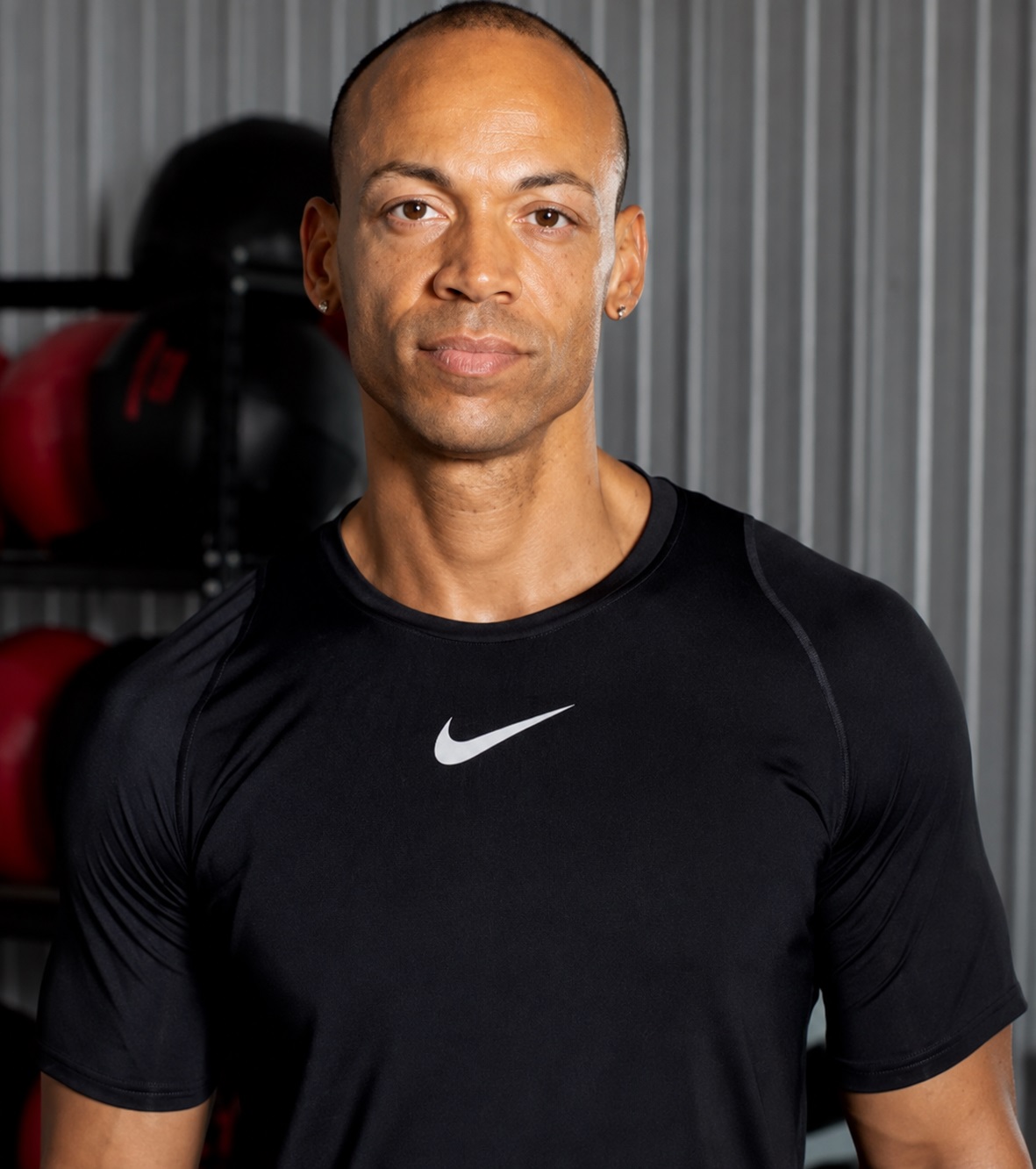
Demps is the interview source and the training authority behind everything documented in this feature. He entered fitness as a teenager using the weight room as an outlet, certified through ISSA during college, and added credentials in brain-based psychology and in nutrition for health and wellness and weight loss management as he came to view behavior and eating as prerequisites to programming. He opened TruFit Bootcamp in 2009 after a client suggested the service he was providing inside other gyms deserved its own address, and he has spent the years since expanding the program upward each time his members reached its ceiling.
Reporting for this feature rests on a recorded editorial interview with Ditanyon Demps, business-provided context for TruFit Bootcamp, the official TruFit Bootcamp website, and image and logo assets supplied for publication. Editorial review concentrated on the three-tier program structure, the station-interval and barbell formats, heart rate zone application, the orientation and two-week access sequence, the nutrition-led coaching order, and the gym’s position within the San Fernando Valley.
Member counts, timelines, and weight-change ranges appear as Demps reported them and are attributed to his account throughout. This is editorial coverage, not medical, rehabilitation, nutrition, or individualized training advice. No medical claims, guaranteed outcomes, fabricated credentials, unsupported testimonials, or unsupported transformation promises are made.