


Four Clients, Four Programs, One Room: Inside Capra Bodyweight Training’s Calisthenics Standard
Studios: Denver, Colorado and New York City
Additional Coaching Markets: Chicago, Philadelphia, and Norfolk, Virginia, with Boston in development
Founder / Training Philosophy Source: Alex Ceban
Business Type: Calisthenics training studios and bodyweight coaching business offering small group personal training and one-on-one sessions by appointment
Training Focus: Bodyweight-only strength, handstand balancing, pull-up bar skills including muscle-ups, front lever, back lever and human flag, pistol squats, mobility, body awareness, injury avoidance, and individual programming inside four-client groups.
M&AView Contents
A structured guide to the training methods, coaching standards, progression system, client experience, and evidence examined in this Authority Spotlight.
Alex Ceban did not arrive at his method through a certification pathway. He arrived through a decade on the floor as a personal trainer, a promotion into fitness management, and the moment he realized the job had begun measuring him in monthly targets rather than client outcomes. He left. He looked for a team whose priorities matched his own, could not find one, and started working for himself instead. Around the same time, calisthenics found him.
What began as a personal discovery is now the entire premise of a business operating across several markets. Capra Bodyweight Training runs studios in Denver and New York City, places coaches in Chicago, Philadelphia, and Norfolk, and works from a single technical position: the training instrument is the client. There are no dumbbells on the floor. No kettlebells, no barbells, no machines, and no mirrors on the walls. Ceban is careful to say that none of those tools are wrong. He used them for years and still respects what they do. He simply built a business that specializes in one thing, and the specialization is why clients search for it.
- Why Capra Bodyweight Training removed external weights entirely, and what that constraint forces a coach to do.
- How four clients can train four different programs in the same room, in the same hour, under one coach.
- What Ceban’s coaches look for before advancing a client toward a muscle-up, a front lever, or a handstand push-up.
- Why the opening weeks are treated as conditioning and mobility preparation rather than a progress window.
- How the free consultation hour becomes a drafted program before the client’s first paid session.
Calisthenics is a plain word for a demanding idea. Every exercise is loaded by the client’s own body. Progression does not come from adding a plate. It comes from changing leverage, extending range, reducing points of contact, and holding positions the body has not yet learned to organize. A pistol squat is a squat with the margin removed. A front lever is a plank the floor no longer helps you hold.
Ceban makes three arguments for the modality, and he makes them in a specific order. The first is safety. He is direct that injuries occur in calisthenics as they do anywhere else, but he considers their severity difficult to compare to what he has seen in heavy external loading. The second is enjoyment, which he treats as a technical variable rather than a marketing note. A client who is entertained keeps showing up, and a client who keeps showing up accumulates the training years that produce the result. The third is capability. He spent two years training bodyweight only, entered a physique show at the end of it, and placed first in the tall division. He offers it not as a credential but as evidence that the modality does not require an apology.
The constraint also does something to the coaching. Without external load, there is no dial to quietly turn down when a client is not ready. The coach has to regress the position, change the lever, or wait. That is a harder conversation than lowering a weight, and it is the conversation Capra’s method is organized around.
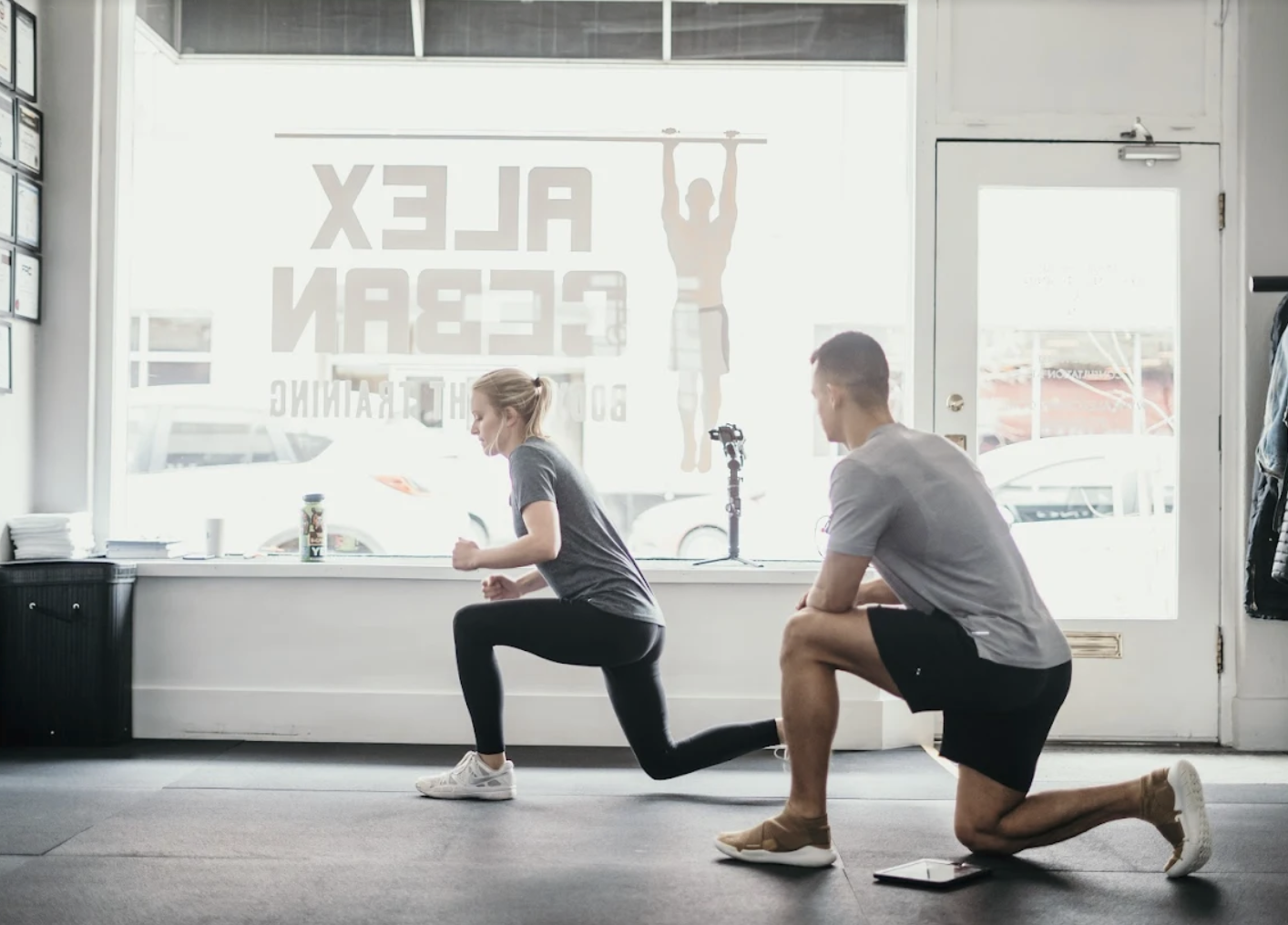
The most distinctive operating decision at Capra is also the least visible from the outside. The business runs small group personal training, but the word group describes the room, not the workout. Four clients is the ceiling. Each of those four is following a program written for them alone.
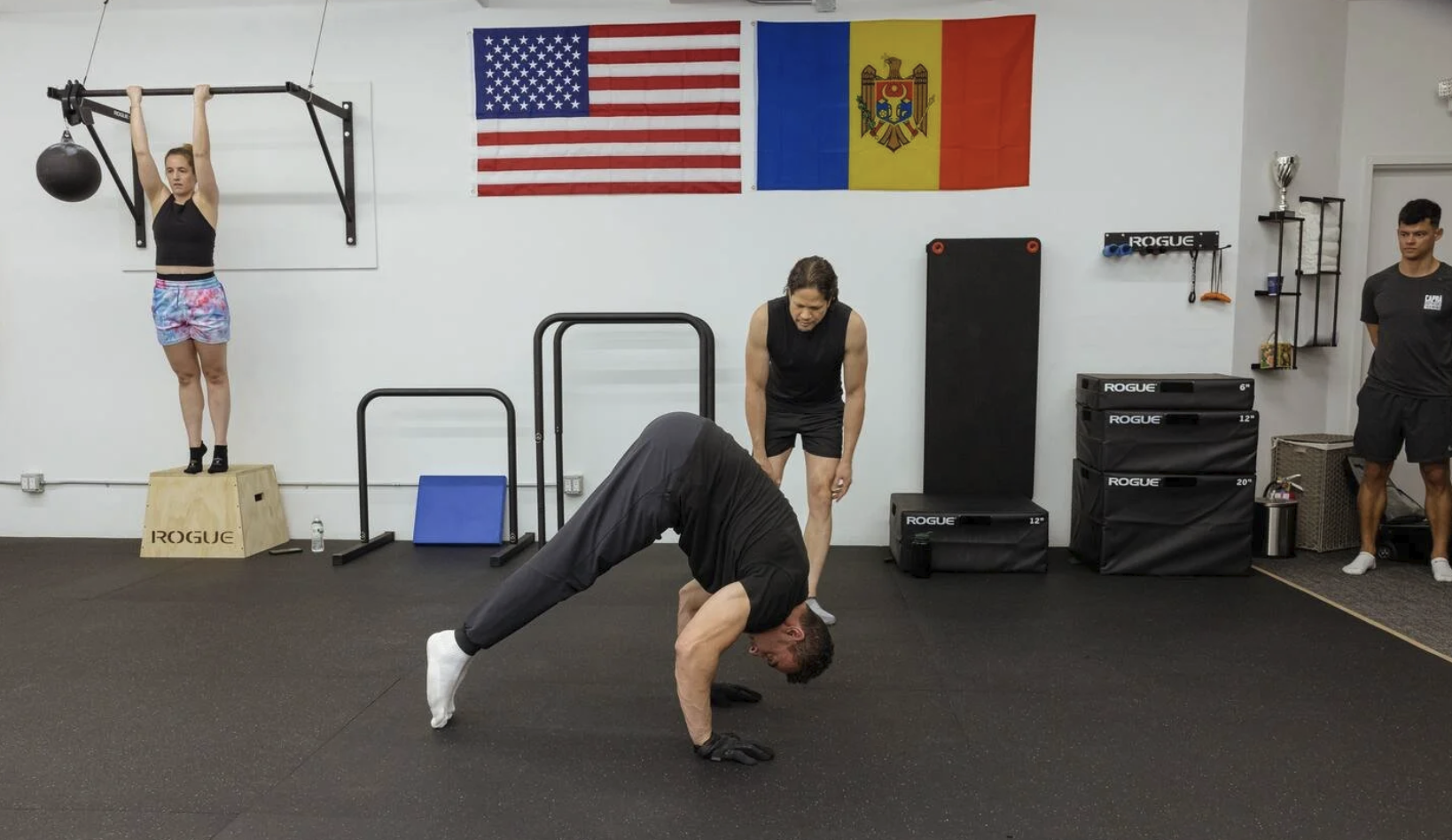
Ceban describes what that looks like in practice. One client is new to training and working toward a first clean push-up. Beside them, a second client is deep into handstand work. A third is older and training for longevity, so their exercise selection is chosen against that goal. A fourth is chasing a muscle-up or a one-arm pull-up. Four goals, four plans, one coach, one hour.
The structure came from a practical observation rather than a business model. After more than a decade of one-on-one work, Ceban noticed how much of a private session is spent talking between sets. He enjoyed that part. He also recognized the capacity sitting inside it. Small group training converts that downtime into coaching for three other people without asking any of the four to train someone else’s program. He argues the value is higher, not lower, because the client still receives individual program design and correction while paying a group rate.
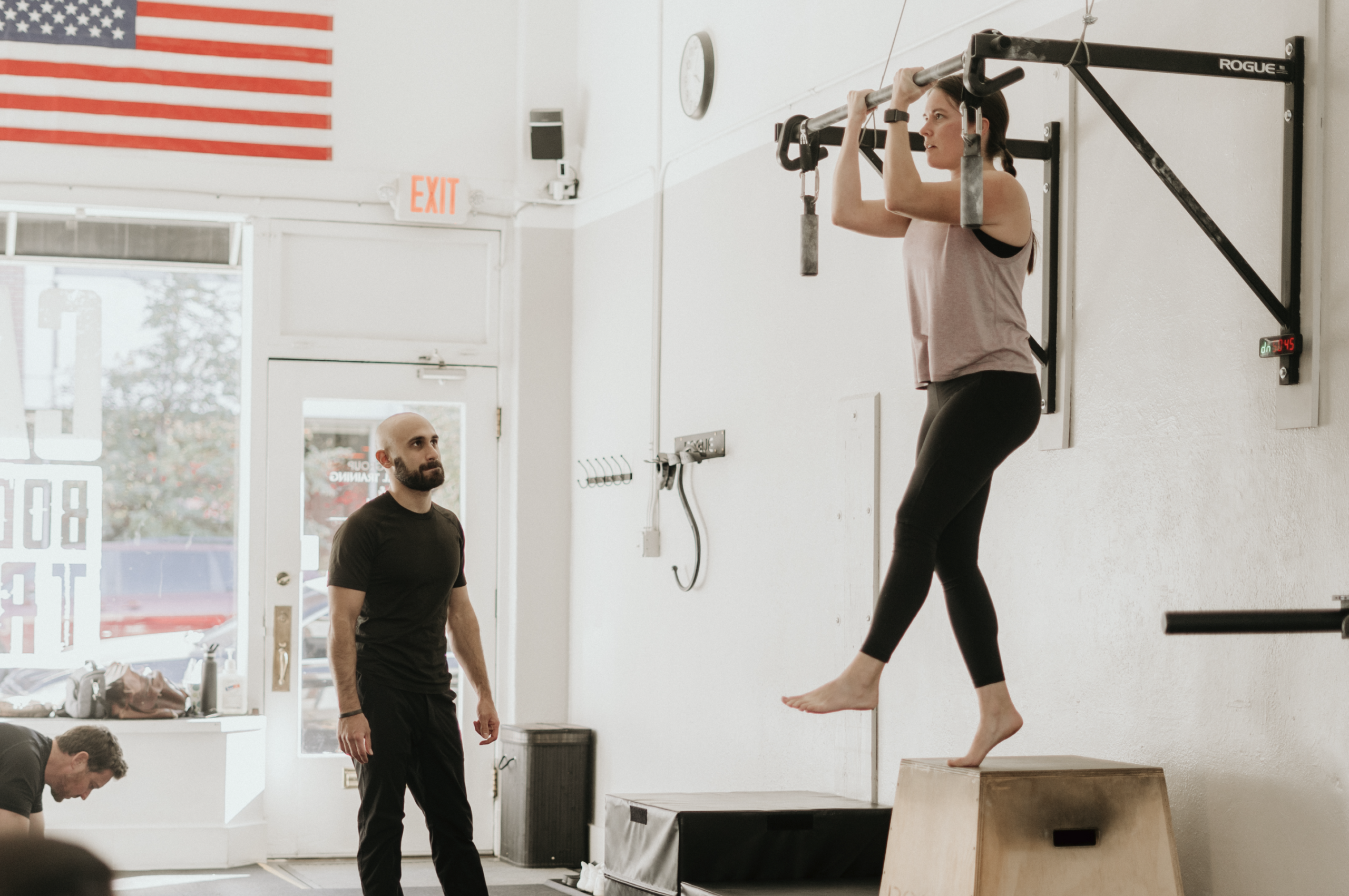
Clients arrive with ambitious requests. Ceban is candid that this is the part of the job that made him nervous as a coach. Someone walks in, names a human flag or a handstand push-up, and is prepared to pay and to work. The goal is now the coach’s responsibility, and most of those clients are nowhere near ready when they say it.
Capra’s answer is a two-sided discipline. The first side is restraint. The opening weeks are spent building strength, mobility, and tissue tolerance, because the fastest route to a skill is the one that does not detour through an injury. The second side is urgency, and it is the more unusual half. Ceban is explicit that stringing a client along for years is a failure, not a business plan. The moment a coach judges a client ready for the next progression, they take it.
Holding both sides at once is the actual skill of the coaching staff. Wait too long and the client stalls and leaves. Move too early and the shoulder pays for it. The judgment call sits with the coach in the room, session by session, which is precisely why the room is capped at four.
Asked what a client should expect early on, Ceban does not reach for a timeline. He points out how many variables sit between a person and a handstand, and then describes the first two to three weeks plainly. That period is for getting stronger, getting mobile, and getting the body ready. He calls it dipping their toes. It is conditioning, and it exists so the goal survives contact with the training.
This is also where the business declines a common piece of leverage. Capra does not sell a body transformation window. Ceban has deliberately steered the model away from physique goals, which is one of the reasons the studios have no mirrors. The early standard is performance: a cleaner push-up, a first pull-up, a stronger set of legs, a torso that knows where it is in space.
The rest of the equation belongs to the client, and Ceban says so without dressing it up. Sleep matters. Nutrition matters. Bodyweight training makes it obvious, because every pound is a pound the client has to pull. Stress matters, which he acknowledges is a large ask of an adult life. The program works when the person lets it.
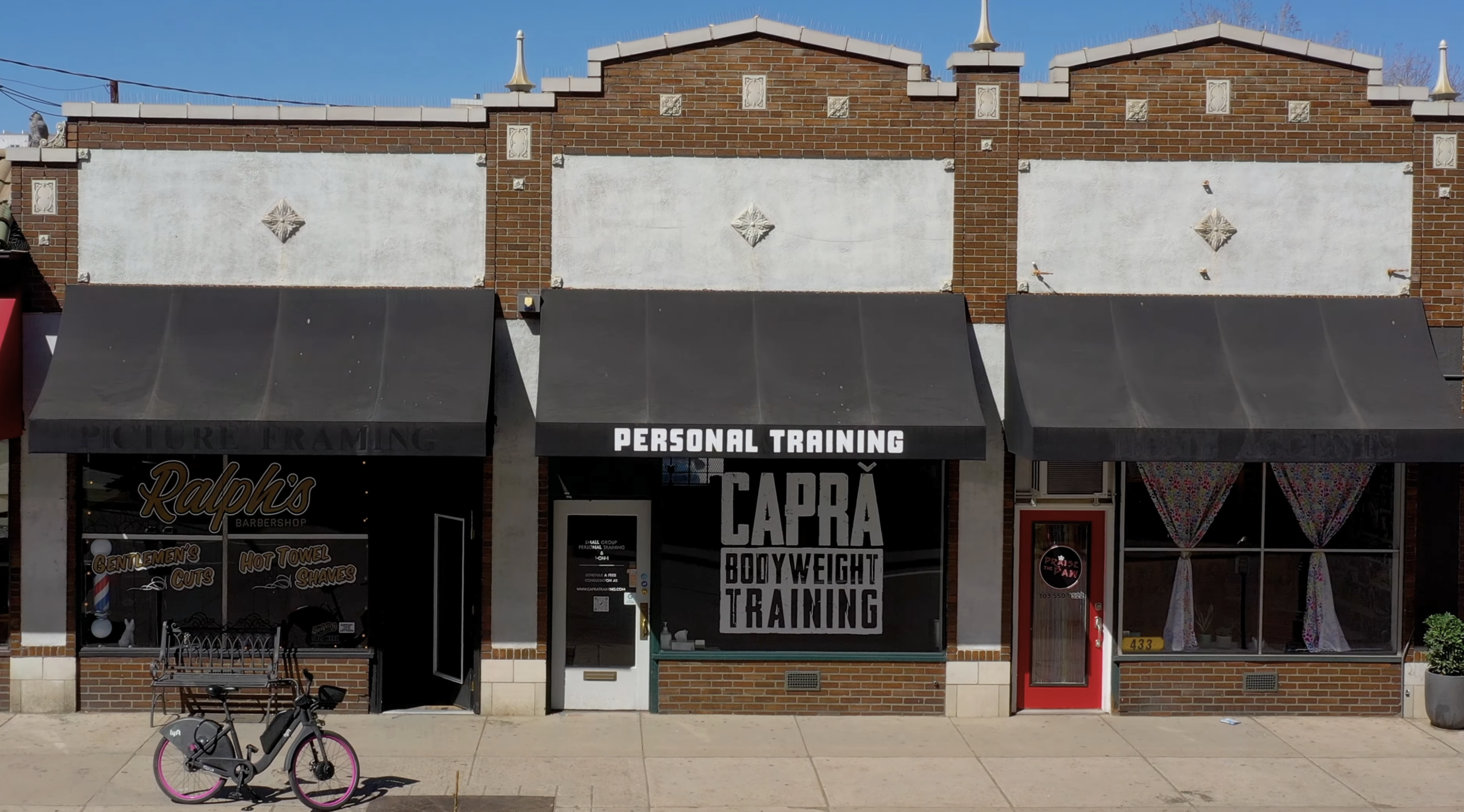
Because the model refuses the mirror, it needs another scoreboard, and the skills provide one. A client either holds the position or does not. The rep is clean or it is not. Ceban points to a client in New York City named Anthony, who came in with a list that would intimidate most coaches: front lever, muscle-up, handstand push-up, human flag. Ceban took him on, then stepped back from coaching to run the business, and handed him to a trainer named Ahmed.
About a year in, Anthony has muscle-ups with form Ceban describes as crisp, and more than a handful of them in a set. He has a human flag, which asks a great deal of the shoulders and back. He has a front lever. Handstand push-ups are still ahead of him, and both the coach and the client are working toward them rather than announcing them.
The detail worth noting is not the skill list. It is the handoff. The client kept progressing after the founder left the floor, which is the difference between a method and a personality. Ceban credits the coach and the client’s own consistency, and that credit is the point: the system is designed to be transferable to other coaches in other cities.
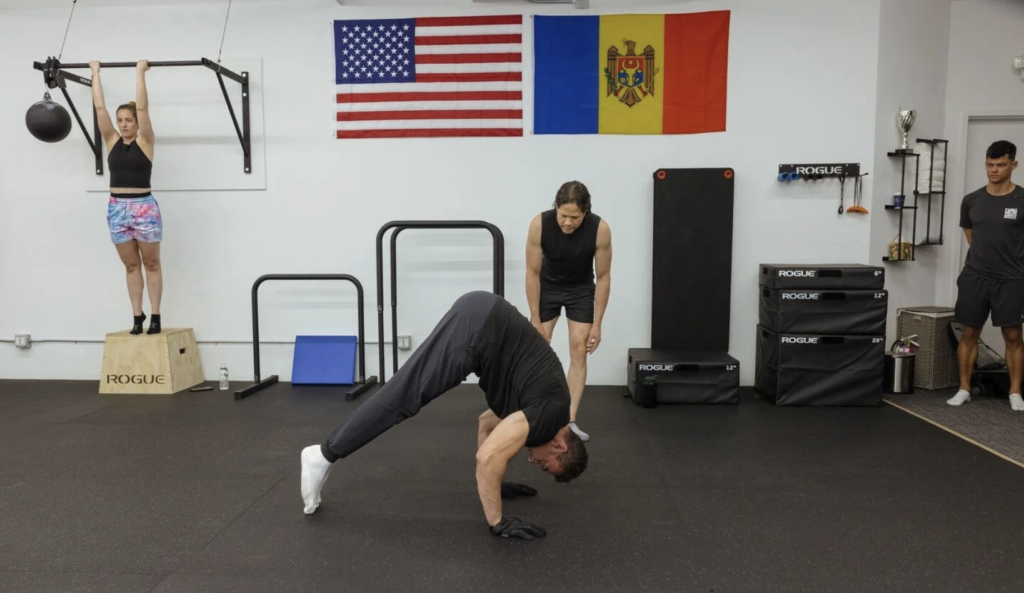
The rooms follow the method. Capra’s studios are spacious, appointment only, and largely empty by design. Equipment lives on the walls rather than the floor: pull-up bars, gymnastic rings, stall bars, and clear wall space for handstand work. Ceilings are high, and Ceban explains why with a coach’s bluntness. A muscle-up needs vertical room, and a low ceiling is a headache waiting to happen.
The absence of mirrors is not a design preference. Ceban connects it to mental health and to the goal-setting he wants to avoid, the kind where the target is an appearance rather than a capability. A room without mirrors makes a quiet argument every session: watch what your body does, not what it looks like doing it.
The client roster is deliberately modest for a business spanning multiple cities. Capra maintains studios in Denver and New York City, partners with other facilities in some markets while it builds, and places coaches in Chicago, Philadelphia, and Norfolk, with Boston in progress. Growth is happening one coach at a time, in one city at a time, which is slower than a franchise and far more protective of the standard.
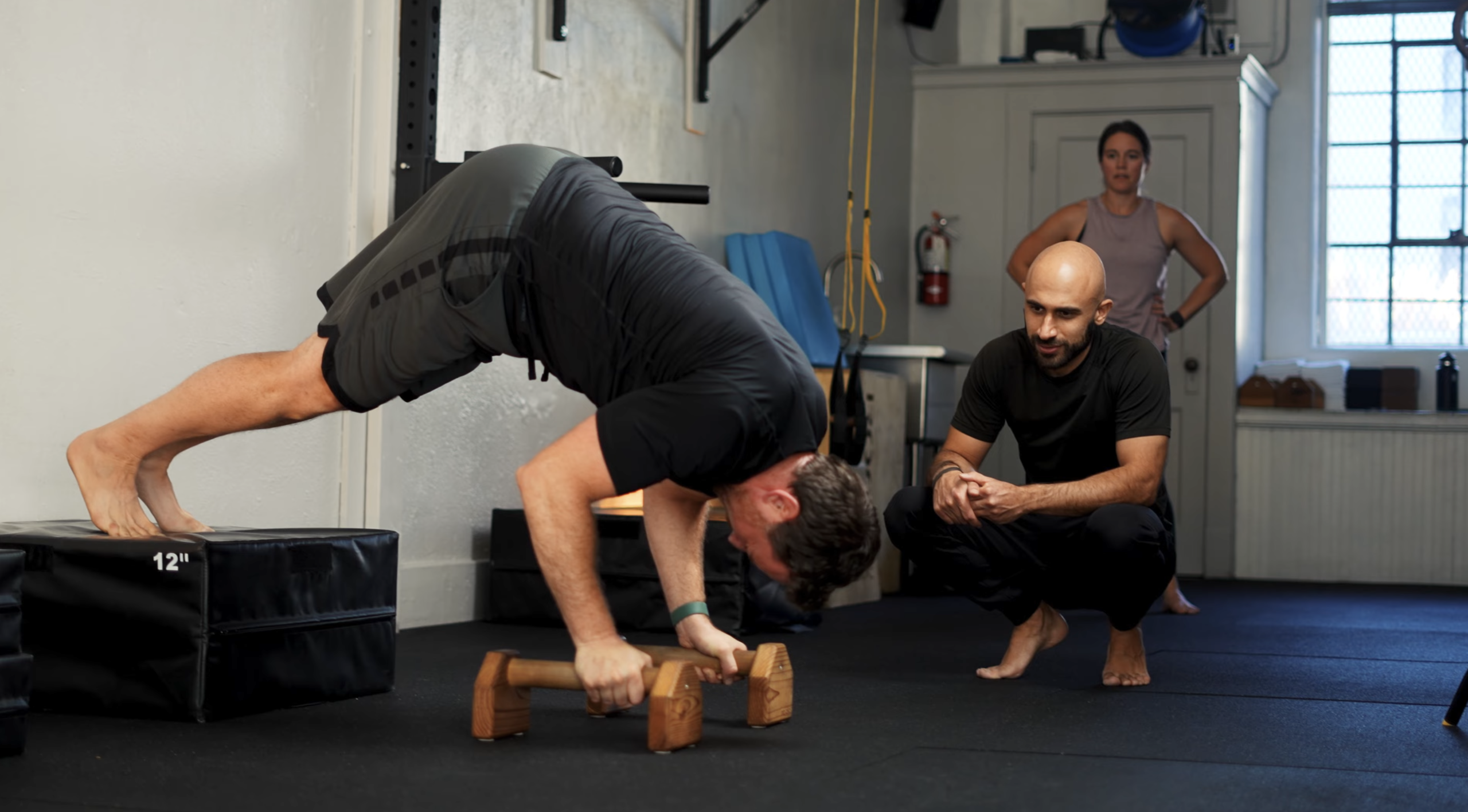
Ceban has an unusually clear read on why clients choose him, and it has little to do with persuasion. By his account, the decision is made before anyone walks through the door. Capra recently interviewed its own clients without a script, and the answers converged on the same story: whatever they were doing before had become boring, or uncomfortable, or both. They went looking for something else that would still make them stronger. Calisthenics was what they found.
That is the practical shape of a niche. Capra is among the very few training businesses working exclusively in bodyweight, and exclusivity is the offer. Clients do not arrive asking for a fitness solution. They arrive searching for a handstand coach in their city, which is a different search and a much shorter list.
Ceban’s ambition is geographic rather than commercial. He describes wanting a Capra coach in every major American city, then the smaller ones, on the reasoning that access to calisthenics should not depend on a metro area. His own days now go to recruiting and developing coaches rather than training clients, and the shift is telling. A method that only works when its founder is in the room is not a method. It is a schedule.
- Capra Bodyweight Training is a calisthenics-only business founded by Alex Ceban, with studios in Denver and New York City and coaches in additional markets.
- Every session is loaded by the client’s own body and progressed through leverage, range, and skill difficulty rather than external weight.
- Small group personal training is capped at four clients per coach, and each client in the room trains an individual program.
- Progression is gated by coach-judged readiness, with early weeks spent on conditioning and mobility and no incentive to delay a client who is ready.
- The intended end state is independence: a client who can keep training the skills without the studio, the coach, or any equipment beyond a bar.
Most training businesses are built to be needed. Capra Bodyweight Training is built to be outgrown. Ceban says it plainly: the goal is not to hold clients, it is to hand them a set of skills they will still have decades from now, in a park, a backyard, or a doorway. A business model that ends in the client’s independence is a strange one to choose. It is also the clearest evidence that the method is the product.
What holds the whole thing together is the sequence rather than the spectacle. Evaluate the person. Condition the body. Wait for readiness and then refuse to waste it. Keep the room small enough that a coach can see all four clients at once. The handstands and muscle-ups are what visitors notice. The order of operations is what makes them arrive.
Ceban’s recommended first step is the free consultation, a one-hour session with a coach. The client sees the studio, meets the trainer, and learns what the commute actually feels like. The coach evaluates strength, mobility, and current level, and drafts a program on the spot.
The consultation is booked through the form on the official website. Ceban asks for three things: the city, the goals, and the hours the client can realistically train. All three matter, because the studio only says yes when it can deliver the goal at the time the person is available.
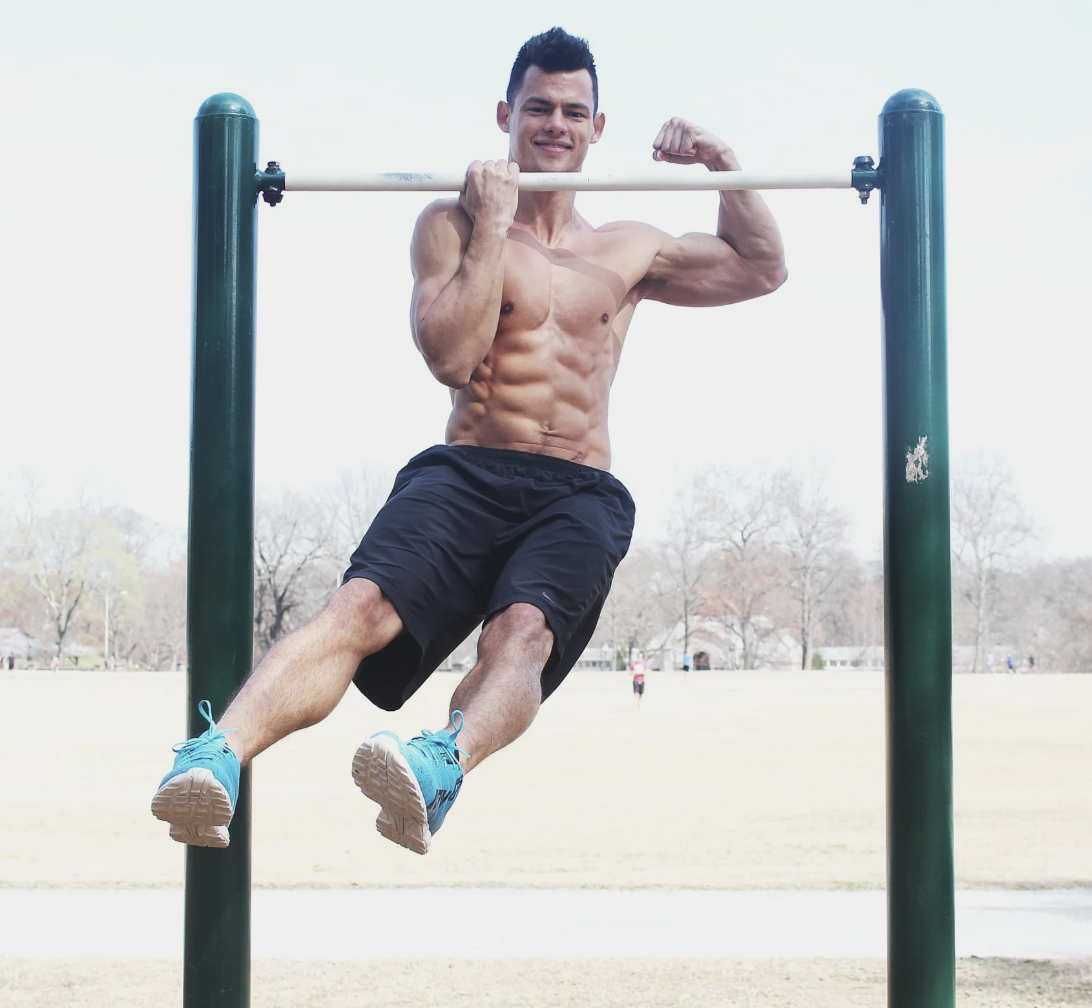
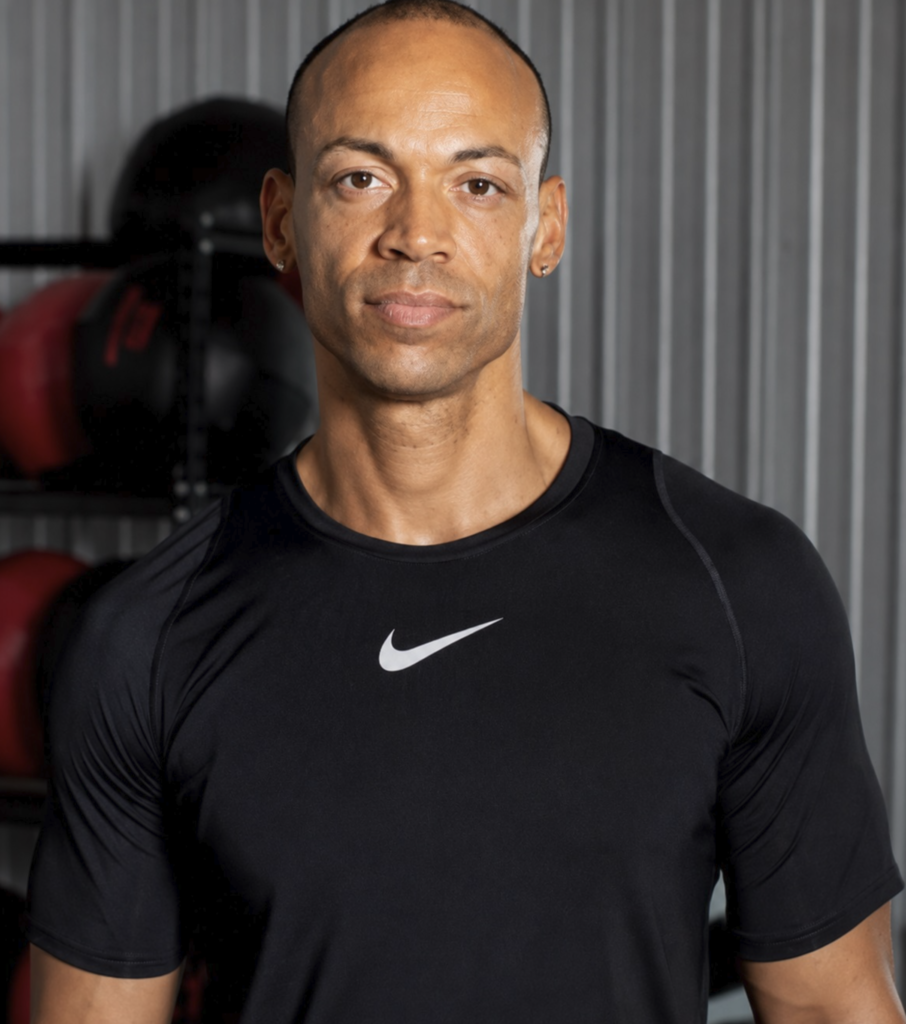
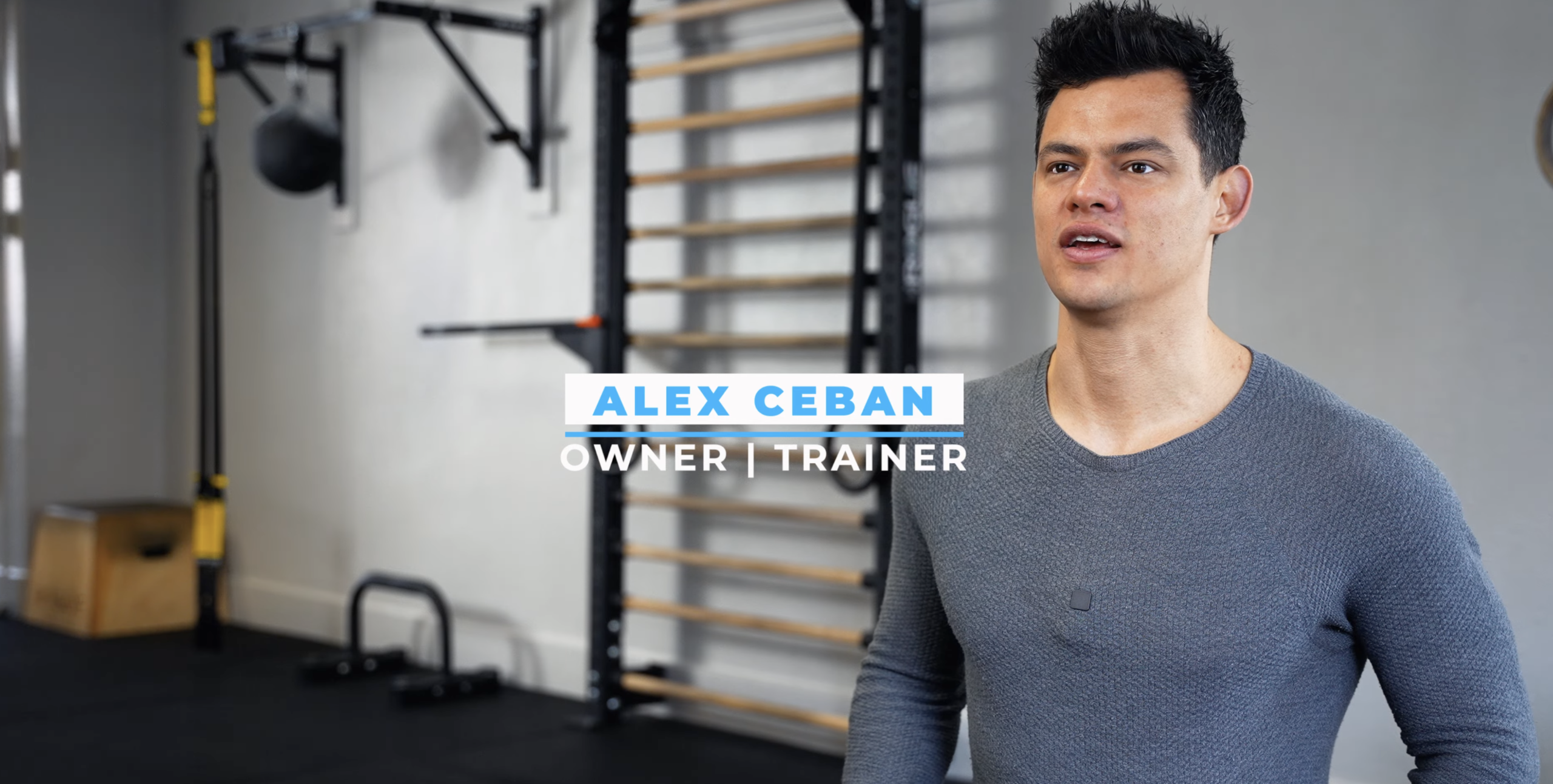
Alex Ceban is the founder of Capra Bodyweight Training and the source of the training philosophy examined in this feature. He grew up in Moldova, moved to the United States at twenty, and came into fitness after deciding that a bar career was not the impact he wanted to have. A decade of personal training and a stretch in fitness management followed, along with the discovery of calisthenics that has shaped the last twelve years of his own practice. He no longer coaches clients. His work now is recruiting and developing the coaches who carry the method into new cities, which is the responsibility a transferable standard creates.
The source material behind this spotlight is a recorded editorial interview with Alex Ceban, business-provided context for Capra Bodyweight Training, the official Capra Bodyweight Training website, and image and logo assets supplied for editorial use. Editorial review centered on the calisthenics training model, the four-client small group structure, the progression and readiness standard, the consultation process, and the studio environment described in the interview.
Everything presented here is editorial coverage. It is not medical, rehabilitation, nutrition, or individualized training advice, and readers should consult qualified professionals before starting or changing a training program. No medical claims, guaranteed outcomes, fabricated credentials, unsupported testimonials, or unsupported transformation promises are made.
- Recorded editorial interview with Alex Ceban, founder of Capra Bodyweight Training.
- Official Capra Bodyweight Training website: https://www.capratraining.com/
- Business-provided context and supplied image and logo assets for Capra Bodyweight Training.
- First step and consultation details extracted from Alex Ceban’s interview response.
- Location reference: Denver, Colorado and New York City, with coaching in additional markets described in the interview.