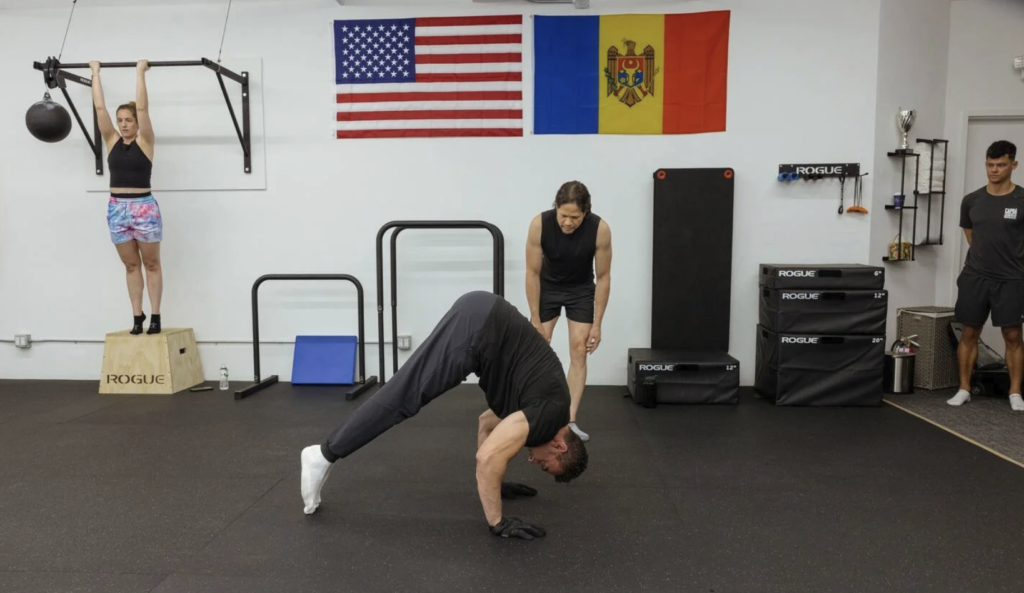


Michael Hamanaka can point to the exact three months his training philosophy changed. He was interning at a well-regarded San Diego performance gym, working a 4 a.m. shift, then a restaurant shift until midnight, driving for rideshare apps in between, and he did not touch a golf club for the entire stretch. What he did change was how he trained. The programming at that gym was functional rather than cosmetic, built around moving well rather than looking good, and he followed it because it was the work in front of him.
When he finally went back to the golf course, he hit the ball farther and straighter than he had before, with three months of zero practice behind him. That result did the arguing for him. Strength work he had adopted for general health had produced a performance outcome in the sport he cared most about, and it had done so without a single repetition of the sport itself. Nine years later, Movement Warehouse is the operational expression of that discovery.
Training follows a fixed weekly split, with upper body on Monday and Thursday, lower body on Tuesday and Friday, conditioning midweek and full-body work on Saturday, and strength accounts for about 85 percent of the volume. That order leaves a minimum of two full recovery days between lower body sessions, while the length of each timed station, from six to twenty-two minutes, decides whether a day leans toward heavy loading or conditioning.
Location: Pacific Beach, San Diego, California
Owner / Interview Source: Michael Hamanaka
Business Type: Outdoor large-group strength training studio with personal training
Training Focus: Group strength training, six-week strength blocks, timed station circuits, and mobility and flexibility work
Primary Clients: Former athletes returning to structured training, complete beginners, desk-bound professionals, and golfers
M&AView Contents
A structured guide to the training methods, coaching philosophy, progression system, client experience, and evidence examined in this Authority Spotlight.
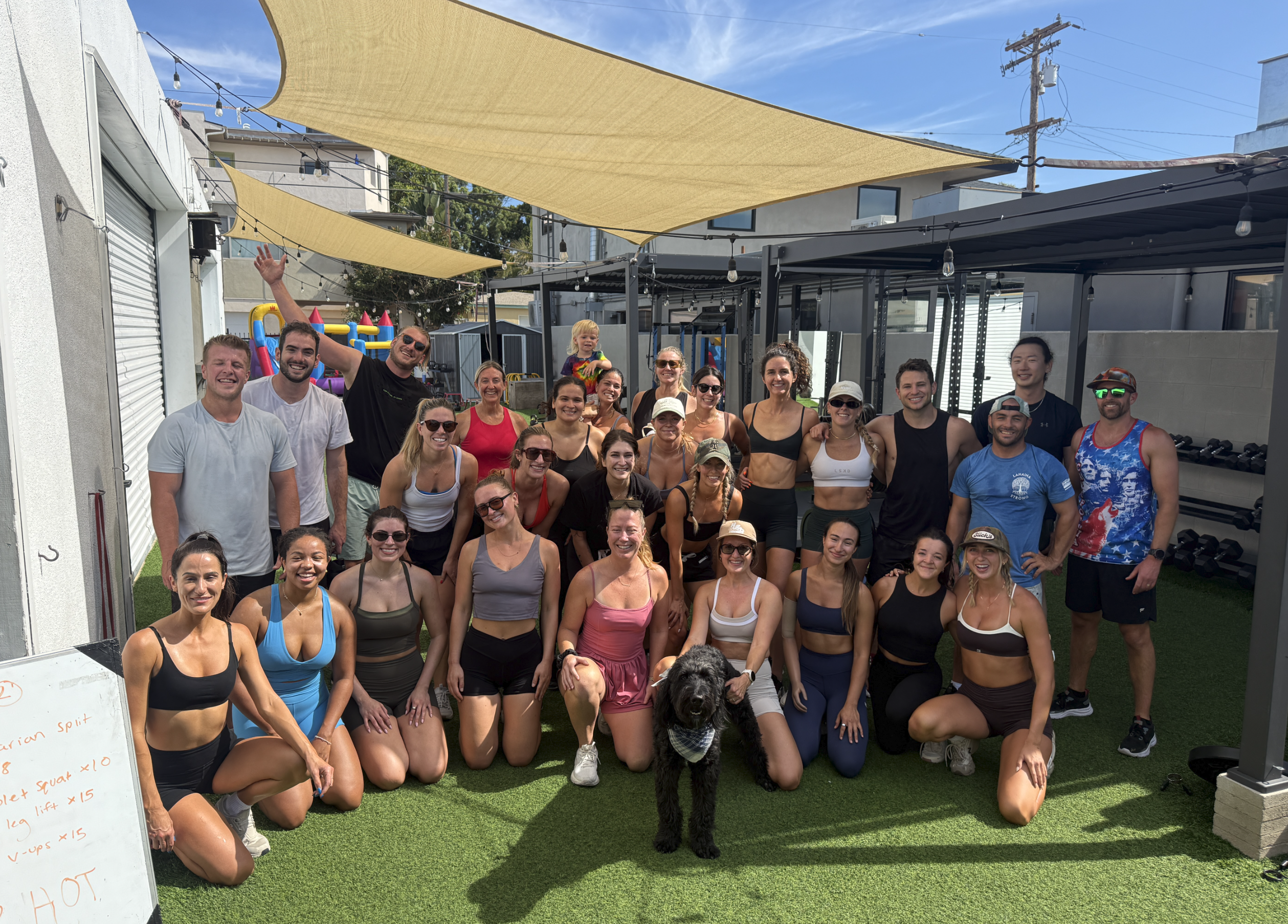
Movement Warehouse runs a large-group format, with anywhere from five to twenty members in a given session, and roughly 85 percent of the training volume is strength work. The remainder is flexibility, mobility, and functional movement. That ratio is deliberate. Hamanaka is not building a conditioning studio that adds resistance work as seasoning. He is building a strength studio that keeps people mobile enough to keep lifting.
The weekly architecture is unusually stable: two upper body days, two lower body days, a midweek conditioning session, and a Saturday full-body effort. Monday is upper, Tuesday is lower, Wednesday is conditioning, Thursday returns to upper, Friday works glutes and quads, and Saturday closes the week. Hamanaka is candid that the studio has held that split for a long time while other operators rebuild their programming regularly. His defense is structural rather than sentimental. The split guarantees at least two full days between lower body sessions, which means the tissue that was trained on Tuesday is not being asked to perform again before it has recovered.
Most members attend three to four sessions a week based on schedule and availability, which means the split does its real work at the individual level. Someone training four times has already been distributed across two body regions and a conditioning day without having to plan anything. The programming absorbs the recovery decision so the member does not have to make it correctly on their own.
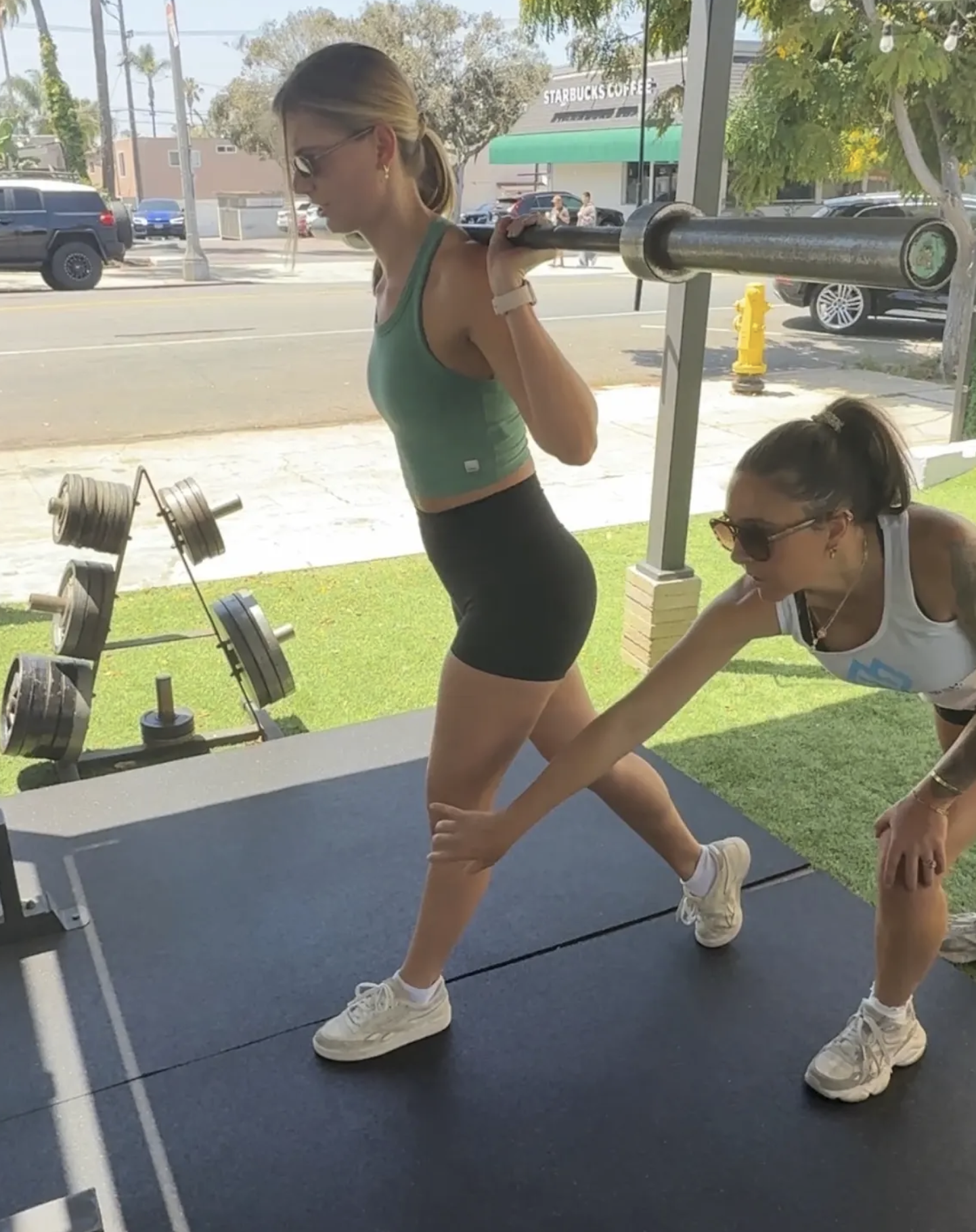
The variable inside the fixed split is the strength block. Movement Warehouse runs six-week cycles built around a specific lift, and each week within the cycle carries different programming for that lift. At the time of this interview the studio was midway through a six-week bench press cycle, with the Monday session carrying the progression.
The purpose of the block is evidential. Hamanaka is direct about the fact that aesthetics matter to many members and that for some it is the only thing that matters. But a mirror is a slow and unreliable instrument. A personal record is not. Hamanaka’s stated expectation is that a member who trains the cycle with reasonable consistency should finish six weeks stronger than they started, with a number confirming it.
That is also the mechanism that keeps a long-running split from going stale. The days of the week do not change. The reason to show up on Monday does. Members are always working toward the end of a cycle rather than repeating an indefinite routine, which is how the studio holds attention without rebuilding its programming architecture every quarter.
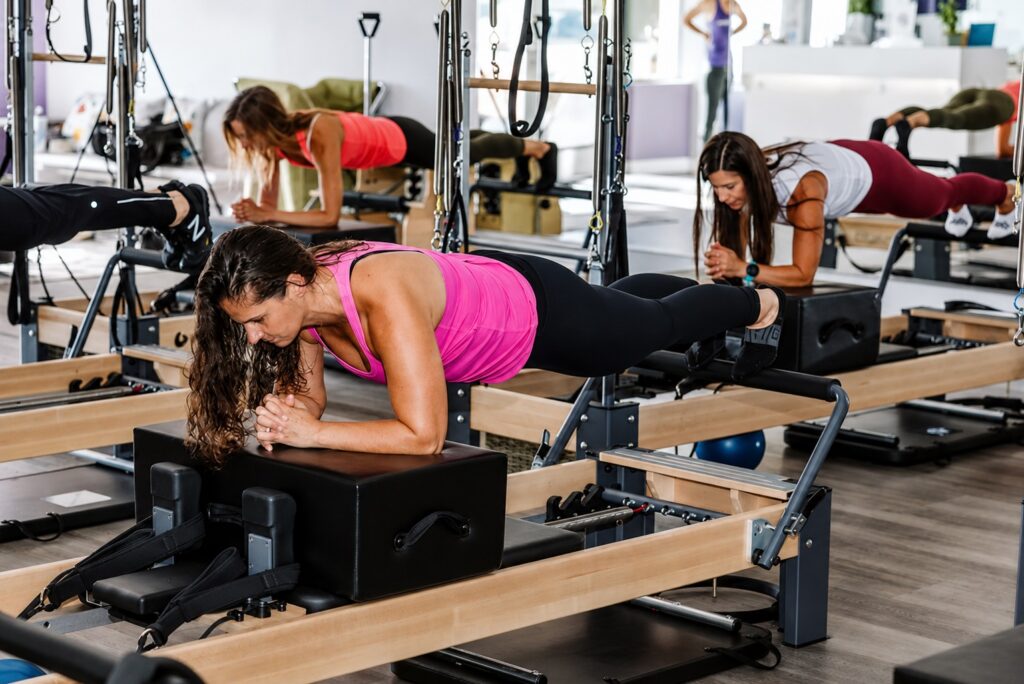
Sessions are delivered as circuit training across timed stations, and the length of the station is itself a programming decision. Six minutes, ten minutes, thirteen minutes, and twenty-two minutes all produce different sessions. A shorter station tightens the work-to-rest relationship and pushes the session toward conditioning. A longer station gives a member room to load heavily, rest fully, and load again.
Take a lower body station pairing barbell back squats with dumbbell Romanian deadlifts. Hamanaka walks through the physiology plainly: after a heavy squat set, a member needs somewhere between twenty seconds and a minute and a half before the next movement, because the phosphocreatine system has to be replenished before another maximal effort. Two heavy lifts stacked back to back does not produce more training. It produces a worse second set.
Because the station timing varies day to day, the session never becomes a template a member can run on autopilot. Some days emphasize heavy loading. Some days push heart rate. The weekly frame stays constant while the daily texture moves.
A significant share of new members arrive at Movement Warehouse having never lifted weights, which puts real pressure on the first session. The studio’s response is procedural. Hamanaka or his manager tries to be present for a member’s first workout. They ask about prior injuries and about what has worked for the person before. They greet the member by name. They deliberately pair the newcomer with a longtime member who already knows the exercises and the form well enough that Hamanaka says many of them could coach.
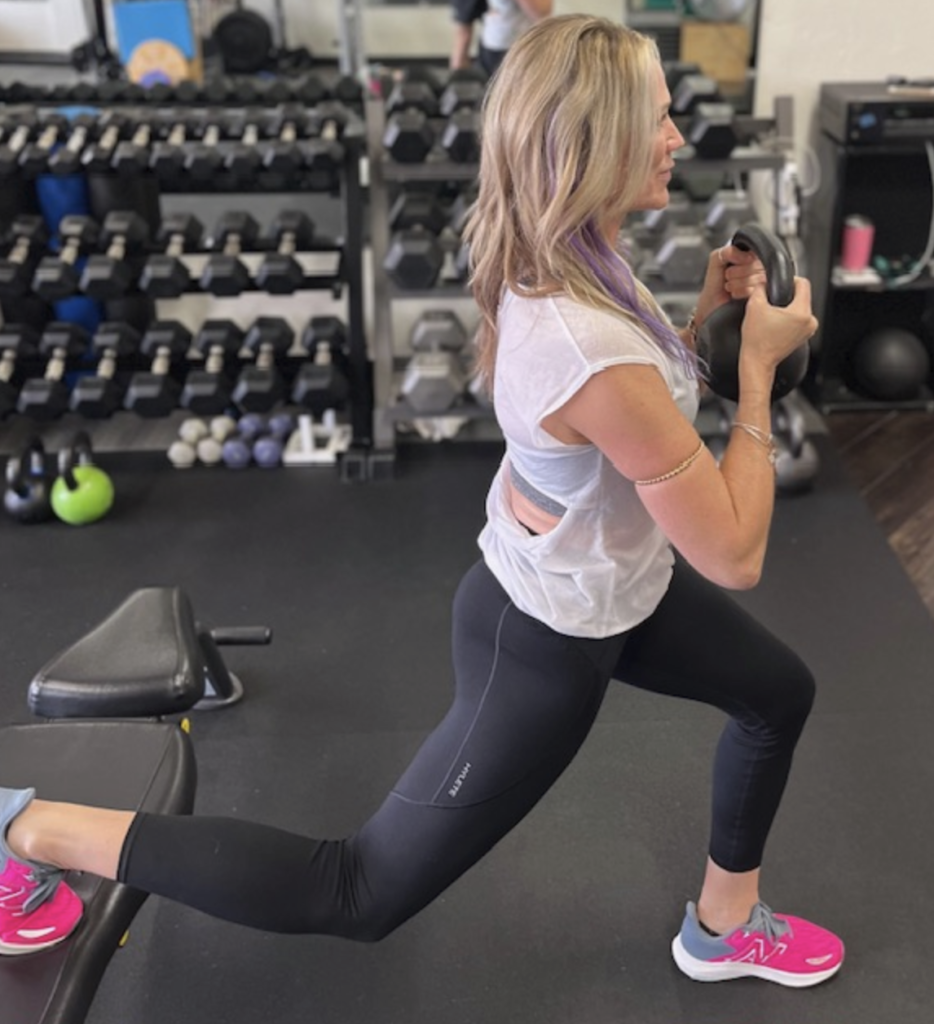
New members are also told plainly that some of the movements are not the ones they will have seen elsewhere, and that every exercise can be adjusted to their mobility. Back squats can become goblet squats. A loaded pattern can become an unloaded one. The point Hamanaka repeats is that the modification is not a concession, it is the method.
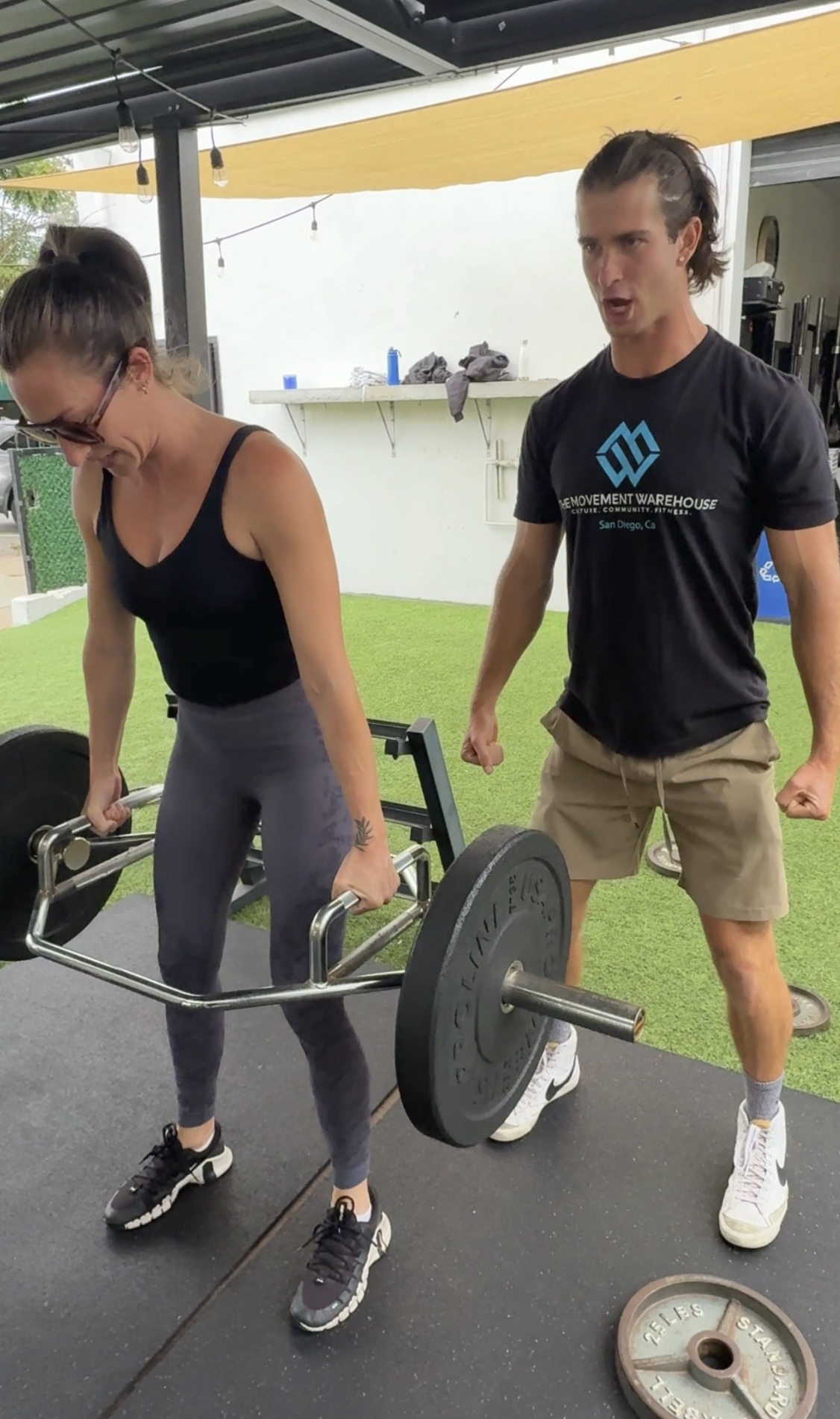
The coaching detail runs finer than a general instruction to go lower. Hamanaka’s example: a member who has been at a desk for eight hours, or for ten years, may need to hinge at the hip, keep the eyes down so the spine stays neutral, and angle the toes out to make the depth available to them. That is not cheerleading. It is a technical answer to a specific restriction, delivered inside a group class.
Asked what Movement Warehouse is best known for, Hamanaka does not hesitate: the group leg days. He also concedes, without qualification, that legs are not the most enjoyable thing to train. He considers them the most important, and his argument is entirely transfer-based. Stronger legs improve snowboarding, mountain biking, surfing, volleyball, golf, and hiking. The aesthetic case is secondary to the capability case.
He treats it as a genuine programming achievement that the studio has gotten a large number of men to look forward to leg day. His reasoning about why that is hard is honest to the point of being unflattering to the industry. Training alone under fluorescent lighting, the default male instinct is chest and triceps, the muscles visible walking down the beach. Bulgarian split squats do not compete well against that.
The group format is what changes the calculus. In a coached session on a fixed split, the hard day is not optional and not solitary. It arrives on schedule, everyone does it together, and the difficulty is shared rather than negotiated. That is a structural solution to a motivational problem, and it is one of the clearest illustrations of what the studio’s format actually buys a member.
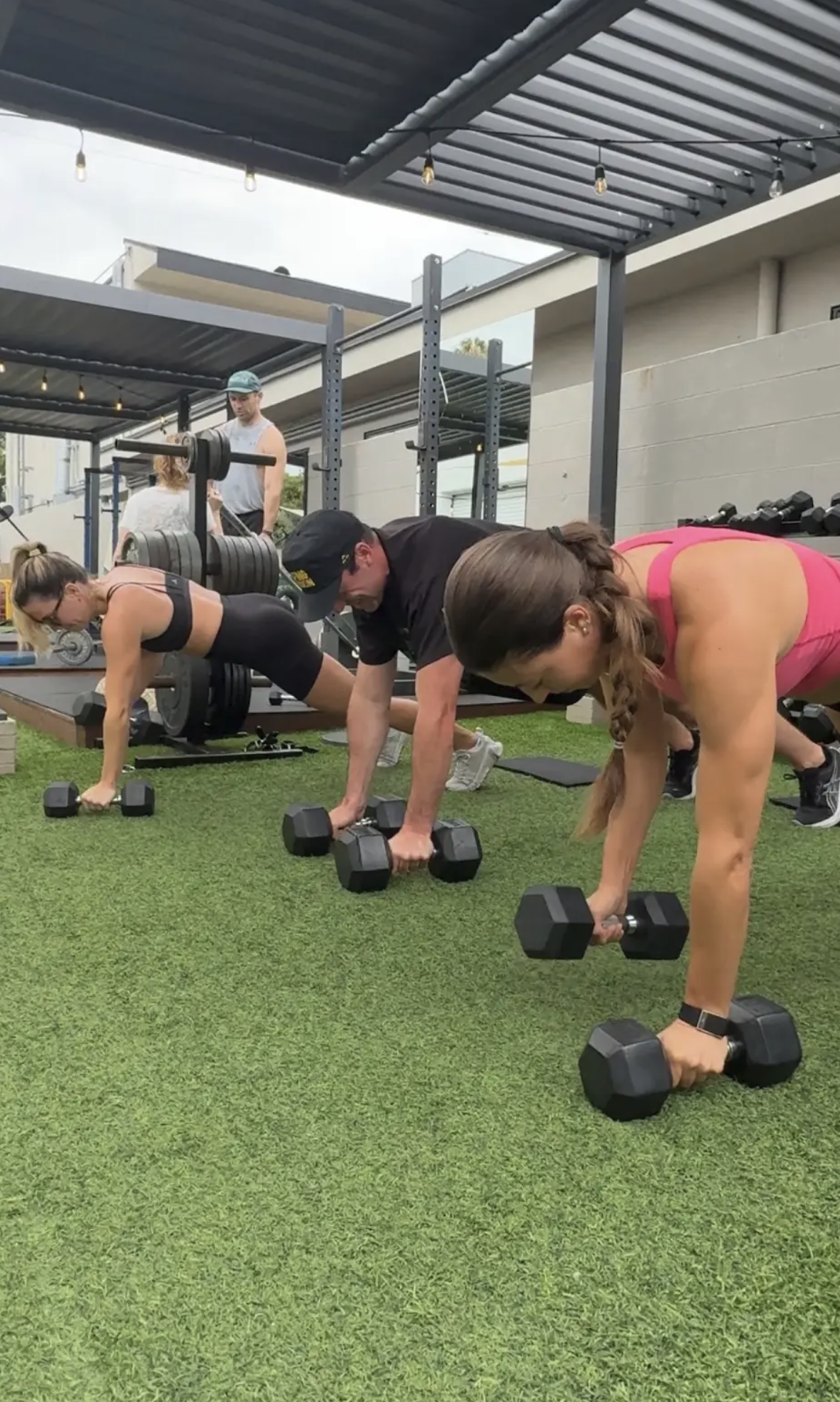
The most distinctive part of the Movement Warehouse model is what happens during the ninety seconds a member is not lifting. Sessions run outdoors, in a group, with no headphones and no phone in hand. Hamanaka’s observation is that a member in that position has exactly one available option during recovery, which is to talk to the person next to them.
He frames this as the thing most gyms are missing rather than as an amenity. The rest interval is physiologically mandatory. Whether it becomes isolated scrolling or a conversation is a design decision the operator controls. Movement Warehouse has chosen the second, and the consequences are visible in the studio’s history. Members have made plans to surf, play volleyball, and golf together. Three marriages have come out of the membership. Hamanaka met his wife after hiring her, and his closest friend, who met his own wife at a first session, later officiated Hamanaka’s wedding.
The business logic behind this is stated without romance. A member who enjoys training will train more often. A member who trains more often accumulates more consistency. Consistency is what produces the result. Hamanaka is explicit that this route may be slower than sessions engineered to leave people gasping, and that it is not the most efficient business model. It is the one he has run for nine years.
Group classes account for the majority of the studio’s revenue, in the region of 70 to 80 percent. Personal training makes up roughly another 10 to 15 percent, and it functions in the model as both a specialist service and an on-ramp. Some members want to lift heavier than a group setting allows or want more individual attention. Others are new enough to fitness that they want more cueing before entering a class, and Hamanaka describes those clients moving into group sessions comfortably after five or ten one-on-one appointments.
Hamanaka also provides manual therapy, massage, and stretching, which is consistent with a studio whose stated rule is that strength without mobility has no value. The golf simulators, available for rental, complete the picture. Golf is where his own training conviction originated, and he now gives golf lessons in addition to coaching and running classes.
There is also a structured six-week transformation program for members who want a defined outcome. It begins with baseline measurements including weight and body fat, sets weekly goals, and pairs training with a nutrition component, unlimited studio access, and a one-on-one accountability coach. Hamanaka is deliberately unglamorous about what it produces. He describes the realistic range as something closer to six or ten pounds over six weeks rather than the twenty or thirty pound claims common in the category, and he treats the habit change as the part that lasts.

Pacific Beach is a difficult trading environment and Hamanaka does not pretend otherwise. The Pacific closes off everything to the west. Traffic makes the eastern approach unappealing. Members arrive from La Jolla down the hill or from Ocean Beach and Point Loma to the south, and members who relocate more than about three miles away tend to cancel. When he opened in 2017 there were roughly eighteen gyms on his street, and the number has not meaningfully fallen.
Inside that constraint the studio has held roughly 140 members and retained staff at a rate the industry rarely sees. His longest-serving trainer has been with the business eight years. Others have stayed four or five. Several members have trained with him for nine years, and a few for eleven, having followed him when he left his previous employer to open the studio. Some current members drive twenty miles and still come two or three times a week.
Hamanaka believes Movement Warehouse was among the earliest businesses in Pacific Beach to deliver strength training in a group setting with this level of coaching oversight. He also points to the weight of current research behind resistance training as a reason he sees this as a favorable moment to be an established strength studio in San Diego. His stated expansion interest is measured: there is nothing quite like the studio further north in the county, which is where he is thinking next.
- Movement Warehouse is an outdoor large-group strength training studio in Pacific Beach, San Diego, owned and operated by Michael Hamanaka since 2017.
- The weekly split is fixed by design so that recovery between lower body and upper body sessions is guaranteed rather than left to the member.
- Rotating six-week strength blocks give members a measurable lift to improve, which keeps a long-standing program structure from becoming routine.
- Load is added only after the movement is available, and trainers substitute implements and ranges on the spot rather than pushing through restriction.
- The outdoor group format turns the mandatory rest interval into connection time, which Hamanaka treats as the mechanism behind the studio’s consistency and retention.
Culture, Community, and the Work in Between
Movement Warehouse opened under the motto move faster, move stronger, move smarter. Hamanaka replaced it with culture, community, fitness, and he is blunt about why: the first version described what he was doing, and the second describes why anyone stays. The order is not an accident, and it is not a softening of the training demands. The programming underneath it remains 85 percent strength work with a two-day recovery gap engineered into the week.
What holds the two halves together is a single claim Hamanaka makes about his own method: if you care about people, they stay, and if they stay, the training has time to work. The split, the six-week blocks, and the modification protocol are the technical apparatus. The ninety seconds of conversation between heavy sets is what keeps members present long enough for any of it to matter.
Hamanaka’s recommended first step is not a tour and not a phone call. It is a class. His reasoning is that a consultation can show a prospective member the space and explain the philosophy, but it cannot deliver the thing the studio actually sells, which is the session itself and the coaching inside it.
Readers who want to see how the split, the station timing, and the movement modification work in practice can review current schedules and options on the official Movement Warehouse website and arrange a first session from there.
Explore Movement Warehouse
Michael Hamanaka owns and operates Movement Warehouse, which he opened in Pacific Beach in 2017 after a decade in restaurants, a personal training certification, and an internship at a highly regarded San Diego performance gym that reshaped how he trains. He coaches sessions, programs the six-week strength blocks, provides manual therapy and stretching, and gives golf lessons at the studio’s simulators. The method described in this feature reflects the system he built and still runs on the floor.
This feature is based on a recorded interview with Michael Hamanaka, owner and operator of Movement Warehouse, on business context he supplied during that conversation, and on image and logo assets provided by the studio for publication. The official Movement Warehouse website was also used in preparing the feature. Details on the weekly split, six-week strength blocks, station-based session design, movement modification, the outdoor group format, and the studio’s service mix come from Hamanaka’s interview.
Statements about programming, member experience, and results are attributed to Hamanaka’s account rather than presented as guarantees, and figures on membership, revenue, staff tenure, and local competition are reported as he described them and have not been independently audited. This article is editorial; it does not provide medical, rehabilitation, nutrition, or individualized training advice, and it does not guarantee individual outcomes. Readers should consult a qualified professional before beginning or changing a fitness program.
- Recorded interview with Michael Hamanaka, owner and operator of Movement Warehouse, covering the weekly split, six-week strength blocks, session design, movement modification, the outdoor group format, and the studio’s service mix.
- Business context supplied by Hamanaka on programming structure, membership scale, service mix, and local market conditions in Pacific Beach, with image and logo assets provided by Movement Warehouse.
- Movement Warehouse website: mvmtwarehouse.com, used in preparing this feature.
Related training methods
Explore more approaches to structured training, scaling and consistent participation.