

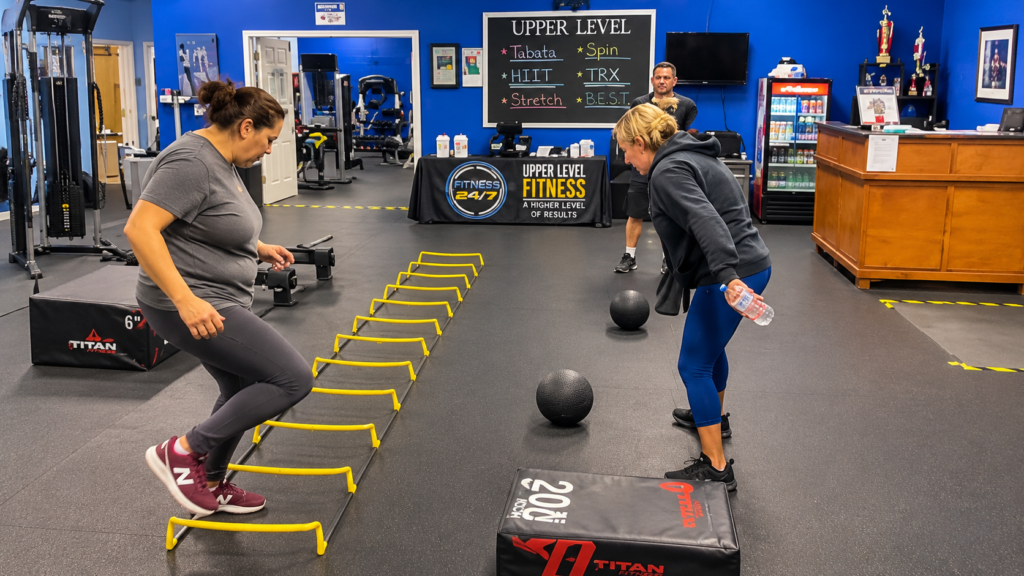
Richard Guerrero did not enter fitness as a coach. He entered as a participant, weighing roughly 280 to 290 pounds and joining a boot camp after his mother had already started. About six months later, the people running that boot camp asked him to train others because they saw his motivation and drive. The path eventually led to certifications, independent personal training and RG Athletics.
That origin matters because the method he describes today is not built around rushing people into harder work. Guerrero repeatedly returns to a more patient sequence: understand the goal, teach the movement, establish the range of motion, watch how the client handles the current demand, and progress only when the evidence supports it.
The same pattern appears in how he introduces a new client. Before choosing a program, he wants to know what the person wants to achieve inside and outside the gym, what the short- and long-term goals are, and which small wins would actually matter to that individual.
The Standard Comes Before the Load
Location: Santa Maria, California
Founder / Interview Source: Richard Guerrero
Business Type: Independent personal training and coaching practice
Training Focus: One-on-one and group training, youth training, bodybuilding and powerlifting coaching, corrective exercise, nutrition support and online coaching
Primary Method: Proper form and full range of motion first; load and program changes follow observed readiness
The First Decision Happens Before the First Set
Guerrero starts with the person rather than the exercise list. He asks about short-term and long-term goals, whether the client wants to build muscle, lose weight, improve performance or simply become more active, and whether there are health considerations that change how the session should be approached.
He described keeping the training basic and simple until the client understands the movement, the range of motion and how to execute the exercise. Only after that does he begin increasing weight or intensity. Throughout the session he checks whether the load feels too heavy, too light or appropriate.
That sequence prevents the written program from becoming more important than the person in front of him. The first training decision is not “what is the hardest thing this client can do?” It is “what can this client do well enough to build on?”
The Operating Details Behind the Method
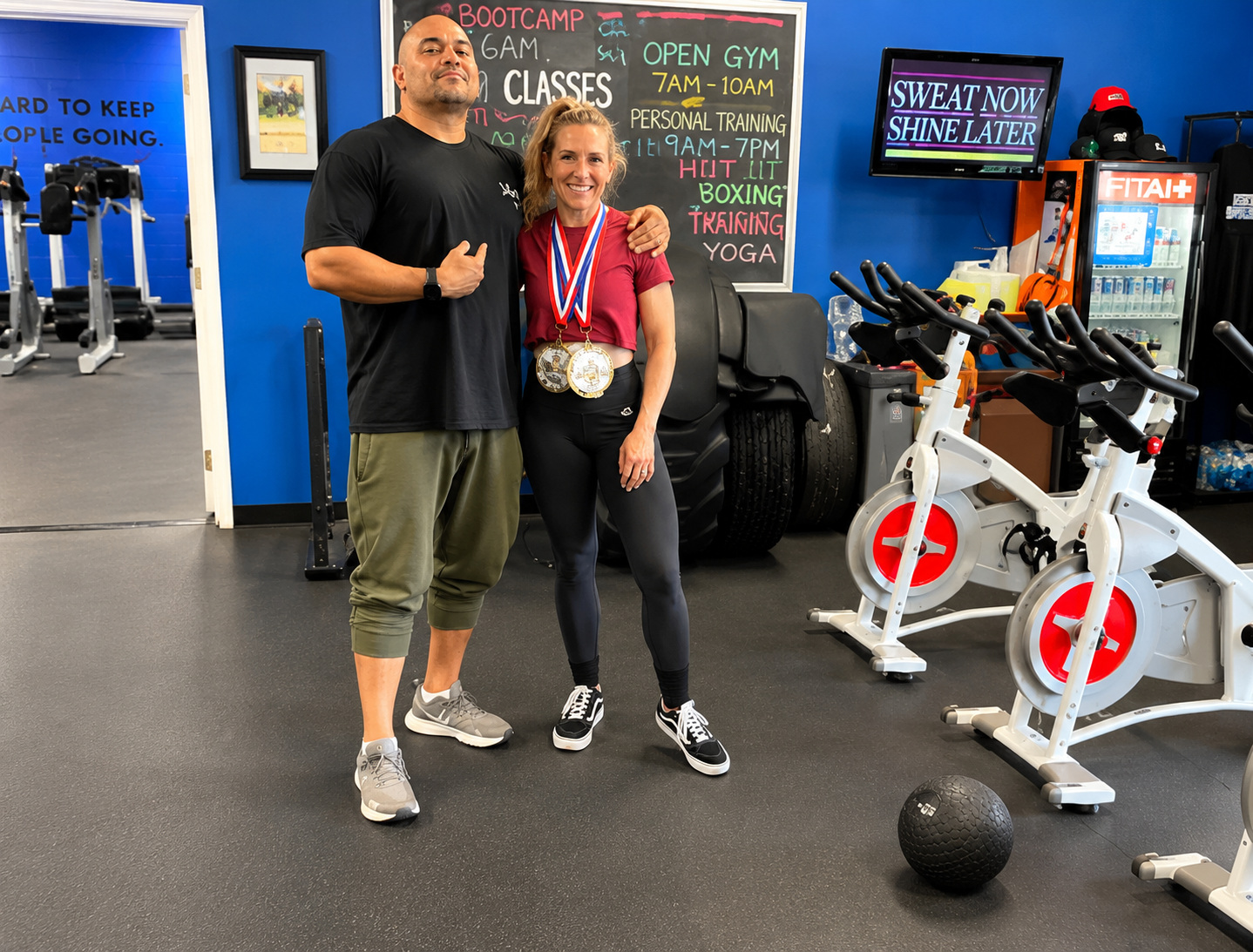
Form and Range of Motion Come Before Load
Asked for the most important principle in his coaching, Guerrero answered without hesitation: range of motion and proper form. He said clients often tell him they know how to squat, only for him to find that the movement needs substantial correction.
His response is not to work around the problem. He slows the session down. Guerrero said he will spend as long as necessary correcting form before moving forward, because the quality of the movement determines whether the next progression is worth making.
That makes technique a gate rather than a suggestion. More weight is not the reward for finishing the calendar week. It follows a movement that the client can execute with enough consistency to justify a greater demand.
How Guerrero Uses Rep Speed to Decide When to Progress
One of the most specific decision rules in the interview concerns the way a familiar weight moves. Guerrero said that if a client has used the same load for two or three weeks and begins moving it noticeably faster, he may test an increase of roughly five to ten pounds.
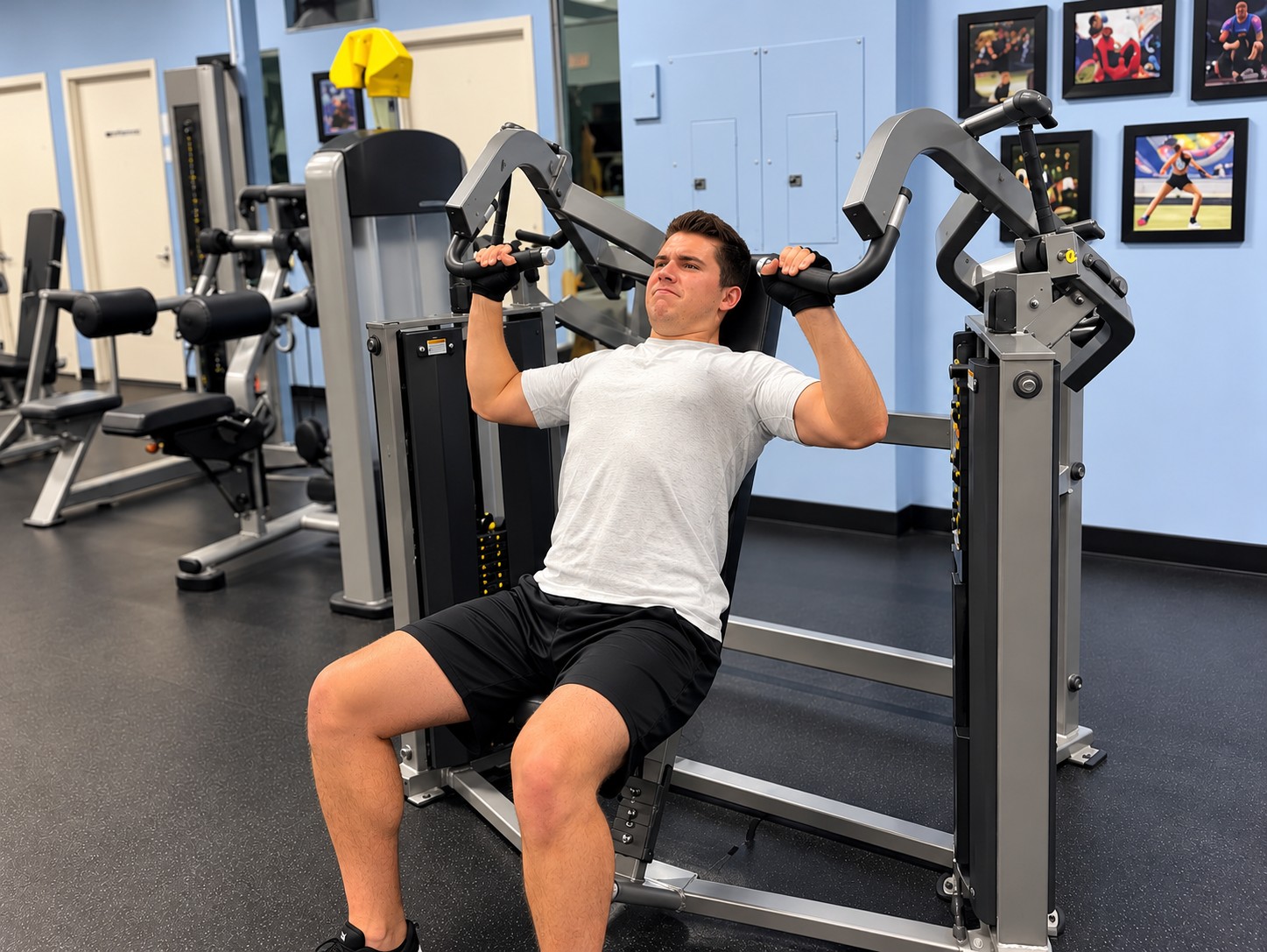
The opposite matters too. If the load is moving slowly, he treats that as evidence that the client may not be ready to advance. The same reasoning can change the exercise itself. When a client outgrows the available resistance on a chest-press machine, for example, Guerrero may move the pattern to a bench press or dumbbell press.
Rep speed is not presented here as a laboratory measurement. It is an observational coaching signal. Its importance is that Guerrero is looking for something concrete before asking the client to do more.
Programming Changes Every Three to Four Weeks
Guerrero does not leave the plan unchanged indefinitely. He said he typically changes a client’s training program every three to four weeks, introducing new variations so the work does not become stale and so the client can continue developing without simply repeating the same pattern forever.
The important distinction is that exercise variation and load progression are not the same decision. The plan may change on a three-to-four-week rhythm, while the decision to make a particular lift heavier still depends on what Guerrero sees and what the client reports.
That gives the method two clocks: a broader programming rhythm and a more immediate set-by-set coaching judgment.
The RG Athletics Method in Four Lines
Measuring Progress With More Than One Signal
Inside the session, Guerrero watches movement quality and load speed. Outside the session, he uses a second set of tools. He described InBody analysis for body-composition information, including lean body mass and total body water, along with weigh-ins, measurements and progress photos.
No single measurement is treated here as a universal definition of success. The editorial value of the system is that Guerrero looks for progress through more than one lens. A client can be moving better before the scale changes; body-composition data can add context that a single number cannot.
That combination makes the coaching process more legible. The client is not asked simply to trust that the program is working. Guerrero has multiple forms of feedback available to decide whether the plan should continue, change or become more demanding.
What Progress Can Look Like Over Time
One of Guerrero’s longest-standing clients, whom he identified as Kathy, came to him early in his independent training career. He described her as wanting to become healthier and move more, while also dealing with knee problems and later a period away from heavier training following knee surgery.
Guerrero said the return required modification and patience. Over time, he saw improvements in her squat and leg-press performance and described her as doing more than she had been able to do before. He also said she became more active, improved some of her eating habits and reported enjoying life with less stress.
Rebuilding Capacity After a Setback
For Guerrero, Kathy’s story illustrates the same coaching standard in a different context: the program has to adjust to the person’s current capacity. Her progress is presented here as one individual experience reported in the interview, not as a medical outcome or a guaranteed result.
A Coaching Environment That Adjusts to the Person
Guerrero has coached a wide age range, from children to adults in their 60s. He described that range as one of the most distinctive parts of his work because the same coaching style cannot simply be copied from one person to another.
A five-year-old may need the training to feel engaging and fun. An older adult may need more time, more patience and closer attention to whether the resistance allows every set and rep to be completed with good form. Guerrero also described working with clients who require more individualized pacing because of health conditions.
That adaptability is not a separate philosophy from the form-first method. It is what makes the method possible across different people. The standard stays consistent; the delivery changes.
Is RG Athletics’ Coaching Approach Right for You?
RG Athletics is an individual coaching model rather than a universal answer for every training preference. Based on Guerrero’s interview and the current service mix, its strongest fit is with people who value instruction, feedback and progression that is adjusted to the person rather than forced through a fixed timetable.
- Beginners who want a coach to spend time on movement quality before increasing load.
- Clients who prefer gradual, observable progression instead of automatic weekly increases.
- Youth or adults who benefit from individualized pacing and frequent feedback during a session.
- People who value measurable tracking through InBody analysis, measurements, weigh-ins or progress photos.
- Your priority is completely self-directed training with minimal coaching interaction.
- You want load increases to follow a fixed schedule regardless of movement quality or readiness.
- You prefer a large-group class experience over individualized personal-training decisions.
- You are seeking medical treatment, physical therapy or rehabilitation rather than fitness coaching.
These fit observations are editorial inferences from the coaching model described in the interview, not universal judgments about individual needs. RG Athletics’ complimentary session remains the clearest way for a prospective client to determine whether Guerrero’s coaching style matches the support they want.
Why Guerrero Gives Technique the Time It Needs
Technique-first coaching only works if the coach is willing to wait for the technique. Guerrero repeatedly used the language of patience when describing youth, older adults and clients whose training capacity changes from day to day.
That patience shows up in small decisions: reducing a load, repeating a movement, changing the exercise, slowing the pace or continuing to coach the same pattern instead of moving on because the program says it is time.
He also described continuing education as part of his professional development. In the interview, Guerrero reported holding about 16 certifications and master trainer status through his certification company, with bodybuilding and powerlifting specializations. He also said he was planning additional education related to Parkinson’s disease; this article does not present planned education as a completed credential.
What Sets RG Athletics Apart
The distinction is not one exercise or one certification. It is the decision sequence Guerrero described across different services and client types. Goals come before programming. Basic execution comes before greater complexity. Form and range come before added load. Feedback comes before the next adjustment.
That sequence gives RG Athletics a recognizable standard even when the client population changes. A youth athlete, a beginner, a powerlifting client or an adult returning from a setback may receive different exercises, but the coaching questions remain similar: Can the movement be performed well? Is the present load appropriate? What evidence supports increasing the demand?
The result is an individual coaching brand whose method is defined less by a rigid template than by the logic used to make the next training decision.
Why the Method Has Broader Relevance
Guerrero’s progression rule speaks to a common problem in personal training: the temptation to make improvement visible by adding more weight, more complexity or more variety before the client has earned it technically.
His method does not reject progression. It makes progression conditional. The client still works harder over time, but the reason for the increase is supposed to come from what the coach sees, what the client reports and what the tracking shows.
That is a broader coaching lesson even outside RG Athletics. A program becomes more useful when the next step is connected to evidence rather than simply to the passage of time.
- Guerrero identifies proper form and full range of motion as the central technical standard in his coaching.
- He keeps early training basic until the client understands and controls the movement.
- Progression is informed by observed rep speed and by asking the client how the load feels.
- Training plans are generally refreshed every three to four weeks to introduce variation and reduce plateaus or boredom.
- Progress tracking includes InBody analysis, weigh-ins, measurements and progress photos.
- The beginner pathway starts with goals, conversation and a complimentary session rather than an immediate high-demand prescription.
Progress Begins With What the Coach Is Willing to Notice
The strongest lesson in Guerrero’s method is not that heavier weight is unimportant. It is that added weight has a context. Before the number rises, he wants to see the movement. Before the program changes, he wants feedback. Before the client is asked to do more, the current demand has to provide enough evidence that “more” makes sense.
That is the operating principle that gives RG Athletics its authority angle: progression is not separated from coaching judgment. The standard lives in the observation between one set and the next.
Guerrero recommends beginning with a call, text, email or website appointment so he can learn what the person wants to achieve inside and outside the gym, including short-term goals, long-term goals and the small wins that would make progress meaningful.
RG Athletics’ current official site advertises a complimentary training session at its Santa Maria location. The session is presented as a low-pressure opportunity to try equipment, receive a form evaluation and decide whether personal training is the right fit.
Explore RG Athletics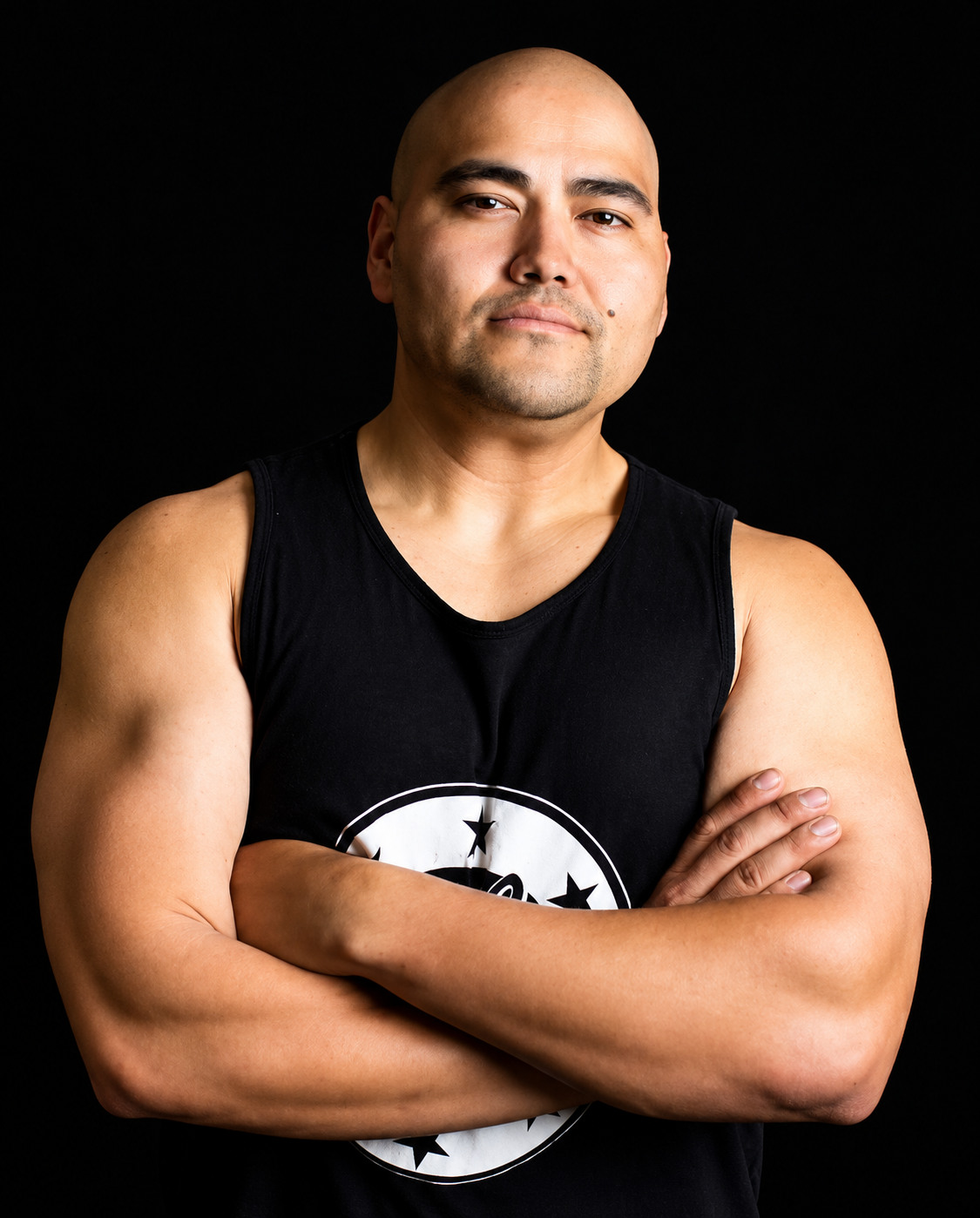
Richard Guerrero is the founder of RG Athletics and an independent personal trainer working from Custom Workouts in Santa Maria. His path into fitness began as a boot-camp participant before moving into coaching. In the interview, he reported about 16 certifications, master trainer status through his certification provider, and bodybuilding and powerlifting specializations. His current RG Athletics service mix spans one-on-one training, group training, youth training, online coaching and related fitness services.
This Muscle & Authority Magazine™ feature was prepared from the recorded interview with Richard Guerrero, RG Athletics-provided visual assets and the current official RG Athletics website used to verify the Santa Maria location, current service categories and complimentary-session entry point. The editorial focus is Guerrero’s movement standard, progression logic, program-change rhythm, progress tracking and client experience.
Statements about training, InBody use, progression, health-related accommodations and client experiences are attributed to or derived from Guerrero’s interview rather than presented as universal guarantees. This article is editorial and does not provide medical, rehabilitation, nutrition or individualized training advice. Planned future education is not presented as a completed credential.
- Recorded editorial interview with Richard Guerrero covering his training philosophy, progression logic, client experience, services, progress tracking and first-step process.
- Official RG Athletics website: rgathletics.com, reviewed to verify the Santa Maria location, current service categories and complimentary training-session entry point.
- Photographs, Richard Guerrero’s leadership image and logo provided by RG Athletics for editorial use.