

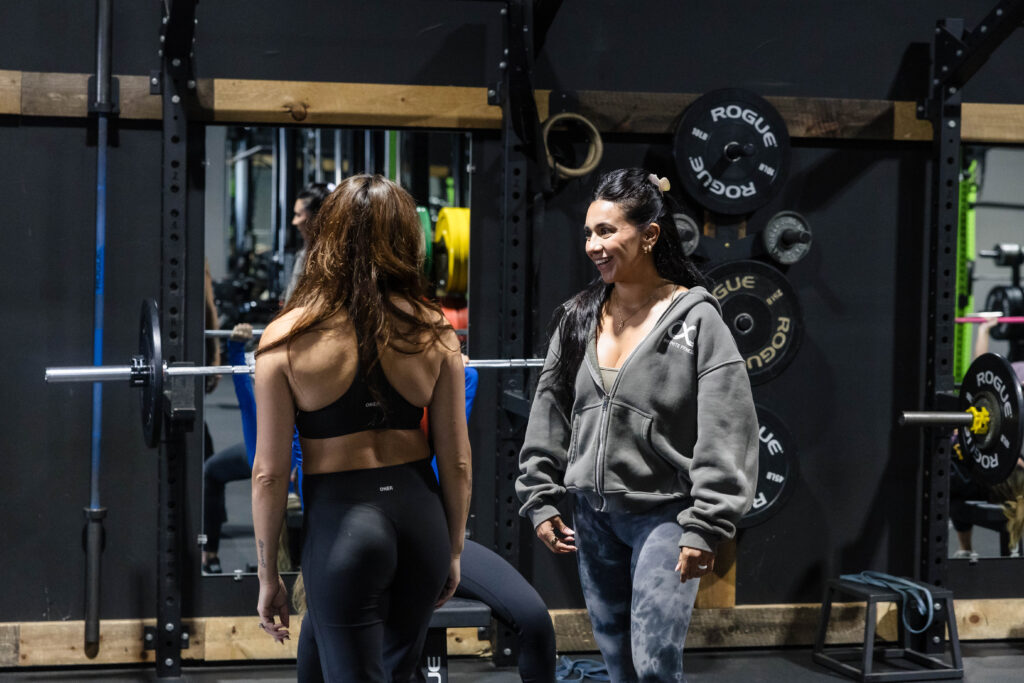
Infinite Fitness Redlands owner Wade McBride puts a first-time lifter and a member with years under the bar in the same class. What separates them is not the room or the hour. It is the version of each movement he hands them, and how much weight, if any, they are allowed to add to it.
The gym in Redlands, California, trains people in groups of 8 to 15, and McBride said each person gets a rack, a bench and a set of weights of their own. The classes are built on a short list of movements he believes every body should be able to do: the squat, the lunge, the row and the thrust. A newcomer may start with a bodyweight or box squat while the person at the next rack works under a loaded barbell.
His first rule is that form comes before load. In the recorded interview, McBride described the rest of the system around that rule: a conversation with most new members before the first workout, exercise swaps made in seconds when a joint complains, attendance checked every week and an InBody scan every month. The results he reports are counted in pounds on the bar.
Infinite Fitness Redlands teaches strength in groups, but each member works at a rack of their own on a version of the lift that fits them. Weight is added only after the movement is learned.
- Business:
- Infinite Fitness Redlands
- Location:
- Redlands, California
- Owner / Interview Source:
- Wade McBride, owner. His recorded interview provides the account of the gym’s classes, coaching decisions and tracking.
- Business Type:
- An independent group strength training gym. McBride worked there under the previous owner before buying the business.
- Training Focus:
- Barbell and foundational strength movements taught in coached classes, with technique established before load is added.
- Primary Users:
- McBride said his members are predominantly women from about 35 to 65, alongside men and first-time lifters who want structured, coached sessions.
“I think so often people want to lift heavy without earning the right to lift heavy.”
Wade McBride / Owner, Infinite Fitness Redlands
The First Conversation Happens at the Door
Most people who join Infinite Fitness Redlands meet McBride before they touch a weight. “Eight times out of 10, I’m meeting with people first before anything,” he said. He described waiting at the door, shaking a newcomer’s hand as they walk in and always setting time aside for these meetings.
The meeting is a conversation, not a workout. McBride said he asks what the person wants to accomplish and what they have tried before, and whether his gym is the right solution for them. Some people ask to try a workout first. He said he has limited spots for that, and that he still meets with them when they do.
From there he introduces the newcomer to the lead trainer. In his account, the trainer makes sure the person has a locker and a rack designated for them, shows them the rower or the skier if they need to learn it and gets them ready for class. The teaching of the lifts themselves is left for the class, where every exercise is explained to the whole group.
Muscle & Authority Magazine™ selected this feature because McBride describes a specific answer to a problem every group coach faces: how to teach strength to people at very different starting points in the same hour. His account connects the choice of movements, the order in which form and load are introduced, and the substitutions a coach makes during class. Trainers and gym owners can examine that sequence against their own floor.
Infinite Fitness Redlands at a Glance
A Rack, a Bench and Weights for Every Member
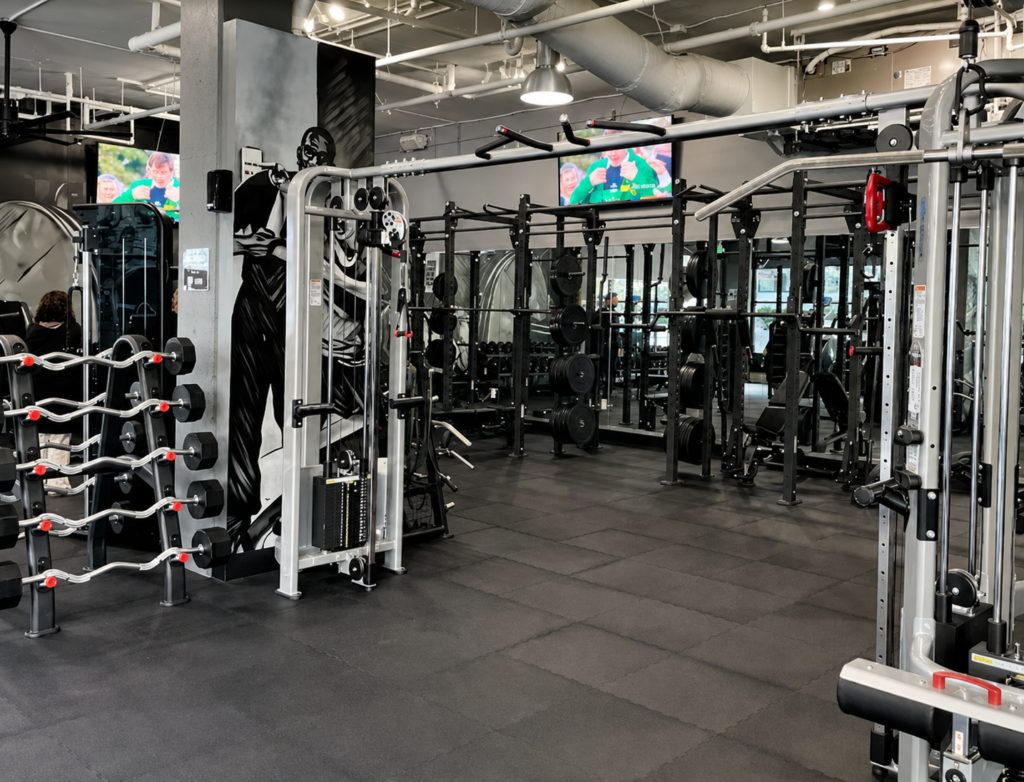
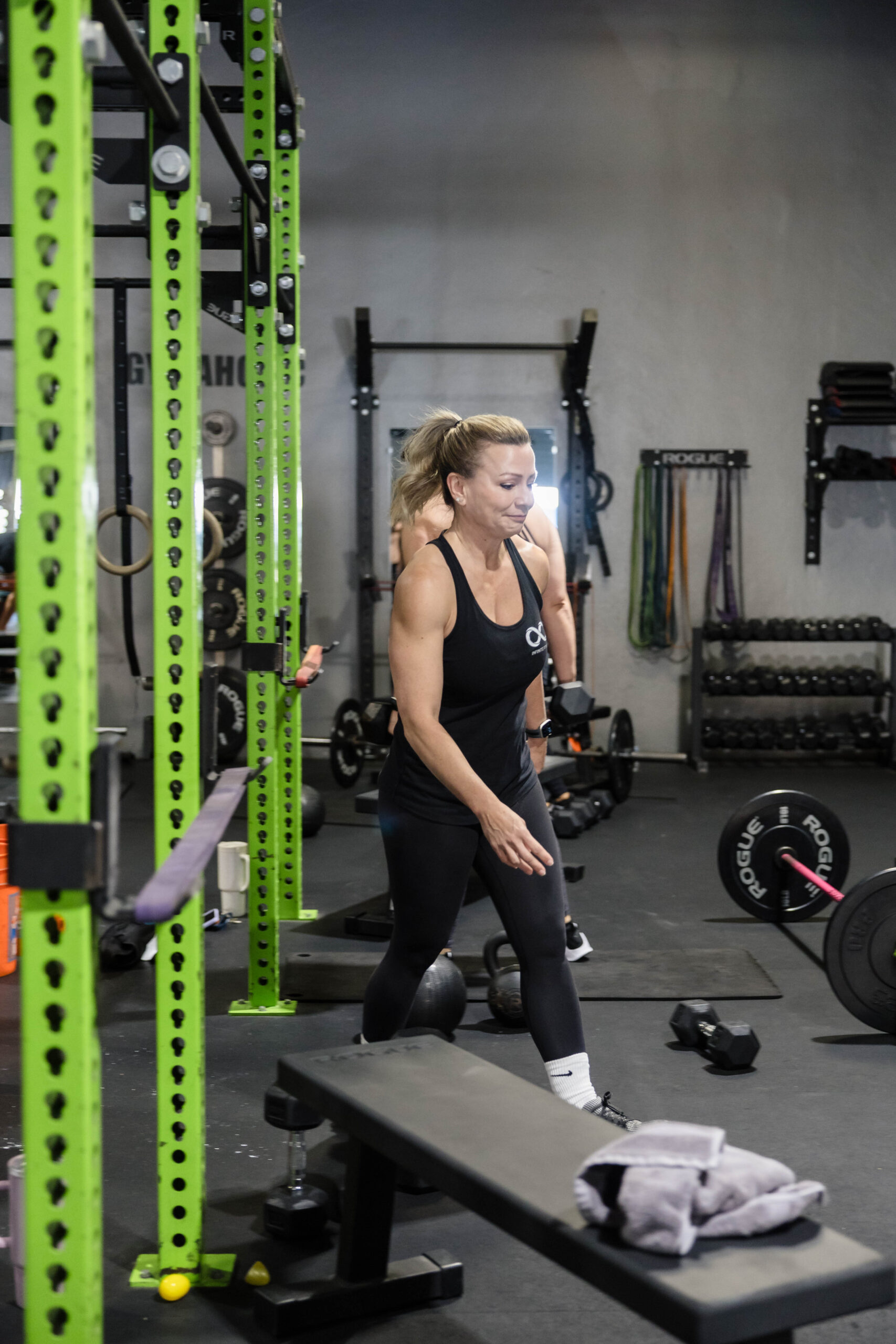
Infinite Fitness Redlands runs group training in classes of 8 to 15 people, and its main business is strength. What McBride emphasizes is how the room is divided. “Each person has their own rack, their own bench, and all their own weights in a group setting,” he said.
The arrangement is meant to give a class the attention of private training without losing the energy of a group. In McBride’s words, it “feels very like a one-on-one and intimate, but in that motivating group atmosphere.” A fixed station also means a coach always knows where to find a given member, which matters later when an exercise has to be changed quickly. That last point is an editorial reading of the setup, not a claim he made.
The classes draw a wide range of people. McBride said his members are predominantly women from about 35 to 65, though he also trains plenty of strong men, and that some people arrive for the first workout of their lives while others have trained thousands of times. What they share, he said, is wanting “structure where they don’t have to think about anything.”
Group fitness often trades individual attention for energy. One coach, many bodies and a fixed plan can leave little room to notice that one person’s squat looks different from the next. McBride’s format is an attempt to keep the group and recover the attention: fixed stations, a short list of movements taught again and again, and a coach expected to choose the right version of each lift for each person. The next sections look at how those decisions are made, beginning with the movements themselves.
Movements Every Body Should Be Able to Do
McBride does not write a separate program for each new member. “I’m not going to train someone differently,” he said. A person who is brand new goes into the class with everyone else.
The reason is his view of what training should cover. He described a set of basic movements, which he called primal moves, that he believes every human body should be doing. “Everyone should squat, row, thrust,” he said, and everyone should lunge.
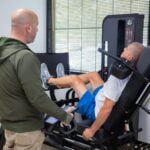
What changes is the version of the movement. For a first-time squatter, McBride said he might start with bodyweight squats, a supported squat or a box squat instead of a barbell back squat. For someone who has never done a lunge, he described having them hold rings or the bar and simply learn where to put their feet, so that the body can learn the pattern. He calls these regressions, and he treats choosing the right one as a skill a group coach has to develop by watching how people move.
The easier version is a starting point, not a separate track. “My goal is always to get them to that outcome,” he said, meaning the full movement the rest of the class is performing.
Teach everyone the same movements, start each person at the version they can do well, and add weight only after the form is right.
Form First, Then Weight
Asked for the most important belief behind his coaching, McBride gave it in a sentence: master form, then worry about weight. Load does not matter, he said, if the lift is being done wrong, because the lifter is likely to get hurt and the muscle is not getting the work it was meant to get.
He wants members to know what each exercise is for. “I’m working the muscle. I’m not trying to just move weight for no reason,” he said. In his account, strength follows once the movement is learned: a lifter who has mastered the form gets stronger fairly easily and, he said, does not get hurt. That last claim is his own. This feature did not review injury records.
The principle also sets the pace for adding load. McBride said people often want heavy weight before they are ready for it, and that the first job is to get comfortable and learn how the body moves. Weight is added as the lifter understands what each movement is supposed to accomplish.
The Infinite Fitness Redlands Method, Part by Part
Learn the movement. Earn the weight. Keep showing up.
The working principle at Infinite Fitness Redlands is that strength is built in order. McBride starts each member on a version of the squat, lunge or row they can perform well, and treats heavier loads as something earned through technique. From there, in his account, the deciding factor is repetition: the members who come to class consistently are the ones whose numbers climb.
The Class Explains Every Lift
A new member does not need a private lesson before the first class, McBride said, because of how the classes are run. He said everything is broken down, and that the trainer is “going to tell you which weight to grab, tell you how to do it and explain it in front of the class.”
Because the instruction is built into the hour, he said, the staff does not have to spend much extra time preparing a newcomer. The beginner hears the same explanation as the rest of the room.
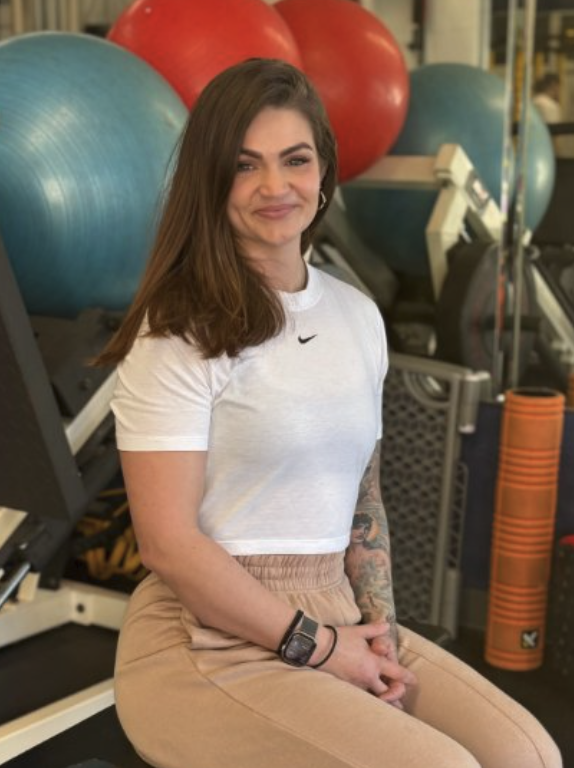
McBride does not lead every class himself. He said he has hired trainers, whom he described as compassionate, caring people who know how to make a newcomer comfortable in a first workout. He said he is at the gym every day, though not every weekend, and present for each class. He described his own job as knowing the members: their names, their families and what they are trying to do.
A Ten-Second Decision in a Class of 15
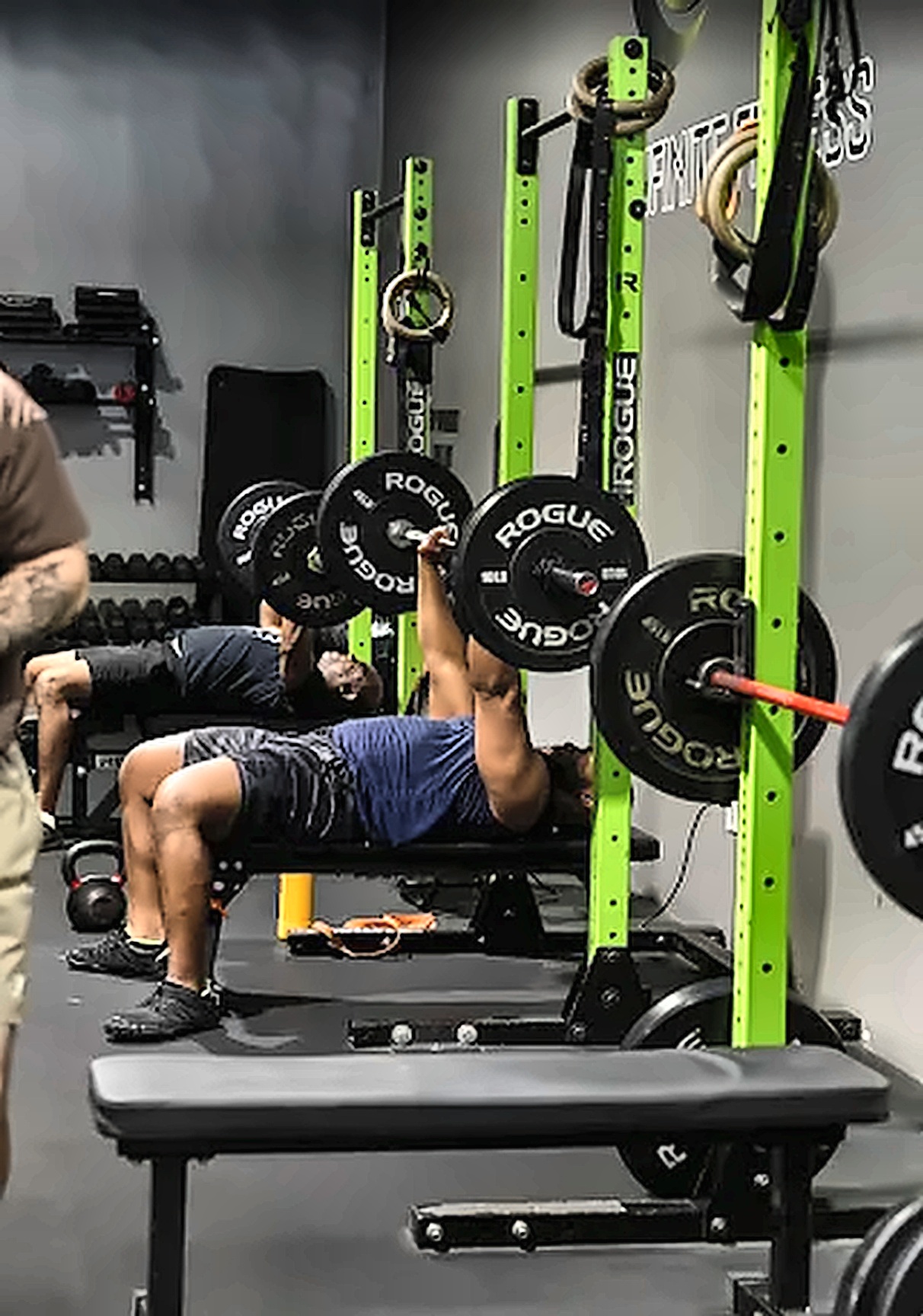
Adjustments, McBride said, are made case by case, and most of them start with an ache. If a member’s knees bother them on a lunge, he might switch them to a step-up. The substitute is chosen to keep the purpose of the exercise: he said he wants to stay with a unilateral move, one that works one leg at a time, while finding something easier on the sore spot.
A shoulder that complains during a barbell shoulder press gets similar treatment. McBride said a change in the pressing position, with the elbows kept in, is often much easier on the shoulders.
He described this as the real skill of training in a group setting. With a class of 15 and one member in trouble, he said, the coach has to know “what exactly I can do in like 10 seconds to help them, but still give them a great workout.”
McBride described coaching substitutions, not treatment. He did not describe diagnosing or rehabilitating injuries.
Attendance Is Part of the Program
McBride places what he called “a heavy emphasis on accountability.” He described constant attendance checks to make sure people are showing up, and said that once a week the staff reviews attendance for the entire membership and follows up with what he called a little subtle reminder.
The reasoning is simple. He acknowledged that everyone in fitness talks about consistency, and said it is true anyway. “If you squat every week, you’re going to get stronger. If you deadlift every week, you’re going to get stronger,” he said.
The lifts themselves leave room to keep improving. A barbell squat, he said, is the same movement for a strong lifter and a first-timer, and “no matter how good you get at it, you can always progress on it.”
The Infinite Fitness Redlands website lists accountability and nutritional guidance among its services, alongside group strength training. McBride said he and his staff help members with nutrition, though he did not describe a specific nutrition program in the interview.
What the Scans and the Barbells Show
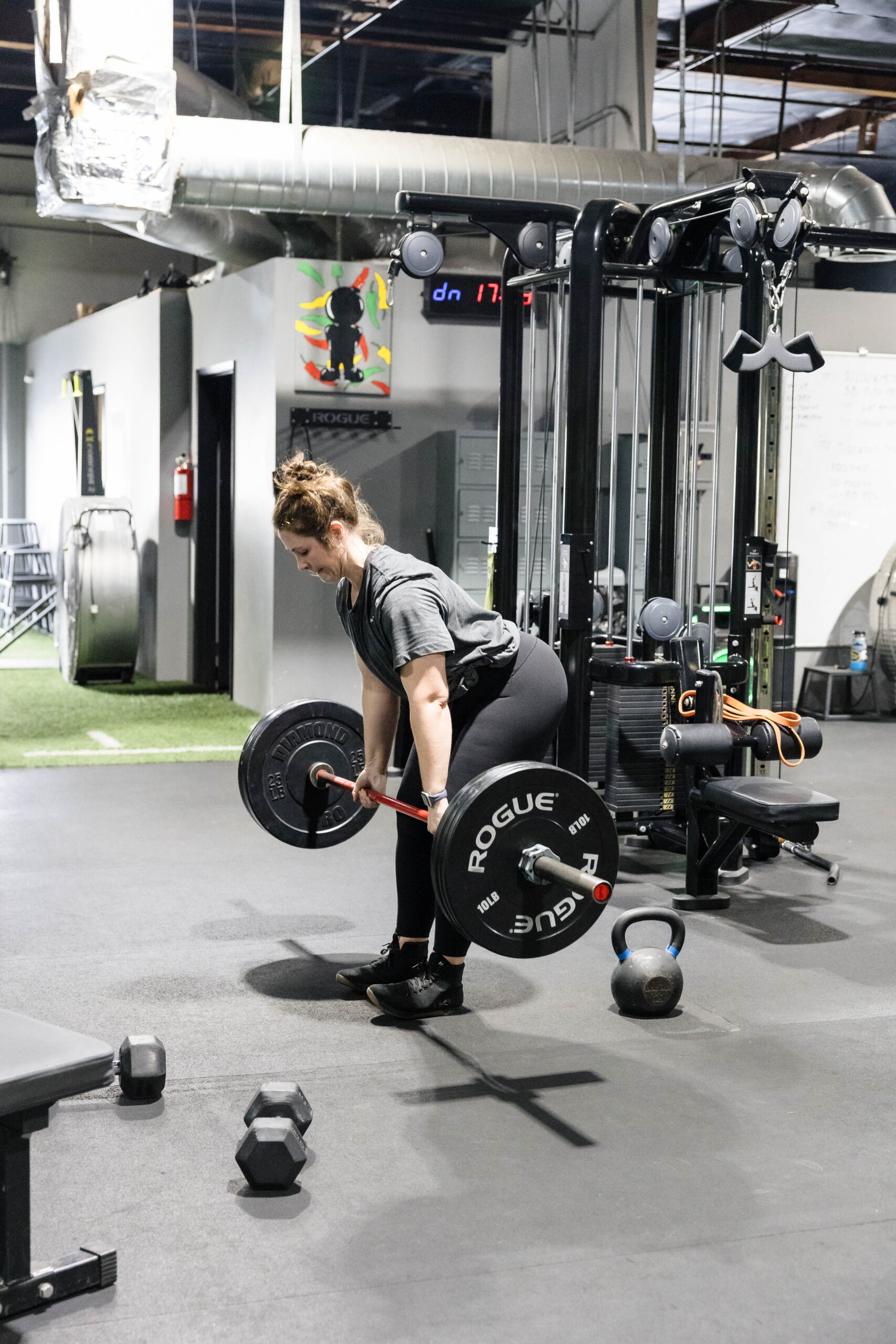
Infinite Fitness Redlands tracks progress in two ways, by McBride’s account. The gym has an InBody machine and runs monthly scans, and it watches the weight members use on their lifts. No scan data, training logs or averages were provided for this feature, so what follows is the owner’s description, not a reviewed record.
The examples he gave are about strength. He said he has women in their 40s squatting 225 pounds, and a few women who deadlift 365 pounds, or almost 400. He was careful about the cause. “I can’t take the credit for all of it, but they do come consistently,” he said.
His broader claim is about attendance. “I’ve never seen someone who has come to Infinite, who didn’t show up all the time, not get tremendously stronger,” he said. The statement reflects his observation of his own members. It is not a measured result, and this feature did not review attendance or strength records to test it.
Pushed, With Safety First
In a review supplied for editorial use, a member who signs as Deb G. wrote that the coaches at Infinite Fitness Redlands push her but always put the client’s safety first. She named McBride and two other coaches, and described him as someone who wants the best for his clients. Her account is consistent with the order McBride described, in which technique is settled before weight goes up. Her training records were not reviewed for this feature.
A Workout Still Counts on a Hard Day
McBride does not expect every session to be a breakthrough. He called himself a firm believer that anyone doing anything is great, and said a member who is in pain or has a problem area can still train by working around it, working through it or doing some stretches.
He counts that kind of session as a big win because the member is still there, and he said every workout is a good workout.
Read alongside the attendance checks, the logic is consistent. A program that depends on showing up every week has to give people a way to show up on the days they are sore, tired or limited. That is an editorial reading of his account.
“Not every day has to be record breaking.”
Wade McBride / Owner, Infinite Fitness Redlands
Who This Method Fits, and Who May Want Another Format
Infinite Fitness Redlands asks members to accept a fixed class, a short list of lifts and a coach who decides when the weight goes up. Based on what McBride described, it fits best with people who want to be taught strength training in a group and are willing to be patient with load while they learn.
- Adults, including those who have never trained, who want to learn the squat, lunge and other basic lifts with a coach present.
- People who want a planned class in which the trainer chooses the exercises and the weight to start with.
- Members who like a group setting but want a rack, bench and weights of their own.
- People who respond well to attendance checks and regular reminders.
- You want open gym time or a program written only for you; the main offering is the group class.
- You want to load heavy barbell lifts right away; weight follows form here.
- You prefer to train without anyone tracking your attendance.
- You need clinical rehabilitation instead of exercise substitutions made around an ache.
These fit observations are editorial inferences from the training model described in the interview, not judgments about any individual’s needs. A conversation with McBride is the most direct way for a prospective member to see whether the format suits their goals.
Classes, Small Groups and Nutrition Help
Group strength classes are the center of the business, but not all of it. McBride said the gym also offers small group training at fewer times: a morning session, one in the afternoon and Saturdays. He did not describe how those sessions differ from the main classes beyond their size.
The gym’s website lists three services: group strength training, nutritional guidance and accountability. It gives the address as 1200 Arizona Street, Suite B10, in Redlands. Listed hours begin at 5 a.m. on weekdays and run to 7:30 p.m. Monday through Thursday and 6:30 p.m. on Friday, with weekend hours from 8 a.m. to 12:30 p.m.
Equipment came up only in passing. Beyond the racks, benches and weights at each station, McBride mentioned a rower and a skier that newcomers are shown before class if they need to learn them. The interview did not cover class length or how a week of training is laid out.
What Sets Infinite Fitness Redlands Apart
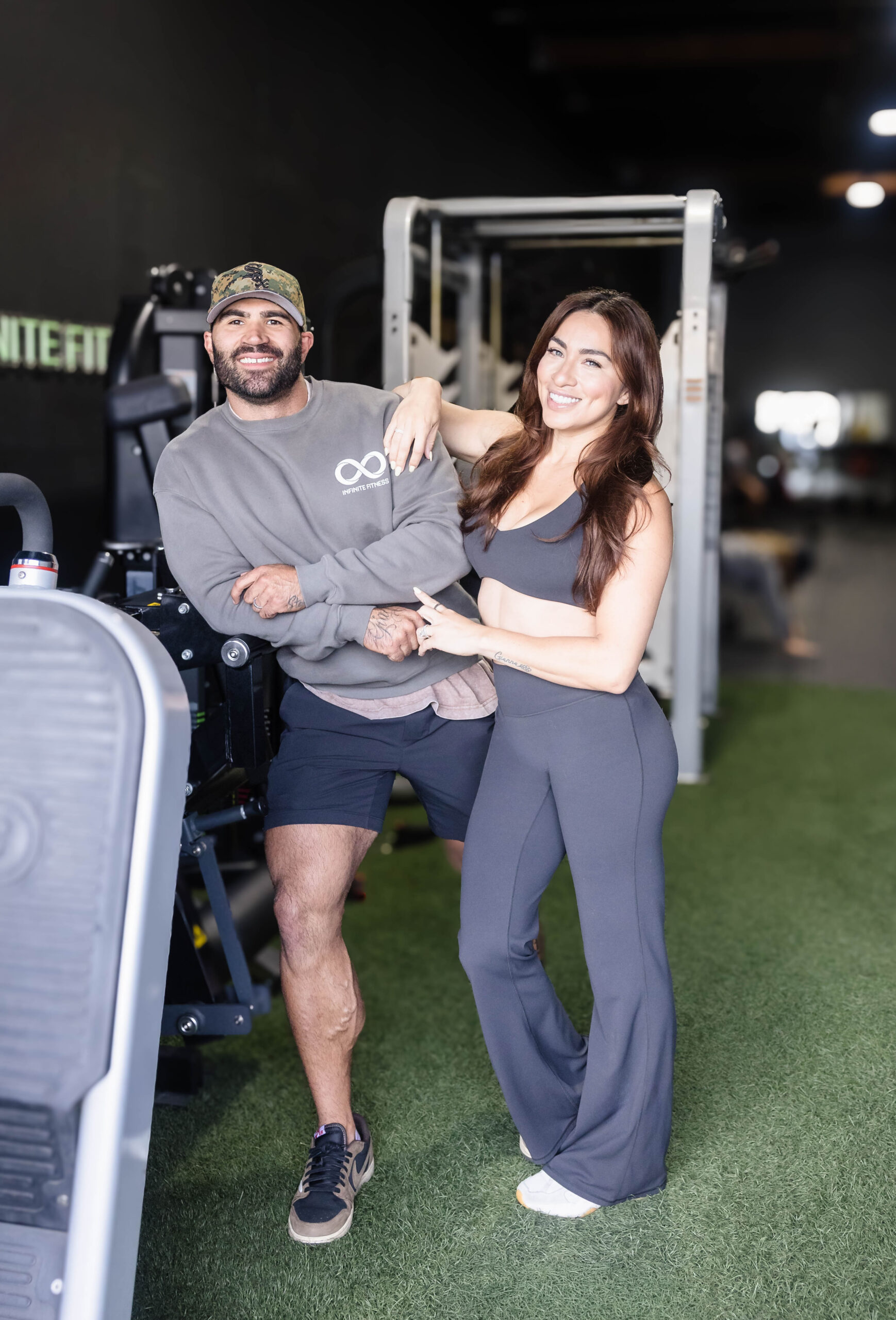
Infinite Fitness Redlands teaches strength in a class without giving up the individual station. Each member has a rack, a bench and weights, and the coach’s job is to fit the movement to the person instead of sorting people into separate programs.
It also puts technique ahead of load as a rule, not a preference. New lifters start on versions of the squat and lunge they can control, heavier weight is treated as something earned, and a sore knee or shoulder leads to a substitute that keeps the purpose of the exercise.
And it treats attendance as something to manage. Weekly attendance reviews, reminders and an owner who said he is present for each class are all aimed at the same outcome: members who keep coming back to the same lifts.
Infinite Fitness Redlands gives its city a coached group strength class in which beginners and experienced lifters train side by side, each at a rack of their own.
Its local relevance comes from who it serves. McBride said his members are predominantly women from about 35 to 65, people who he said want structure and come in to learn, and that the gym keeps more than 300 people in its program. He worked at Infinite Fitness Redlands under its previous owner before buying it, and said the business has grown every year since.
Strength Training for People Who Have Never Lifted
McBride’s account is most useful for what it says about beginners. He said some of his members started in their mid-60s without ever having worked out, and others walked in for the first workout of their lives. The format he described gives those people a defined place to stand, a short list of movements to learn and a coach who decides how hard each one should be.
The broader implication is about how barbell training is introduced. Heavy lifts are often presented as something for people who already know what they are doing. A class that starts with a supported squat and moves toward the barbell over time offers a different entry, provided the member accepts a slower start. That is an editorial reading of the model, not a claim McBride made about any member.
Key Takeaways
- One class can serve different starting points. McBride keeps beginners and experienced lifters together and changes the version of the movement instead of the program.
- Technique sets the pace for load. In his account, weight is added after a lifter can perform the movement well and understands what it is meant to work.
- A substitute should keep the purpose of the exercise. When a knee objects to a lunge, he looks for another single-leg movement instead of dropping the pattern.
- Group coaching depends on fast decisions. He described the skill as knowing what to change for one member in about 10 seconds while the rest of the class keeps working.
- Attendance is treated as a training variable. Weekly attendance reviews and reminders support his view that repeating the same lifts is what builds strength.
- The reported results are the owner’s account. McBride cited monthly InBody scans and specific squat and deadlift numbers. No scans or logs were reviewed for this feature.
Earned One Class at a Time
Infinite Fitness Redlands makes a plain argument about strength: the movement has to be right before the weight means anything. McBride applies it to everyone who walks in, whether they have never squatted or have squatted for years.
The rest of his system exists to keep that order intact in a room of 15 people: a station for each member, a starting version for each lift, a substitute for a sore joint and a weekly look at who has stopped coming. The interview leaves the measured results unreviewed, but the reasoning behind each coaching decision is clearly stated.
Infinite Fitness Redlands treats heavy lifting as something a member works up to. In McBride’s account, the coach’s judgment about form, substitution and timing carries the method. For trainers and gym owners, the useful lesson is how much of that judgment he has built into the structure of the class.
Start With a Call or Text to the Owner
The first step at Infinite Fitness Redlands is a conversation with McBride. He said the gym’s phone number, (951) 999-0899, is his own cell phone, and that a prospective member can call or text him directly. A direct message to the gym’s Instagram account, Infinite Fitness Redlands, reaches him as well. Either way, he said, a first visit can often be arranged the same day.
Expect to talk before you train. McBride meets most newcomers first to ask what they want to accomplish and what they have tried before. People who would prefer to try a workout first can ask, though he said spots for that are limited.
Questions worth bringing include which version of each lift you would start with, how the coaches decide when to add weight, and what they would change around an old injury or a sore joint. Those answers connect the first class to the method described in this feature.
Membership pricing was not discussed for this article. Because offers can change, confirm current terms with McBride directly. Infinite Fitness Redlands holds its classes at 1200 Arizona Street, Suite B10, and the website lists hours seven days a week.
Explore Infinite Fitness Redlands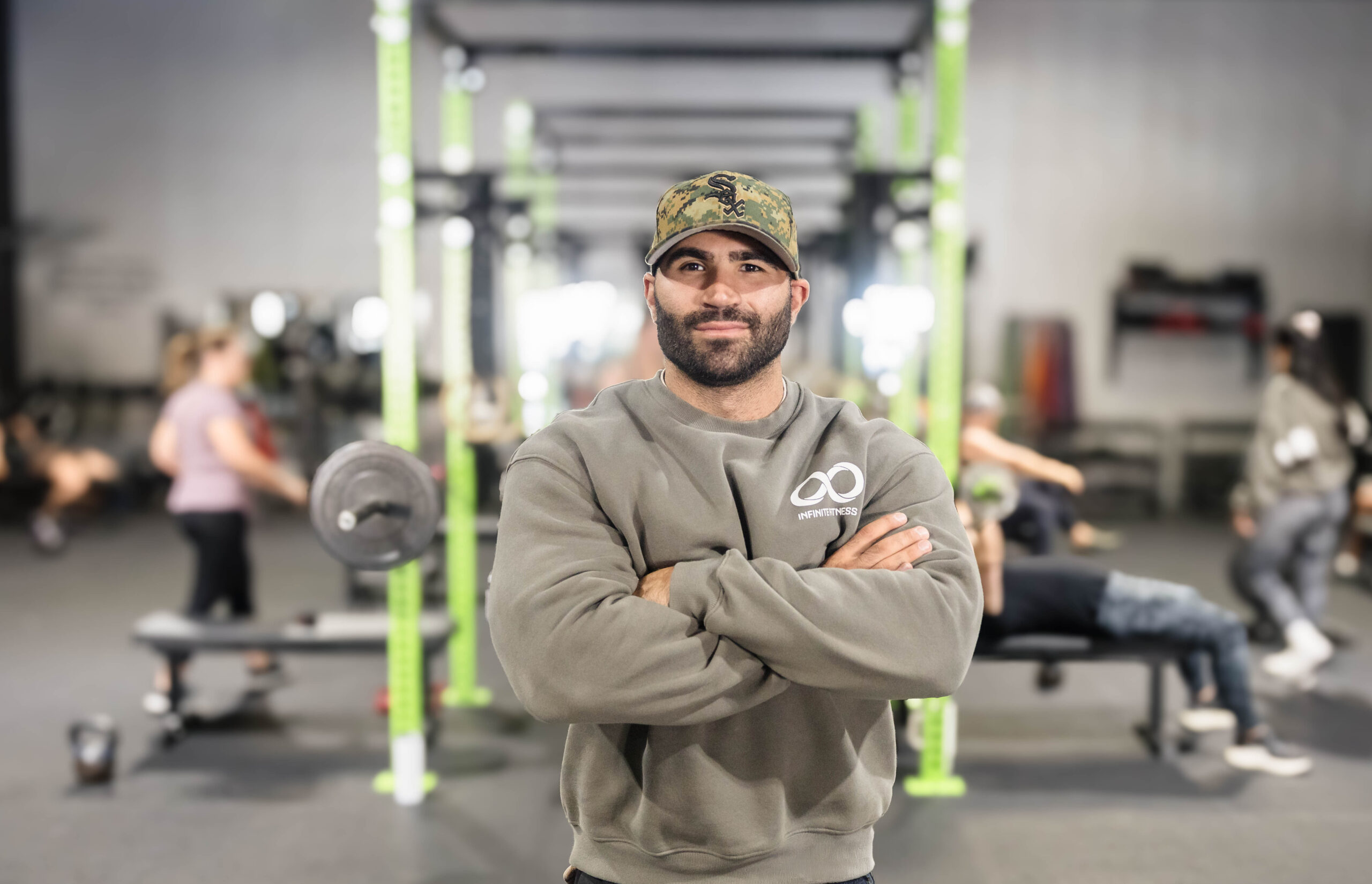
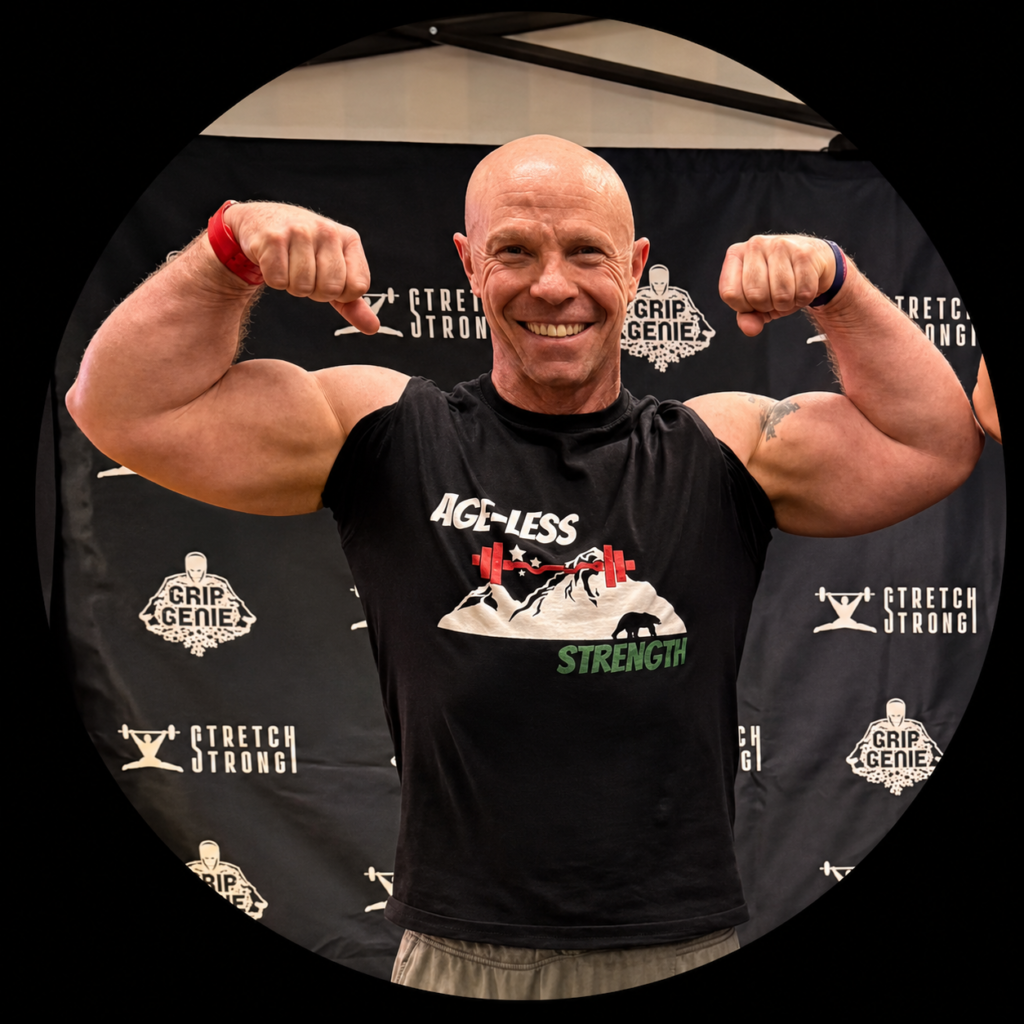
Wade McBride
Master the form of every movement first, then let the weight follow.
Wade McBride is the owner of Infinite Fitness Redlands, a group strength training gym in Redlands, California. He first worked at the gym as an employee under its previous owner, whom he credits as a mentor, and later bought the business.
He began lifting as a teenager and said he competed in a bodybuilding show at 17. Today he describes his coaching as purpose driven: a member should know which muscle an exercise is meant to work before adding weight to it.
He now oversees coached classes of 8 to 15 for a membership he put at more than 300 people, meets most newcomers himself and said he is present for each class. His coaching rests on a short list of foundational lifts, taught with form ahead of weight and tracked through attendance checks and monthly InBody scans.

Form, Substitutes and the First Call
A concise editorial briefing on how Infinite Fitness Redlands teaches its lifts, adjusts them and brings in new members.
What does a class at Infinite Fitness Redlands involve?
Wade McBride said classes hold 8 to 15 people, and each member has a rack, a bench and weights of their own. The trainer tells members which weight to pick up and explains each exercise in front of the class. The work centers on foundational lifts such as squats, lunges and rows.
How does Wade McBride handle beginners and sore joints in a group class?
Everyone trains in the same class, but the movement is scaled. A first-time squatter may start with a bodyweight, supported or box squat, and a member whose knees hurt on a lunge may be moved to a step-up. McBride said the substitute should keep the purpose of the exercise.
What is the first step for someone new to Infinite Fitness Redlands?
McBride recommends calling or texting him at the gym’s number, (951) 999-0899, or sending a direct message on Instagram. He meets most newcomers before their first workout to ask about their goals and training history, and said a visit can often be arranged the same day.
A group class can be judged by what happens when one person cannot do the planned exercise. In McBride’s account, the answer is a prepared substitute and a clear order of form before weight. His strength figures and scan practice are reported here as he described them. The underlying records were not supplied.
The feature is based on a recorded interview with Wade McBride, owner of Infinite Fitness Redlands. The Infinite Fitness Redlands website was reviewed for the address, hours, phone number and list of services. A member review supplied for editorial use is summarized in the Member Story. Photographs and the logo were provided by the business. Training descriptions, coaching decisions, adjustment practices and first-step guidance come from McBride’s interview unless the website is named as the source.
Statements about class format, exercise regressions, substitutions, attendance checks, InBody scans and member strength figures are attributed to or derived from McBride’s interview. None of these statements was independently verified, and no scans, logs or attendance records were reviewed. This article is editorial; it does not provide medical, rehabilitation, nutrition or individualized training advice, and it does not guarantee outcomes.
- Recorded interview with Wade McBride, owner of Infinite Fitness Redlands, covering the group class format, foundational movements, form and load, exercise adjustments, accountability, progress tracking and the first-step process.
- Member review supplied for editorial use by Deb G.
- Photographs and logo provided by Infinite Fitness Redlands.
- Infinite Fitness Redlands website: infiniteredlands.com, including its services page.