

Based on a recorded interview with Joe Bando.
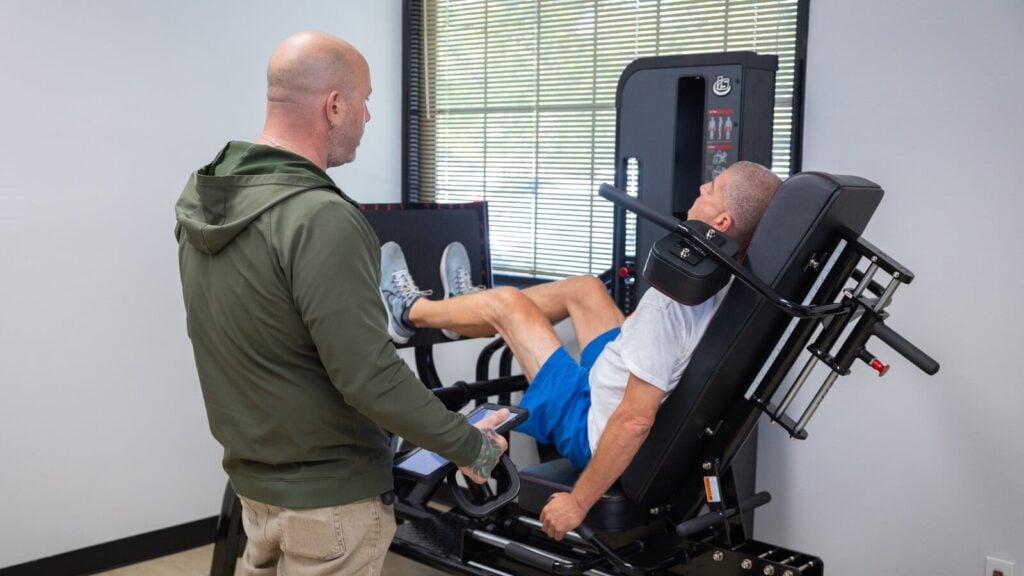
Sacred Strength Sanctuary Laguna Niguel owner Joe Bando does not count repetitions. He times them. At his private studio in South Orange County, each member trains one on one on machines built to be moved slowly, and a stopwatch, not a rep count, measures how long each muscle stays under tension before it gives out.
Bando, who said his members range from 16 to 91 years old, describes the business as doing one thing: building muscle. Most of the people he trains, about 80 percent by his estimate, are women over 60 who want to hold on to muscle and protect their bones as they age. They come in twice a week for about 20 minutes, move through roughly six machines and leave.
The method begins with a long conversation before any weight is lifted. From there Bando loads each muscle as heavily as form allows, keeps it under tension until it reaches muscular failure and removes other reasons to stop, down to keeping the studio at 67 degrees. The workout itself rarely changes. What changes is the weight, raised a few pounds at a time and logged so that progress can be reviewed about every six weeks.
The Clock Matters More Than the Count
Location: Laguna Niguel, California
Owner / Interview Source: Joe Bando
Business Type: Private one-on-one strength training studio
Training Focus: Super slow, high-intensity strength training on machines designed to be moved slowly, with sets timed under tension and taken to muscular failure
Primary Users: Members from 16 to 91, about 80 percent of them women over 60, along with busy professionals and athletes
The Intro Session Comes Before the First Set
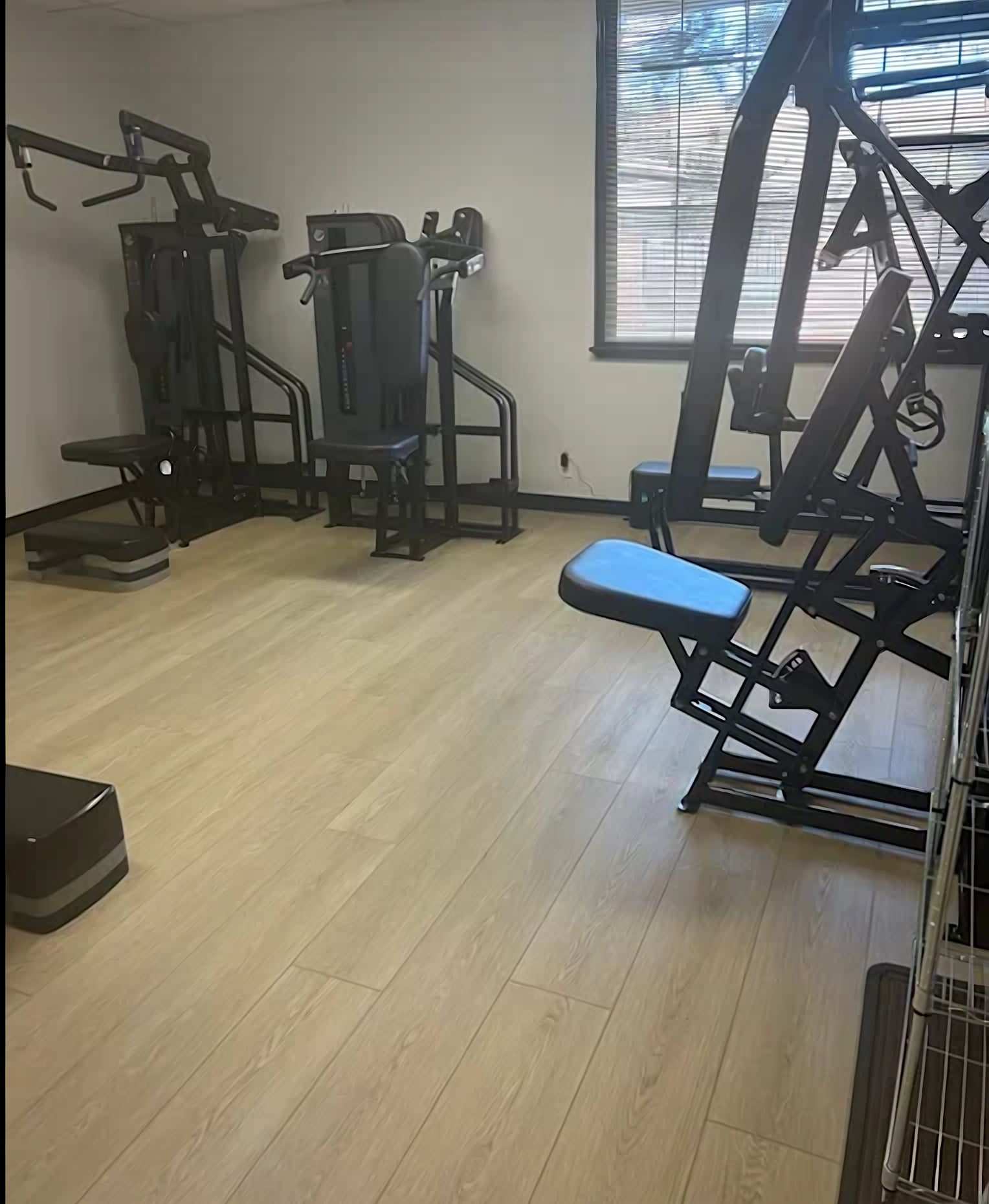
Every new member starts with a free introductory session, which Bando said runs about 50 minutes. It does not begin on a machine. The studio has two rooms with machines and a third, furnished with a couch, that he calls the Zen Den, where members can sit and meditate before or after their workouts. That is where he holds the intro conversation.
Bando said he takes a lot of time at this stage to understand the person physically: what injuries they have, how their joints feel, what aches and pains they carry. He wants to be sure, he said, that someone will be safe before he ever puts them on a machine. He also asks about diet, lifestyle, concerns and goals, because in his account the session is only part of the process. The workout creates micro tears in the muscle, and recovery outside the studio does the rest.
Then he explains some of the science, gives a tour of the machines and describes how they differ from the equipment in a commercial gym. The visit ends with a short workout on four or five machines, during which Bando teaches the cadence: moving the weight very slowly, which he said is unfamiliar to most people. When they feel it, he said, they understand that their muscles are doing all the work.
Sacred Strength Sanctuary Laguna Niguel at a Glance
One Member, One Trainer, About Six Machines
Sacred Strength runs no classes and no groups. Bando said everything is private and one on one, and that there is never more than one trainer and one trainee in the studio. Sessions are by appointment only, and most members are on the schedule twice a week.
The routine is built for efficiency. When a member arrives, Bando said, their machines are already set up. The session always starts on the leg press, then moves directly from machine to machine through a full-body sequence of about six machines, so a member is in and out in 15 to 20 minutes. He said members like that they do not have to think about anything: he guides the workout through every turnaround and tracks every weight himself.
The format serves a wide range of people. Bando said his members run from a 16-year-old trying to get strong and lose weight to a 91-year-old woman, with busy professionals, an actress and an elite professional big wave surfer among them. Most, though, are women over 60, and he said the workout was specifically designed for post-menopausal women looking to avoid osteoporosis.
Time Under Tension Replaces the Rep Count
“We don’t count reps,” Bando said. Instead, he times how long each muscle stays under tension, running a stopwatch through every set, and records the weight and the time in an app called EverStrong, which he said a friend who runs studios in San Francisco developed to track this kind of workout.
The load is chosen to make that time demanding. Bando said he is always trying to overload the muscle with as much weight as possible without sacrificing form in any manner, and to keep the muscles under deep tension. The target is not only muscle. He said he also wants to build up the tendons and make them more dense.
Much of that tension comes from how slowly the weight moves and from isometric holds, which he said some members see as quite brutal, almost like torture, but which he considers a very effective way to stimulate the muscles deeply. In his words, “I dance with tension all day,” adjusting each set as the member works through it.
Failure Is the Only Reason to Stop
Most members work to muscular failure, the point at which the muscle can no longer move the weight. Bando said injuries sometimes change that, but the aim is clear: in his account, the only thing that should end an exercise is the muscle.
So he removes other reasons to stop. Bando said the studio is kept at 67 degrees so that members do not overheat and quit because of the heat rather than the muscle. The only acceptable reason to stop, he said, is a muscle at complete fatigue or failure.
Reaching that point also means getting past what Bando calls mental limitations. “I communicate with their muscles,” he said. He watches everything about a member during a set, including form, breathing and facial expressions, and said the work brings people to a vulnerable place, so they have to trust him. Getting to know each member’s psychology, in his account, is how he builds that trust and pushes them past the limits they perceive.
The Sacred Strength Method, Part by Part
One Method, a Different Approach for Each Member
Bando said he trains nearly everyone the same way. What changes from member to member is the coaching around the method. Asked for the most important principle behind his approach, he said he wants to meet people where they are, so that he can bring them beyond the limits they believe they have.
That sometimes means being soft, gentle and calm until it is time to raise the intensity, he said. For some members he brings humor to put them at ease; for others the session is closer to a quiet meditation. He described it as a transference of energy, and said he avoids bringing excitement and emotion to a member who does not need it.
Bando, who is also a stand-up comedian, compared the skill to working a room: every crowd is different, and the performer has to find where it is and get its attention. In his account, the same is true of each member who walks into the studio, even when the machines, the cadence and the goal of the set do not change.
Injuries Change the Setup, Not the Method
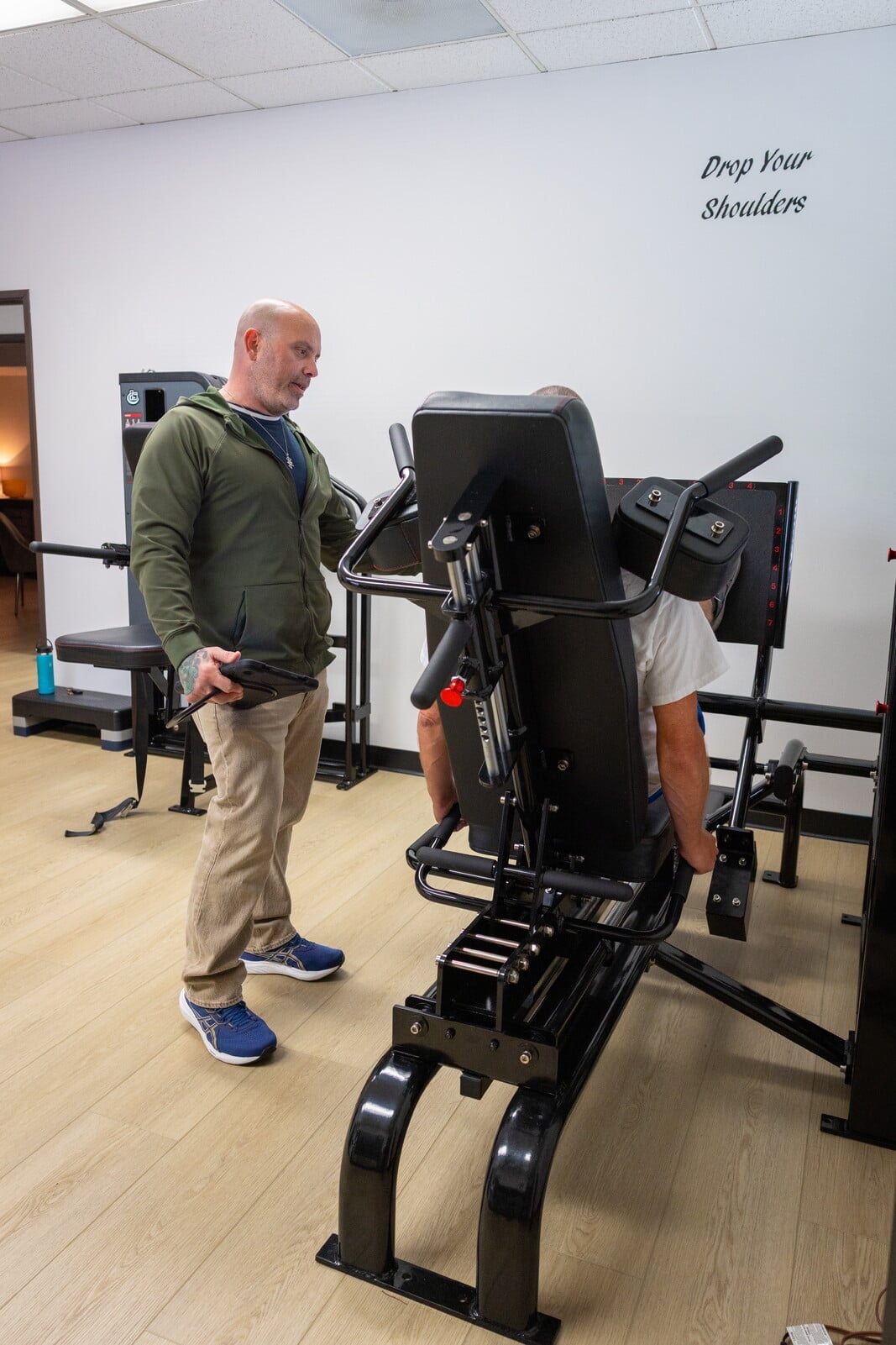
Injuries are the main reason a session looks different. Bando said much of his adjustment work comes down to how the machines are set up and the range of motion a member uses, and sometimes the weight. The intro session’s questions about injuries, joints and pain exist so those decisions are made before a member’s first set.
The studio’s website says it works with people who have chronic pain or who are recovering from or preparing for procedures such as hip or knee replacements, adjusting range of motion, resistance, positioning and exercises for each person. Its FAQ is explicit about the limit: “This is not about pushing through pain.”
That distinction matters for reading the rest of the method. The limits Bando wants members to push past are mental ones, the urge to quit before the muscle is finished. Pain and injury, in his account and on the website, are reasons to change the setup rather than obstacles to push through.
Two or Five Pounds at a Time
Once a member’s routine is set, it stays set. “There’s never anything new,” Bando said, describing the same workout on every visit. Progression comes through progressive overload: he raises a member’s weight by two pounds or five pounds, depending on how much time under tension they achieved and how easily they handled the load.
In his account, a weight that becomes a little easier to handle is the sign of progress, and the reason to add more. He does make exceptions when a member asks for something specific. He described a member who came in with a picture of her daughter’s back and said she wanted her back to look like that, so he added a couple of exercises. For the most part, though, the routine does not change.
Bando treats that repetition as a lesson in itself. He said his goal is to teach members that boring is progress: the workout does not need to be exciting or flashy if the weight keeps going up. He put the question to a hypothetical member a year in, pushing 100 more pounds on the leg press: would that still feel boring? If someone does plateau on a machine, he said, he may try new strategies such as changing the order of the exercises, though he said that rarely happens.
What the Logs Are Meant to Show
The recorded interview explains how Sacred Strength measures progress more than it reports results. Bando did not share logged data, averages or group results, and no measurements were provided for this feature. What he described is the system: every workout recorded in the app, with weight and time under tension graphed and reviewed with each member about every six weeks. More weight or more time, he said, are the results. In leaner members, he added, he can often see the change as muscle definition.
He also described individual outcomes. Bando said one long-time member who arrived with severe osteoporosis had a bone density scan after a little more than a year of training that, by his account, showed a gain of 0.4. He said he has about 80 members and that each has a story of what has changed since they started. These are the owner’s accounts, and this feature did not review any member’s scans, medical records or training logs.
A Short Workout in a Busy Schedule
In a review supplied for editorial use, Dr. Mindy Bixby, who signs it as a board-certified neurologist, wrote that Bando had been very instrumental in building “a strong body and a grounded mind” through her practice at Sacred Strength. She described having found a workout that fits into a busy schedule and said it had produced tremendous results both physically and mentally. Her account reflects the format Bando described: two short, fully guided sessions a week. Her logged results were not reviewed for this feature.
Recovery Happens Outside the Studio
Bando frames the session as the start of the work rather than the whole of it. He said all he does in the studio is create micro tears in the muscles, and that the real change happens outside, which is why the intro session asks about diet, lifestyle and recovery before any training begins.
The schedule reflects that. Most members train twice a week, and the studio’s website says sessions allow full recovery between them and that some members train once a week, depending on schedule and goals. The Zen Den gives members a quiet place to sit and meditate before or after a session.
Bando said the training often spills into the rest of a member’s life. Members who start to feel more firmness in their muscles want to see more of it, he said, and begin eating better. He described the studio as a catalyst for healthier living, an observation drawn from what members tell him rather than from any tracked measure.
Who This Method Fits, and Who May Want Another Format
Sacred Strength’s method asks members to accept a narrow, repetitive routine in exchange for close supervision and a precise record. Based on what Bando described, it fits best with people who want guided strength training in a private setting and are willing to judge progress by the numbers in a log rather than by variety.
- Adults, especially women over 60, who want to build muscle with aging and bone health in mind.
- Busy people who want a full-body strength session of about 20 minutes, twice a week.
- Members who want every set guided, timed and recorded by a trainer in a private room.
- People who are content to repeat the same routine and judge progress by the weight logged.
- You want classes or open gym time; every session is private and by appointment.
- You want cardio conditioning or varied workouts; the studio does one thing, build muscle.
- You dislike working to muscular failure or long holds that some members find brutal.
- You need clinical rehabilitation rather than strength training adapted around an injury.
These fit observations are editorial inferences from the training model described in the interview, not judgments about any individual’s needs. The free intro session is the most direct way for a prospective member to see whether the format suits their goals.
Machines Built to Be Moved Slowly
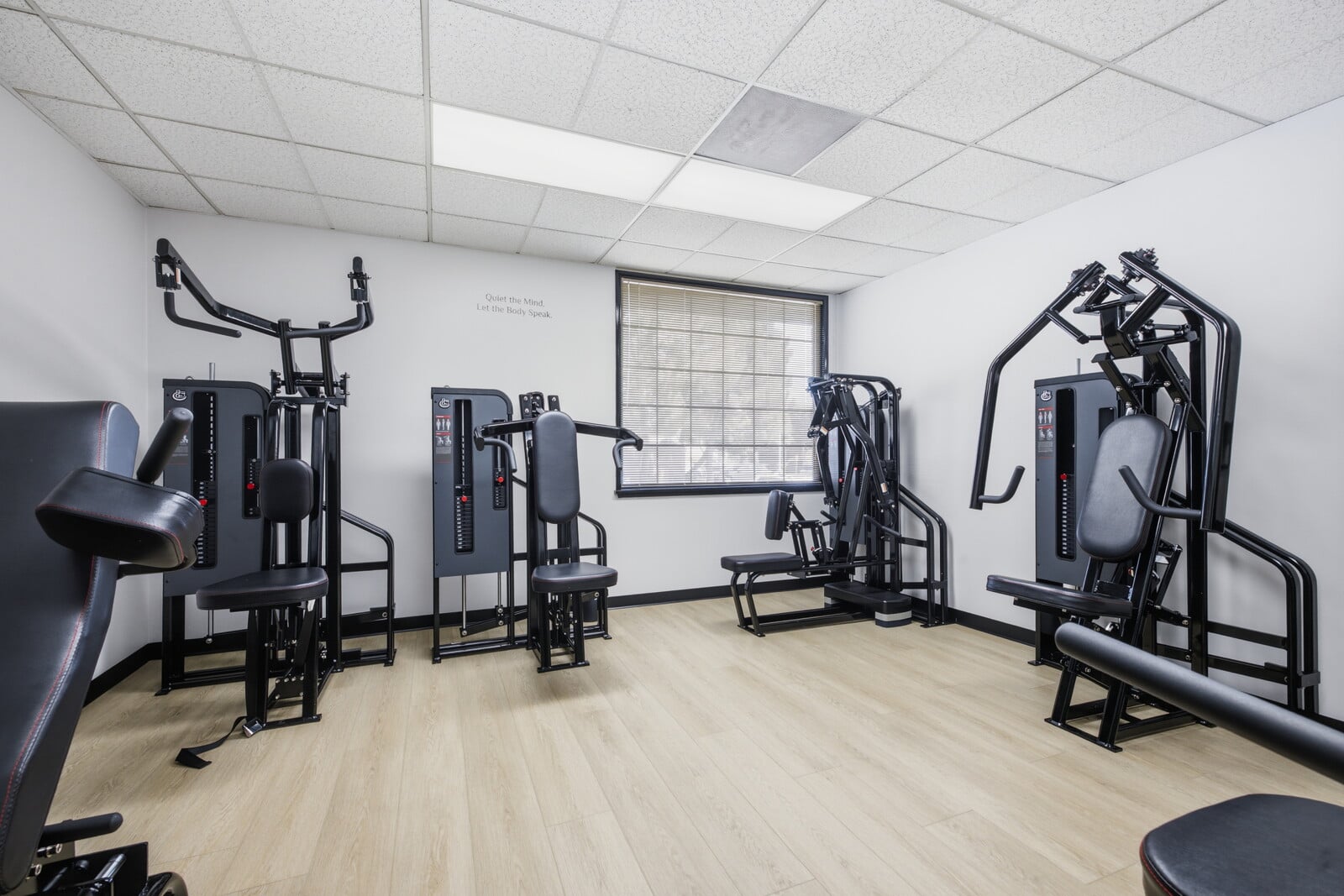
The equipment carries much of the method. Bando said the studio uses machines from a company called Imagine Strength that are designed to be moved slowly and to provide a consistent strength curve throughout each movement. During the intro, he explains to new members why he considers them superior to the machines in a traditional commercial gym.
The approach has a lineage he traced in the interview. Bando said he trained in Newport Beach with a trainer named Wes, who had been taught by Ken Hutchins, an engineer at Nautilus whose science Bando called the foundation of what the studio does. Wes worked on a small set of rare prototype machines, and Bando began training some of Wes’s clients there before opening his own studio.
The studio’s website describes the same mechanics: controlled resistance on specialized machines, momentum removed and tension kept constant, with the trainer monitoring speed, load selection, alignment and breathing and adjusting in real time. In practice, Bando said, the slow speed is what teaches new members the method’s central lesson, that the muscles are doing all the work.
What Sets Sacred Strength Sanctuary Apart
Sacred Strength measures strength work in seconds and pounds. Every set is timed under tension, every weight is logged, and members review the graphs with Bando about every six weeks, which gives both sides a running check on whether the training is working.
It also runs a strictly private format. With one trainer and one member in the studio, machines set up in advance and no classes, Bando can watch each member’s form, breathing and expression through the whole set and decide when to raise the weight. The website lists Dr. Amanda Gale-Bando, a behavioral health psychologist, as the studio’s clinical director alongside him.
And it treats sameness as part of the method. There are no new exercises to learn each week, no rep targets and no group pace to match. In their place, Bando’s account offers a fixed routine, a controlled room and a weight stack that is expected to keep moving.
Strength Training Framed Around Aging, Not Aesthetics
Bando was direct about what the method is for. “This isn’t about aesthetics,” he said, though he acknowledged that some of that happens. In his account, the work is about people aging well: avoiding muscle atrophy and bone density problems, feeling stronger and improving balance. He said the workout was designed with post-menopausal women and osteoporosis in mind, which helps explain the makeup of his membership.
The broader implication is about time. A full-body session of about 20 minutes, twice a week, asks less of a schedule than many strength programs. For adults who have avoided strength training because of the time it takes or the setting it happens in, that format may lower the barrier, provided they accept the intensity the short session demands. That is an editorial reading of the model, not a claim Bando made about any member.
- Every new member starts with a free intro session of about 50 minutes covering injuries, lifestyle and goals, a studio tour and a short workout on four or five machines.
- Sessions are private and by appointment: one trainer, one member, about six machines and 15 to 20 minutes, usually twice a week.
- Bando does not count repetitions; he times each set under tension and logs the weight and time in the EverStrong app.
- Members work to muscular failure on machines designed to be moved slowly, and the studio is kept at 67 degrees so heat is not the reason to stop.
- The routine stays the same, and weights rise by two or five pounds as a load becomes easier to handle.
- Injuries change the machine setup, range of motion or weight, and logged results are reviewed with members about every six weeks.
Slow Enough to Feel, Simple Enough to Repeat
Sacred Strength Sanctuary Laguna Niguel makes a precise case for strength training that looks unremarkable from the outside. Bando’s method asks a single question of every set: did the muscle stay under enough load, for long enough, to reach failure with good form?
Everything else in the system serves that question: the long intro conversation, the machines set up before a member arrives, the stopwatch, the cool room and the few pounds added when a load gets easier. The interview leaves open how the logged numbers have moved across the studio’s members, but the decision-making behind each step is clearly described.
For someone considering Sacred Strength, Bando said the first step is to visit the website or call the studio and set up a free introduction session, then come in, see what the studio does and decide whether it is a fit. There are no classes or groups; every session is private and one on one.
The intro runs about 50 minutes. Bando said it begins with a conversation about injuries, aches, diet, lifestyle and goals, followed by a tour of the machines and a short workout on four or five of them, during which he teaches the slow cadence. Pricing is discussed at the end. Members who join train by appointment, most of them twice a week, at the studio on Town Center Drive in Laguna Niguel.
Explore Sacred Strength Sanctuary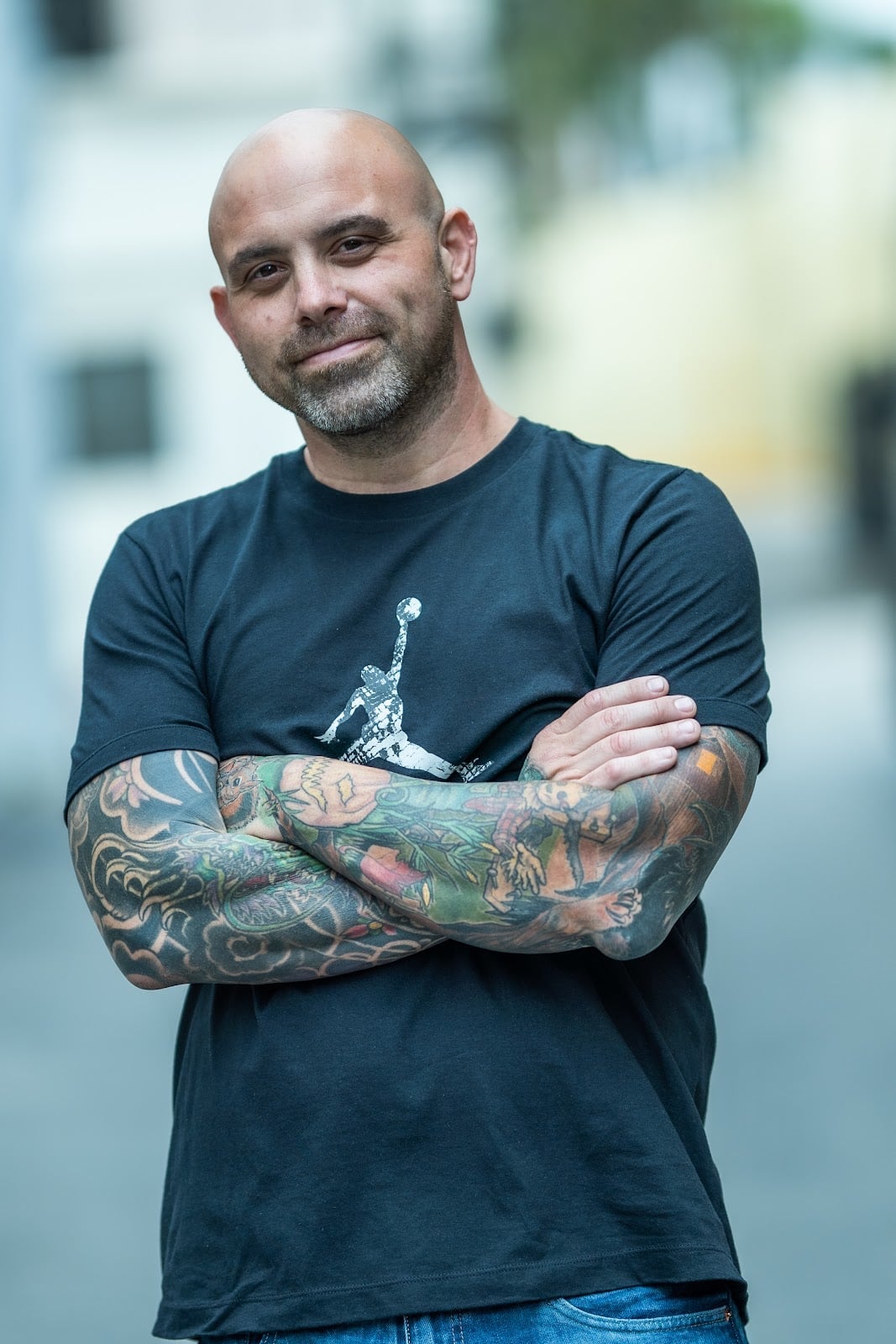
Joe Bando is the owner and operator of Sacred Strength Sanctuary, a private one-on-one strength training studio in Laguna Niguel, California; the studio’s website lists him as Director of Operations and Lead Strength Therapist. He leads the studio with his wife, Dr. Amanda Gale-Bando, whom the website lists as Clinical Director. Bando came to super slow training as a member, through an introductory session at a San Francisco studio, and later trained in Newport Beach with Wes, a trainer taught by Ken Hutchins, before he began training Wes’s clients himself. He now works with about 80 members, from 16 to 91 years old, on machines designed to be moved slowly, timing each set under tension, taking it to muscular failure and logging every weight and second. He is also a stand-up comedian, an experience he says shapes how he reads each member.
The feature is based on a recorded interview with Joe Bando, owner and operator of Sacred Strength Sanctuary. The Sacred Strength Sanctuary website was reviewed for business details, role titles, the method and FAQ pages and the introductory session. A member review supplied for editorial use is summarized in the Member Story. Photographs and the logo were provided by the business. Training descriptions, programming decisions, adjustment practices and first-step guidance come from Bando’s interview unless the website is named as the source.
Statements about the intro session, time under tension, muscular failure, progression, tracking and member outcomes are attributed to or derived from Bando’s interview. None of these statements, including the bone density account, was independently verified. This article is editorial; it does not provide medical, rehabilitation, nutrition or individualized training advice, and it does not guarantee outcomes.
- Recorded interview with Joe Bando, owner and operator of Sacred Strength Sanctuary, covering the introductory session, machine-based super slow training, time under tension, muscular failure, progression, tracking and the first-step process.
- Member review supplied for editorial use by Dr. Mindy Bixby.
- Photographs and logo provided by Sacred Strength Sanctuary.
- Sacred Strength Sanctuary website: sacredstrengthsanctuary.com, including its method and FAQ pages.