


Location: Pioneer Square, Seattle, Washington
Owner / Lead Teacher: Christl Marcontell
Interview Source: Christl Marcontell
Business Type: Pilates studio offering private instruction, semi-private groups, small classes, and MELT Method education
Training Focus: Comprehensive Romana’s Pilates across the full apparatus range, breath-led core recruitment, structural stability, symmetry and balance, choreographic flow, consent-based hands-on teaching, and neural fascial self-care through the MELT Method.
Teacher Training Lineage: Romana’s Pilates International Instructor Training Program; Christl Marcontell was certified as a teacher in 1999 by Romana Kryzanowska, Joe Pilates’ protégée and a Grand-Master teacher trainer.
Apparatus Note: Kinesia Pilates can teach on any classical Pilates apparatus; Gratz Pilates is the apparatus manufacturer Christl regards as a gold standard, not the teacher-training program.
M&AView Contents
A structured guide to the training methods, coaching standards, progression system, client experience, and evidence examined in this Authority Spotlight.
Christl Marcontell did not arrive at Pilates through the fitness industry. She arrived through dance, which she began at four and never abandoned, and through a collision in her early twenties that left her with a shoulder broken in several places. She kept dancing, including aerial work on low-flying trapeze. What she could not do was sit still for a living. Movement stopped being a preference and became a structural requirement of her life.
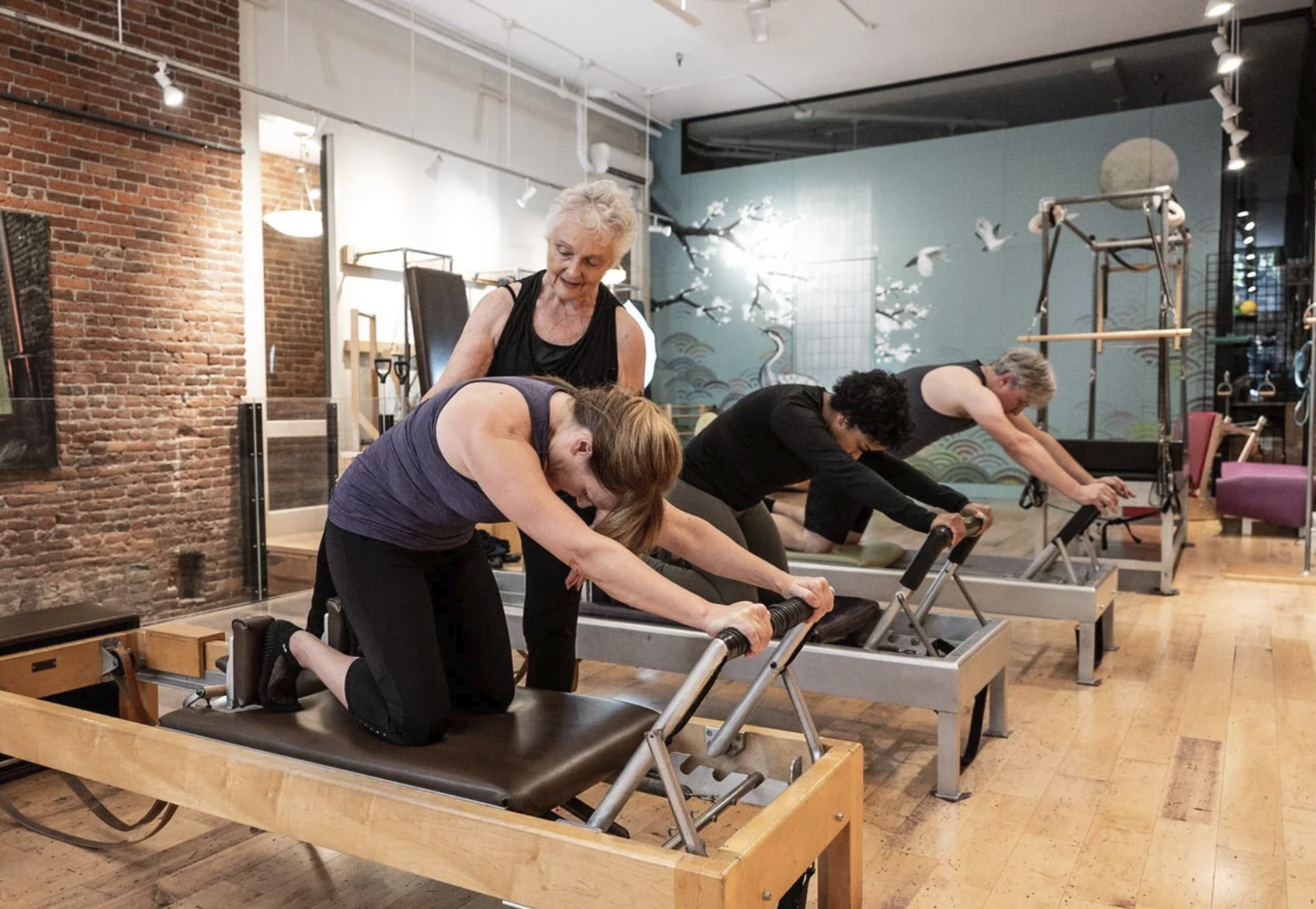
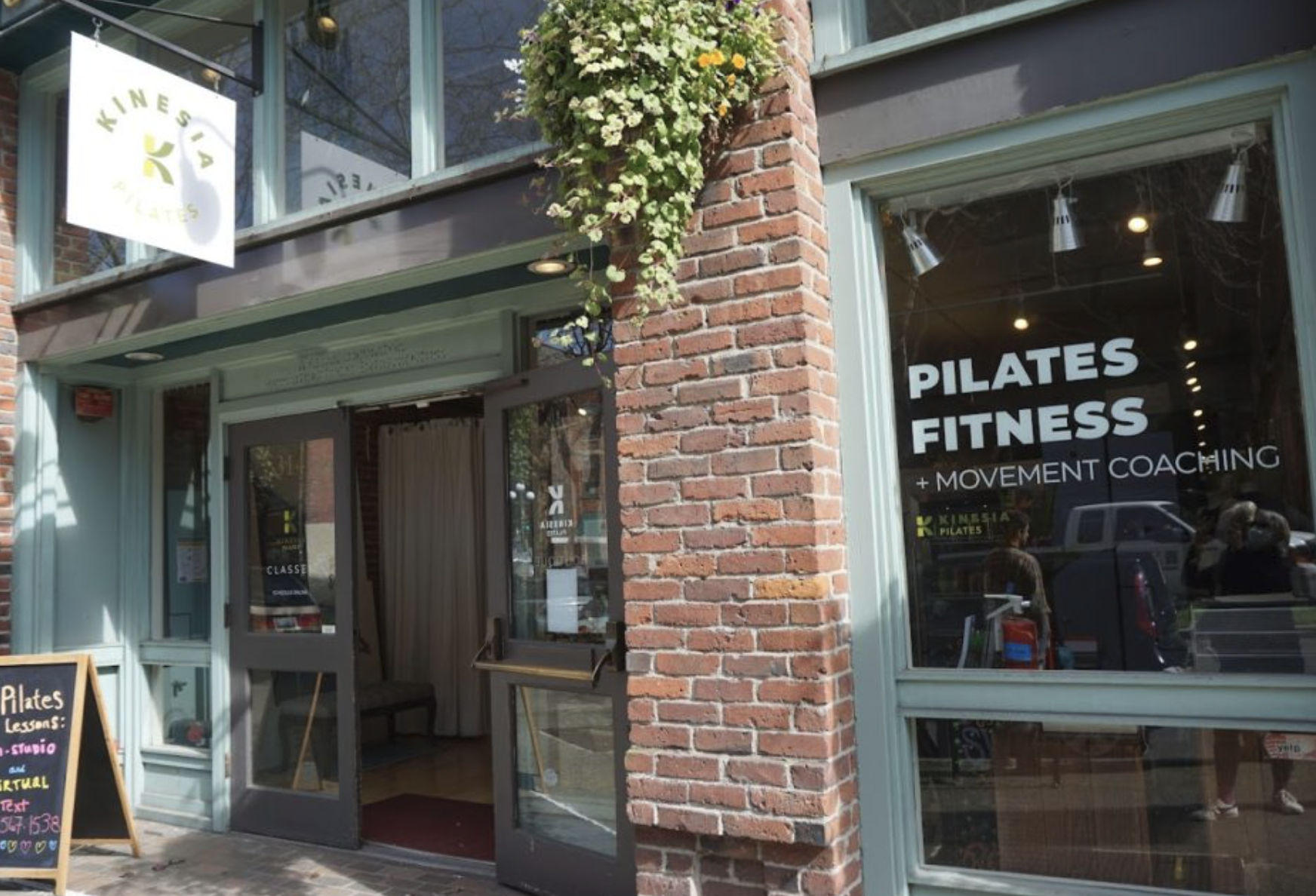
That history explains the studio she runs today in Pioneer Square. Kinesia Pilates serves roughly eighty to ninety regular clients inside a calm, high-ceilinged space in one of Seattle’s oldest neighborhoods, surrounded by galleries, stadiums, architecture offices, and startups. Clients arrive carrying the day. The method they meet is not designed to exhaust that day out of them. It is designed to teach them how to find their own structure underneath it.
- Why Marcontell treats resilience, rather than force or endurance, as the property that makes strength usable.
- How the comprehensive Romana’s Pilates curriculum, Romana’s Pilates International Instructor Training Program lineage, and full apparatus range shape what a session can teach.
- Why she considers breath, not abdominal tension, to be the entry point to genuine core recruitment.
- How private lessons, invitation-based semi-privates, and three tiers of small class work create distinct routes through the method.
- Where the MELT Method fits, and why Marcontell sequences connective tissue work ahead of structural strength work.
Asked what consistently produces results across very different clients, Marcontell does not name an exercise. She names communication. Most people, she observes, walk in fighting something: a tight back, a stubborn hip, a body that has become an opponent. Her first task is to interrupt that argument and help the person establish what she calls a body baseline, a reliable sense of where they actually are.
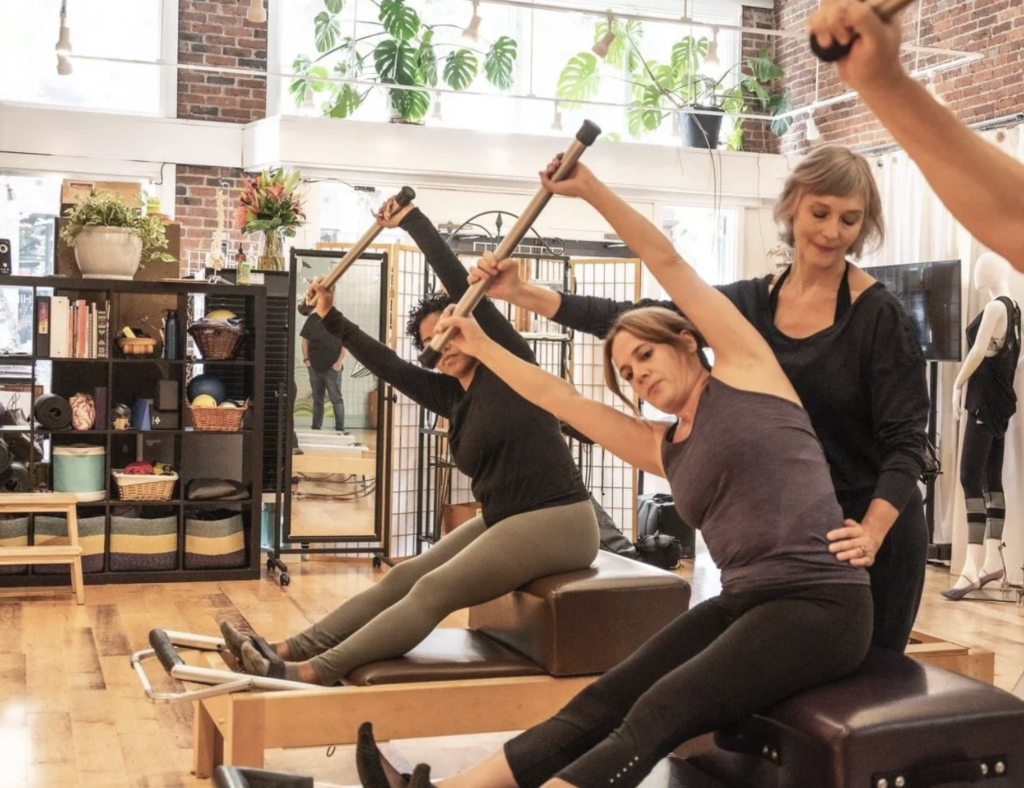
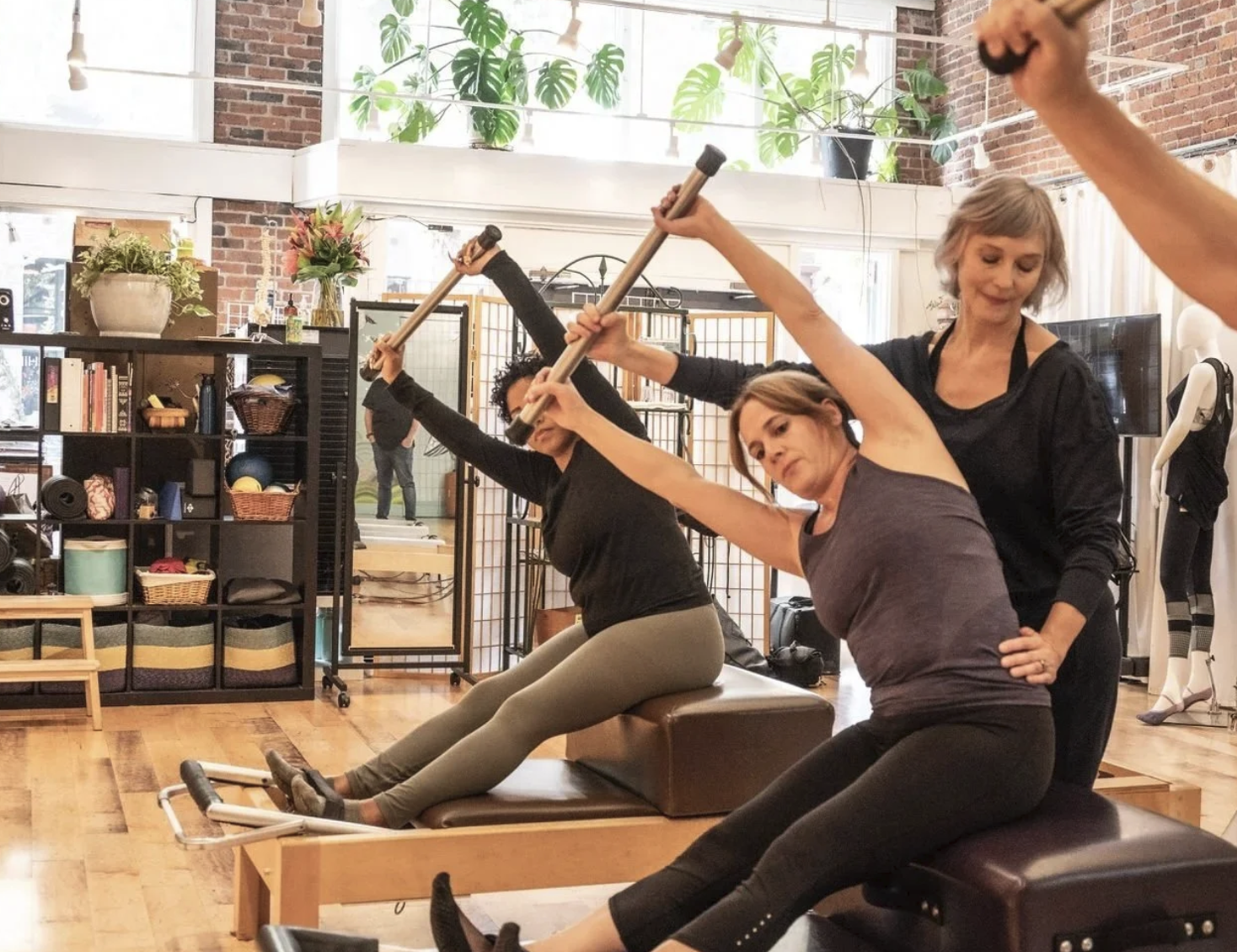
The mechanics of that are unusually explicit. Hands-on guidance is standard at the studio, and it is introduced as a stated agreement rather than assumed. Clients are told at the outset that touch will be used to show them where their body is, and that they may decline it at any moment, because for some people it registers as overstimulation. Marcontell treats the client’s willingness to say so as the beginning of the training itself.
What follows is a teacher adjusting a plan in real time against what the client reports feeling. Early lessons are often less about exercise than about release: learning to stop bracing, to unclench the neck and shoulders that a desk has trained into permanent tension, and to notice what the middle of the body does once the periphery stops shouting. Only then, she says, do people begin to feel their core.
Marcontell’s training philosophy turns on a distinction most fitness marketing never makes. Strength, she argues, is usually sold as one of two things: forcefulness or endurance. Both are real. Both are also narrow. Without resilience underneath them, they cap out quickly and they break in predictable places.
Her working definition of resilience is comprehensive rather than poetic. It is the body’s capacity to sustain force, develop more of it, and remain agile and adaptable while doing so. That capacity, in her reading, is not built exclusively by loading muscle. It is built through the circulatory system, through the connective and lymphatic tissue, and through the information the nervous system uses to time when a muscle fires at all.
This is where the MELT Method enters the studio rather than sitting beside it. Marcontell teaches it as neural fascial self-care that clients perform at home, and she teaches it upstream of the structural strength work of the Pilates session. Address the tissue and the timing first, her sequence argues, and the strength training that follows lands on a body prepared to receive it. She is planning a six to eight week MELT series this autumn and already runs quarterly workshops in it.
Romana’s Pilates is choreographed work, and Marcontell teaches it that way. A client performs roughly five repetitions, transitions, and moves into the next exercise. The volume is low; the sequencing is dense. Because the exercises face the body in different directions, the workout corrects itself as it goes rather than accumulating a bias.
The choreography does something else. Learning it is cognitive work. Clients memorize sequence, know their own modifications, and move without waiting to be told, which Marcontell regards as brain training that supports adaptability as clients age. Advancement means new sequences, not more repetitions of old ones.
The formats then sort themselves by what a client needs from the room. A private lesson gives full attention. A semi-private, extended by invitation to three to five people who work well together, occupies the hours a class cannot fill. A Foundations class serves the beginner and the advanced client refining technique alike. Flow moves without stopping to explain. Challenge moves faster still, includes advanced exercises, and expects the client to sit out anything they do not know. Accountability, in that room, belongs to the individual.
Ask Marcontell what changes in the opening months and she does not reach for a photograph. She reaches for self-control and self-awareness. Clients become more refined in how they approach movement, which is a quieter claim than most studios make and a harder one to fake.
The frequency matters, and she is candid about it. Once a week produces benefit but develops the work more slowly and less thoroughly. Twice a week or more is where she sees results arrive quickly. By around sixty days, clients report that their shape is changing. The core draws together instead of twisting or favoring one developed side. Symmetry appears where dominance used to be.
She offers a working example. A cycling enthusiast arrives with powerfully developed legs, a tight lower back, and difficulty standing up after a day in a chair. Within sixty to ninety days, Marcontell says, that particular difficulty was no longer part of that client’s day. She offers it as one case, not as a schedule. The legs were never the problem. The relationship between them and everything above them was.
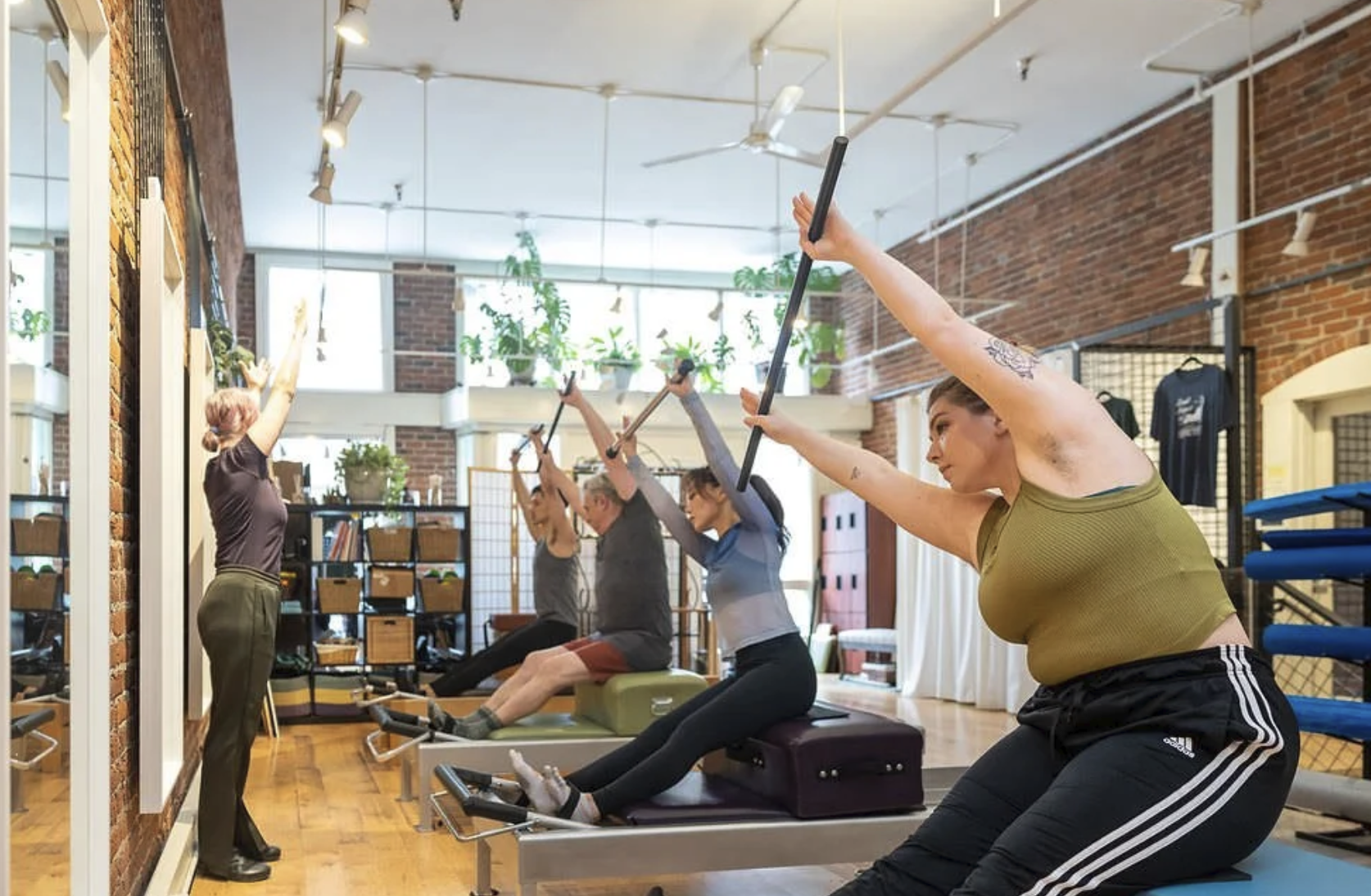
The word Marcontell hears most often is grounded. Clients also describe feeling energized, more connected physically, safe, supported, and resilient. She is precise about that last one. Resilient, in her clients’ usage, means the stretch they gained has structural strength behind it rather than the false flexibility of a body that is loose in one place and gripping in another.
The physical reports follow the same logic. A client arrives citing tight hamstrings; months later, Marcontell says, the conversation has moved to the lower back, and to how much freer it feels. The hamstrings may still be tight. What changed is the chain they were pulling on. Marcontell describes the body balancing out naturally as the work proceeds, the way a dancer’s musculature reads as long and symmetrical rather than overdeveloped in the places most used.
Her most instructive story is one of observation. A former competitive baseball pitcher came to her with pain that diagnostics could not locate. Working on structural framework and connecting breath to movement, Marcontell noticed that whenever the client achieved genuine stability through her legs, one eye twitched. She mentioned it. The client mentioned it to her neurologist. The observation, according to Marcontell, was the missing piece, and the pair have been rebuilding stability together since. A teacher’s authority is sometimes just the discipline of watching closely and saying what she sees.
Pioneer Square is not a quiet place. Stadiums, galleries, warehouses, architecture practices, startups, and century-old brick sit within blocks of the studio, and clients arrive straight from all of it. Marcontell designed the transition deliberately. The space is open and calm, the ceilings are high, and a pale blue mural of cranes covers the back wall, commissioned from an artist she briefed on her mission rather than on a color scheme.
She does not, however, want silence. Two teachers may be working. Voices carry. That mild stimulus is intentional, because she considers the ability to stay centered while the world continues around you to be part of what the practice teaches. A calm that only survives a soundproof room is not portable.
The range of who occupies that room is wide. Teenagers with early pain. Professionals whose necks have taken the shape of their desks. Clients in their eighties working on balance and staying lifted rather than folding forward. Marcontell describes the promise plainly: whatever stage of life a person walks in with, there is a pathway.
Marcontell’s sharpest observation concerns her own field. Pilates has become highly visible, and much of what is visible is performance: impressive shapes executed by bodies that are not recruiting their core at all, moving instead from the limbs and the back. Those clients arrive at her studio having practiced for years without the result they came for. Her advice to anyone choosing a studio is unglamorous. Learn something about the teachers. Learn what is actually happening in the room.
That is why her hardest business constraint is also her clearest credential. Marcontell will not staff the studio with teachers trained below the comprehensive Romana’s Pilates International Instructor Training Program standard. That distinction matters: her preferred certification lineage comes through Romana Kryzanowska’s teacher-training program, while Gratz Pilates refers to the classical apparatus manufacturer she regards as an equipment gold standard. The certification standard is difficult to obtain, particularly in her region. She teaches nearly everything herself, runs the desk, and handles the accounts, which leaves little room to develop others. One teacher completed the full training and has been teaching just over a year, building his own clientele. Finding and nurturing more of them is the growth problem she names first.
Her clients find her the way a neighborhood business is found: by walking past the storefront, or because a friend feels noticeably better in their body and is willing to say where. She writes a blog and sends a weekly email to a list of roughly five hundred people, most of whom will never take a lesson. She writes it anyway, on the theory that the ideas are useful whether or not they arrive through her door.
- Kinesia Pilates is a Pioneer Square, Seattle studio led by Christl Marcontell, who was certified as a teacher in 1999 by Romana Kryzanowska and teaches the comprehensive Romana’s Pilates curriculum across the full apparatus range.
- The certification lineage and apparatus distinction are clarified: Romana’s Pilates International Instructor Training Program is the teacher-training program Christl prefers, while Gratz Pilates is a gold-standard apparatus manufacturer.
- Resilience, defined as the capacity to sustain force while staying agile and adaptable, is the organizing idea behind the method.
- Breath comes before abdominal effort. Marcontell treats core recruitment as a breath skill and teaches it that way.
- MELT Method work addresses connective tissue and nervous system timing ahead of the structural strength work of the session.
- Session formats run from private lessons to invitation-based semi-privates to three tiers of small class work, with roughly eighty to ninety regular clients across them.
The clearest signal in Marcontell’s method is what she expects to happen after the lesson ends. She teaches self-care that clients perform without her. She teaches choreography they carry in memory. She wants the correction internalized rather than administered. A studio can only claim authority over the hour it controls; the standard she has set applies to the other one hundred and sixty-seven.
Readers who suspect they have been doing Pilates without ever finding their core will recognize the argument at the center of this feature. Marcontell’s position is that the result requires the right intention, the right instruction, and enough time under a teacher who can see what the body is doing. The apparatus is not the method. The teaching is.
Marcontell offers a free fifteen minute consultation, and she means it as a real question rather than a formality. Will this fit your life. Can you get here. Does the room feel right. Coming in person is ideal, because the answer to those questions is usually physical.
Clients who already know they want to begin can take the introductory series of three private lessons, booked online, by phone, by text, or by email. Clients with prior Pilates background who prefer group work can take an introductory series of three classes, beginning with a foundational format so the studio can establish a baseline first. There is no lot; a safe garage sits two blocks away, past the cafes and galleries.
Explore Kinesia Pilates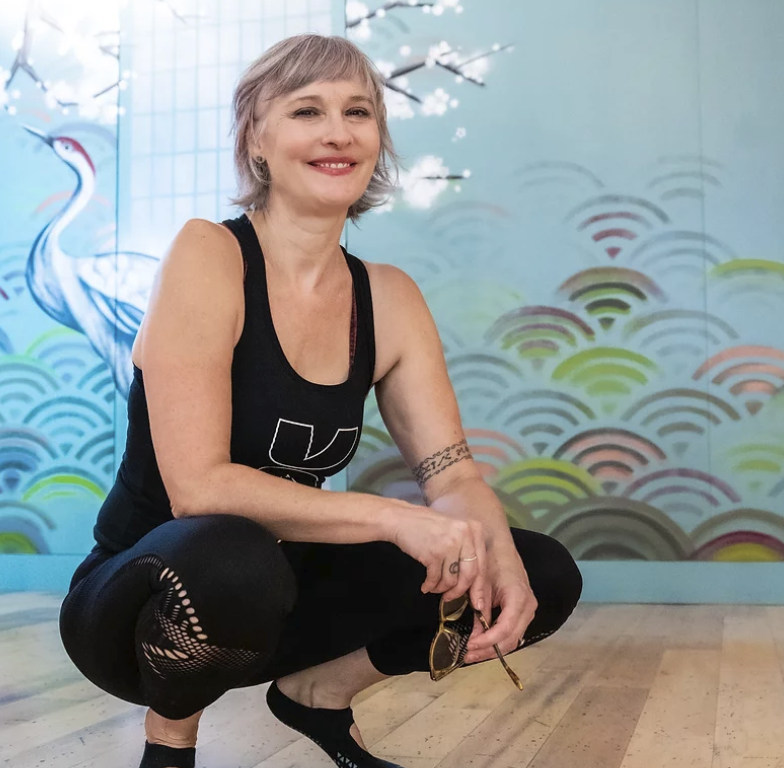

Christl Marcontell owns and leads Kinesia Pilates in Pioneer Square, Seattle. A dancer since the age of four, she came to Pilates in her late twenties after an accident made a sedentary career impossible, and she was certified as a teacher in 1999 by Romana Kryzanowska, Joe Pilates’ protégée and a Grand-Master teacher trainer who carried his work to the next generation. She teaches the full apparatus curriculum and the MELT Method, alongside a small teaching staff certified through Romana’s Pilates International Instructor Training Program. Gratz Pilates is treated here as a gold-standard apparatus manufacturer, not as the teacher-training program. The authority in this feature is drawn from her method, her teaching standard, and her insistence that a client leave the studio able to find their own center.
Source material for this Muscle & Authority Magazine™ feature consists of a recorded editorial interview with Christl Marcontell, context supplied by Kinesia Pilates, the studio’s official website, and image and logo assets provided for editorial use. The editorial review concentrated on the comprehensive Romana’s Pilates curriculum, the studio’s breath-led approach to core recruitment, its private, semi-private, and class formats, its MELT Method instruction, its teaching standard, and Christl Marcontell’s follow-up clarification about Romana Kryzanowska, her 1999 teacher certification, Romana’s Pilates International Instructor Training Program, and Gratz Pilates as an apparatus manufacturer rather than a teacher-training program.
Client experiences described here are recounted as Marcontell described them in the interview and are presented as illustration rather than as expected outcomes. This article is editorial in nature. It does not provide medical, rehabilitation, nutrition, or individualized training advice. No medical claims, guaranteed outcomes, fabricated credentials, unsupported testimonials, or unsupported transformation promises are made.