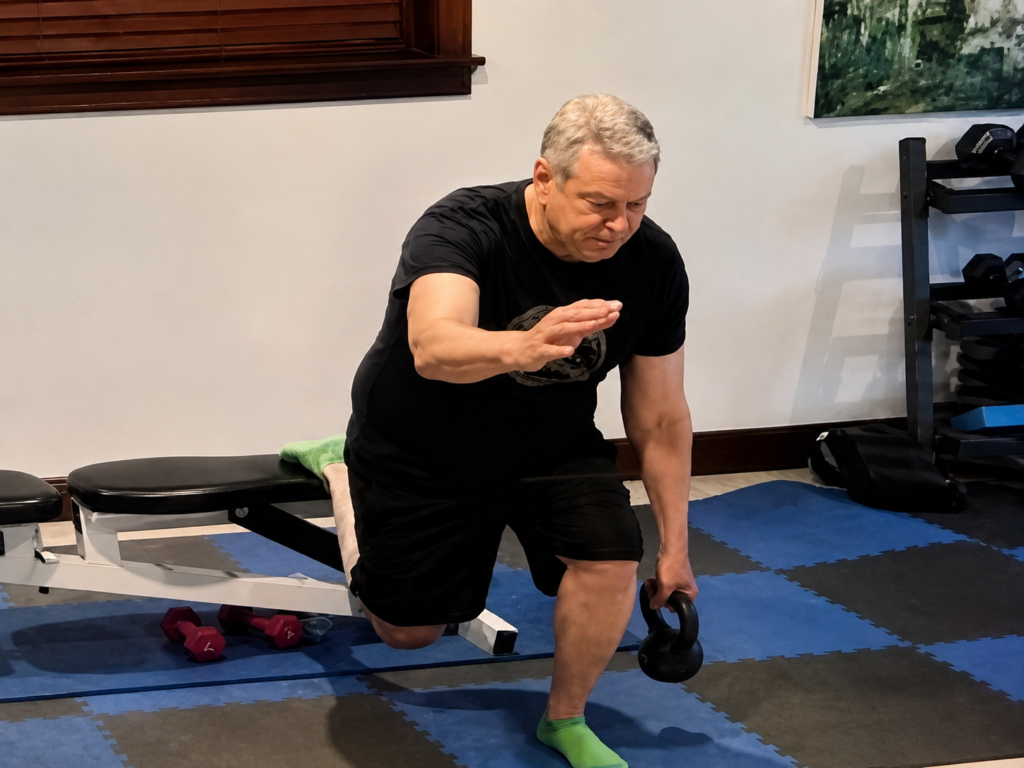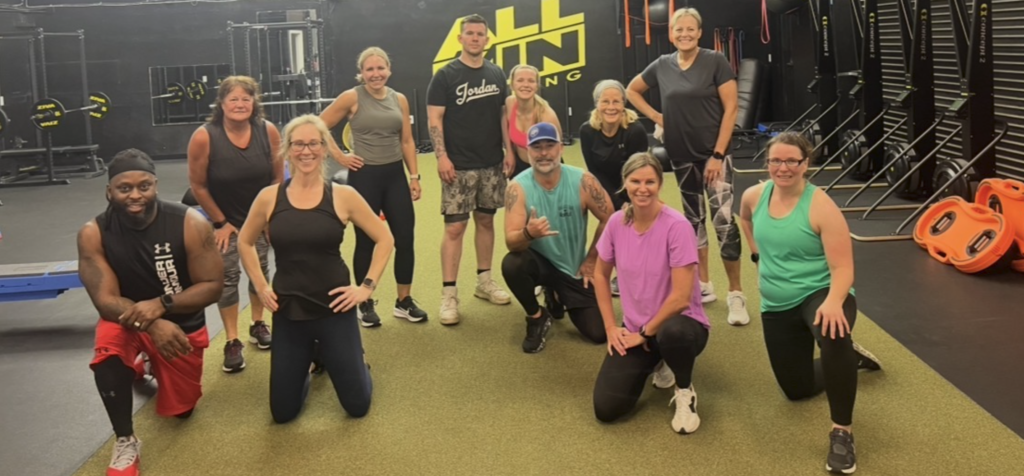



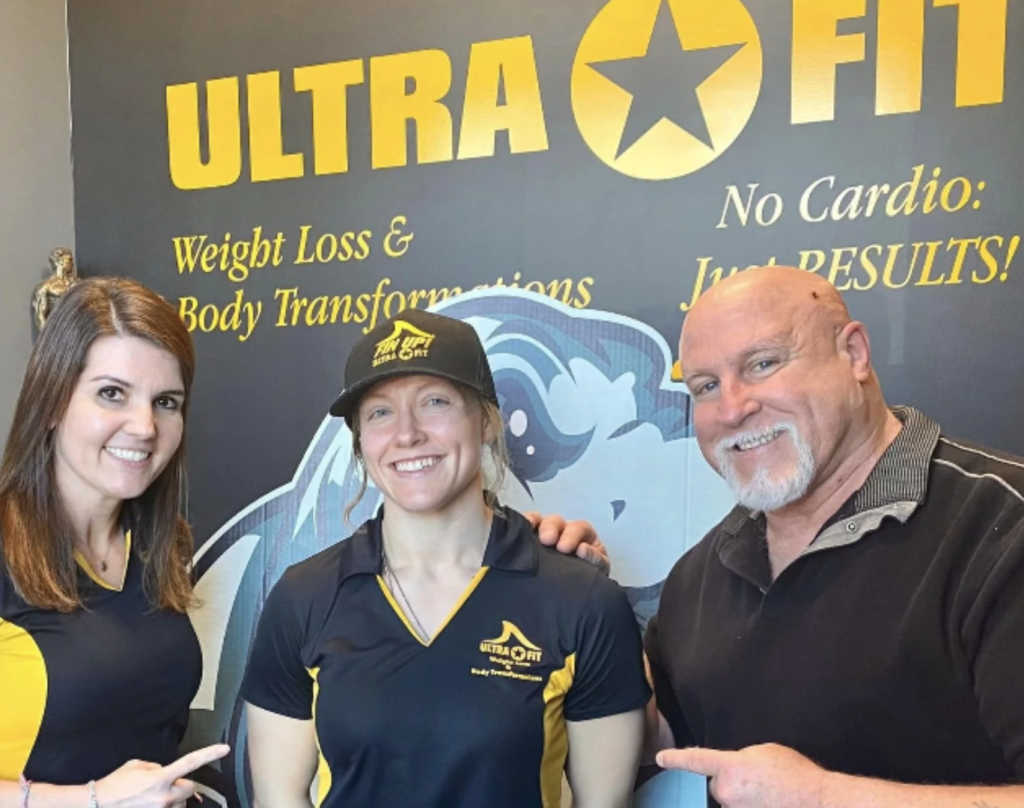
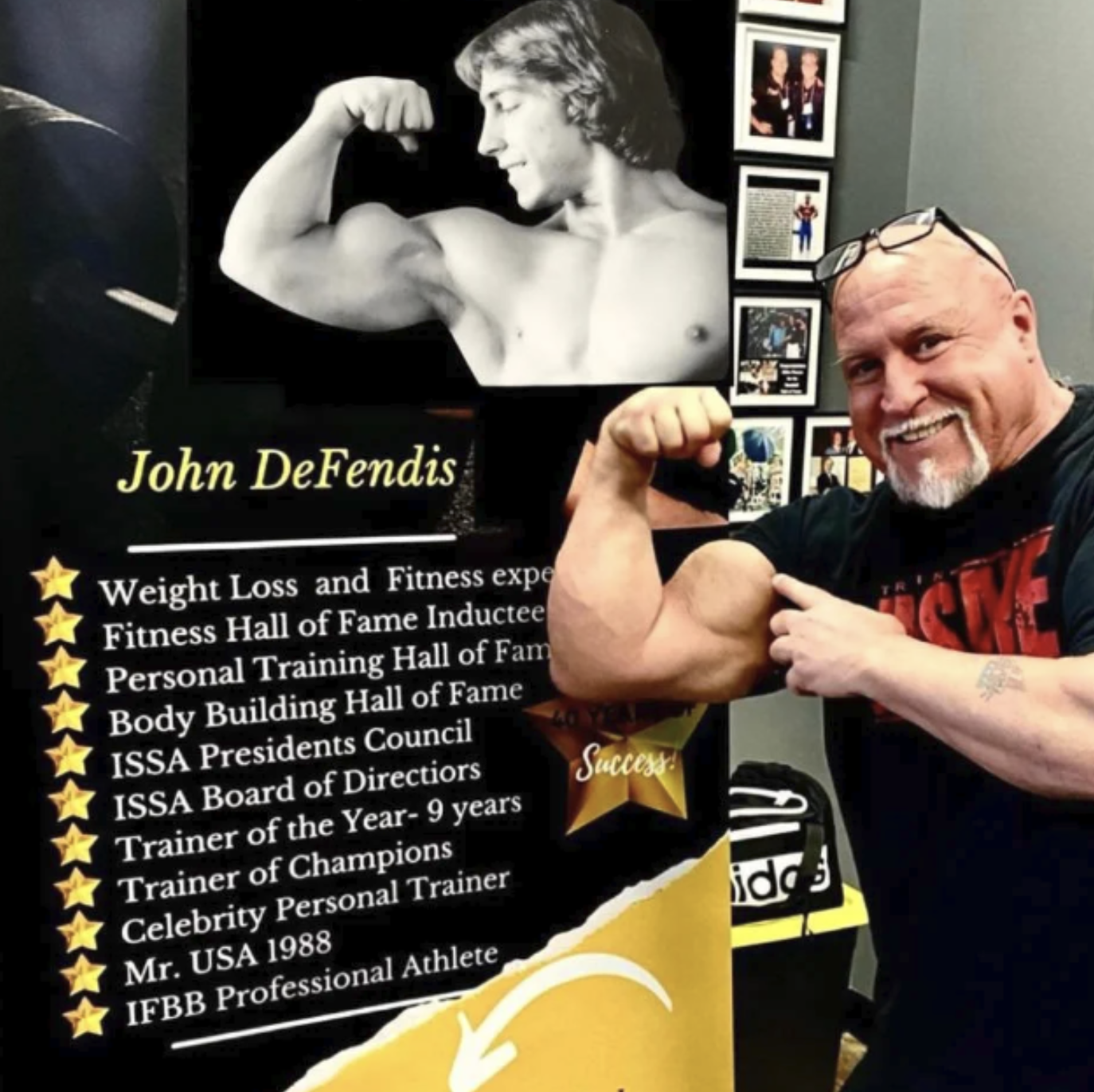
John DeFendis started lifting at ten, when his father put a barbell in his hand, and was competing in bodybuilding by fifteen. The lesson that shaped his business came a year later. At sixteen, he says, he put his mother on a program of very light weights and a set nutrition plan, and she lost 180 pounds over the next two years. Ultra Fit’s method still starts from that pairing.
DeFendis has trained clients since the 1970s, first in New York gyms, and founded Ultra Fit in Arizona in 1982 before moving it to Florida and, in 2006, to South Carolina. Ultra Fit is a personal training company, not a gym. Its trainers work inside the large 10 Star Fitness gyms and the private Ultra Fit studio, and DeFendis says more than 750 trainers have worked for him over 44 years.
The method runs on what he calls the TEAM concept: training, education, accountability and motivation. Sessions are built on strength work, and the rest between sets shrinks as clients get fitter, so a single hour covers conditioning as well. Food arrives as set choices, quantities and recipes rather than numbers to count. Appointments are firm, and early results, in DeFendis’s account, are what keep clients coming back.
The Strength Hour Is Also the Cardio Hour
Location: Upstate South Carolina (Greer, Greenville, Spartanburg, Anderson and Simpsonville)
Owner / Interview Source: John DeFendis
Business Type: Personal training company operating inside the 10 Star Fitness gyms and the Ultra Fit studio
Training Focus: Muscle-first strength training with shrinking rest periods, nutrition coaching and attendance accountability for weight loss and body transformation
Primary Users: Adults with weight to lose, beginners who want a coached plan, and gym members who prefer a structured program to training alone
A Training Company That Works Inside the Gym
Ultra Fit’s structure is unusual for a business of its reach. DeFendis says plainly that he does not own the gyms or the studio where his trainers work. What he owns is the training company: the program, the trainers who deliver it, and the system that tells those trainers what to do with a new client. The facilities are the 10 Star Fitness gyms and the Ultra Fit studio, and the training company operates inside both.
The two settings serve different preferences. DeFendis describes the 10 Star Fitness locations as very large gyms with a lot of equipment and a high volume of members, while the Ultra Fit studio is private and personal. A client who likes the energy of a big floor can train there; one who would rather work without an audience can use the studio. In his words, “whatever a person’s looking for, we can accommodate them.”
Every new person starts the same way. DeFendis says Ultra Fit gives everybody an assessment and a training session, in which a trainer takes them through a workout so they can see what the program involves. From there, some people go on to train on their own, while others continue with a trainer and the full Ultra Fit system.
How the Program Is Delivered
Four Letters That Organize the Coaching
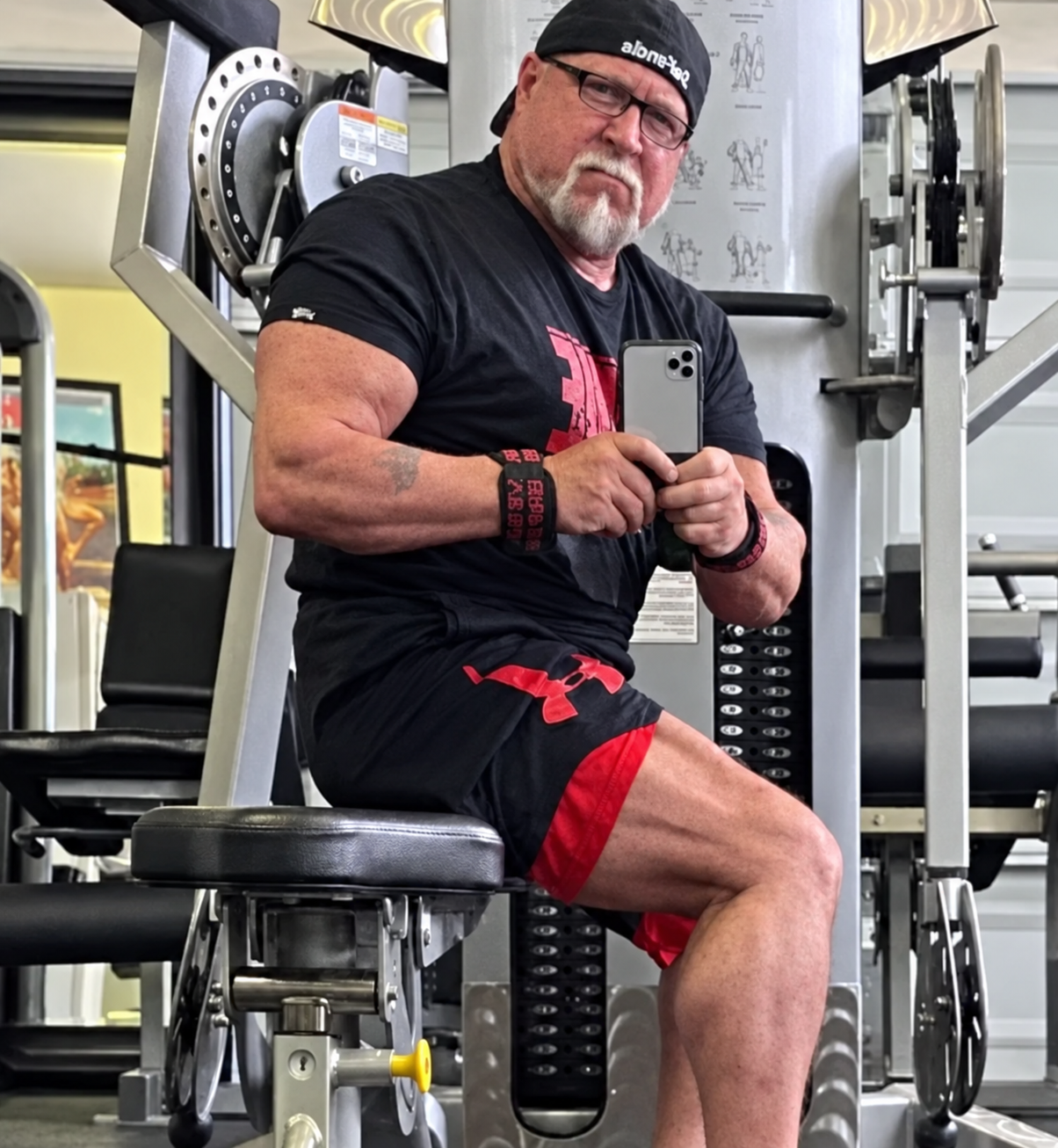
DeFendis created the TEAM concept to answer what he sees as a narrow idea of personal training. The common perception, he says, was of a trainer as someone who counts reps, and plenty of people decided they did not need one. His reply is that “it goes much deeper than that,” and the acronym is his way of spelling out what the deeper work consists of.
Each letter gives the trainer a job. Training means taking the client through a challenging workout and raising the challenge from one session to the next. Education covers Ultra Fit’s training principles, exercises DeFendis says he created over the years, and the nutrition knowledge a client needs to eat for results. Accountability means fixed workout times and a regular look at the client’s food log. Motivation, he says, comes from the results themselves: “We’re going to motivate them with results.”
The sequence is deliberate. The workout produces change, the education explains it, the accountability protects it between sessions, and visible progress gives the client a reason to return. Taken together, the four letters describe a trainer whose responsibility extends well past the hour on the gym floor.
How the Training Hour Is Built Around Muscle
The center of the method is a position DeFendis states without hedging: muscle, not cardio, should lead a fat-loss program. In his words, “muscle is your fat burning engine, and we want to burn fat.” He calls a routine built on cardio, cardio, cardio “the biggest, biggest fallacy in the world.”
The session is designed so that strength training also delivers the conditioning. A beginner who has never worked out, DeFendis explains, will see her heart rate rise after just a few sets, and the trainer can keep it elevated through the session. As she becomes better conditioned, the trainer intensifies the work by cutting the rest between sets. The resistance training stays at the center, while the shrinking rest interval does the cardiovascular work.
The structure is also a scheduling decision. DeFendis does not want clients finishing a strength session and then climbing onto a treadmill or bike for a second workout. They get it all in that one hour, he says, and when the hour is over, the instruction is to rest, recover and eat the right foods.

Every Workout Changes One of Three Things
Progression at Ultra Fit follows a rule simple enough for a client to remember. DeFendis describes a progressive program in which every workout does one of three things: increases the weight per set, decreases the rest time, or increases the volume with a little more work and a few more sets. Each option, he says, raises the intensity of the session, and higher intensity is what produces better results.
The rule gives the trainer room to adjust without loosening the demand. A client who cannot yet handle more load can still progress by resting less. A client whose conditioning is ahead of their strength can add weight. The constant is that the next session asks for something the previous one did not.
It also explains why rest carries so much weight in the method. In many strength programs, rest is simply recovery between efforts. At Ultra Fit it is one of the three main levers, and the one that turns a strength workout into conditioning as the client adapts.
What the TEAM Method Runs On
Accountability Comes With a Calendar and a Food Log
The A in TEAM runs on a schedule. Clients train at a set time, attendance is required, and DeFendis says a session canceled within 24 hours is lost. The rule is not presented as a penalty for its own sake. Trainers make it clear, he says, that “we don’t want you to lose the session,” and that the point of the policy is to keep the client on course for results.
Accountability extends to the kitchen. Trainers review clients’ food logs to check that they are eating the foods the program calls for and staying on track between sessions. DeFendis describes personal training done properly as “a 24 hour job,” and the food log is how a one-hour appointment reaches into the rest of the client’s day.
The availability runs in both directions. DeFendis says he gives his phone number to clients and members so they can reach him with questions, and he wants every trainer and client to have whatever answers they need. Telling people you are there for them is one thing, he argues; being there when they need you is another.
What the First Two Weeks Are Meant to Prove
DeFendis is specific about the results he expects, and he presents them as typical figures for clients who follow the full program rather than as promises. A person with weight to lose, he says, will typically drop about 10 pounds in the first two weeks. Over the first six to seven weeks, for a client fully engaged on a three-to-four-day-a-week program, he reports typical losses of 20 to 25 pounds for women and 30 to 35 pounds for men. He says men can often lose 100 pounds in under six months, while women usually take longer because they carry less muscle. He also says Ultra Fit has helped more than 1,000 people each lose more than 100 pounds and holds more than a thousand testimonials and before-and-after photographs. These figures come from the recorded interview and were not independently verified for this feature.
The early numbers carry the M in TEAM. DeFendis compares a client to an employee waiting on a paycheck: someone who works hard all week and is told there is no pay will not be eager to come back on Monday, while someone who is paid and thanked will be. Weeks of effort with nothing to show for them are, in his analogy, the missing paycheck. A client who drops 10, 12 or 15 pounds in the first two weeks, he says, is excited, listening, and committed to the next phase of the program.
113 Pounds in 15 Weeks
Asked what the strongest results look like, DeFendis described a male client who went from 331 pounds to 218 pounds, a loss of 113 pounds in 15 weeks. He did not name the client. According to DeFendis, the client went on to compete in a bodybuilding contest. He presented the case as his best result rather than a typical one, and it sits at the far end of the range he described for men.
Meal Plans Without the Arithmetic
The E in TEAM includes nutrition, and here Ultra Fit breaks with a common coaching habit. Many trainers, DeFendis notes, ask clients to count macros: carbohydrates, fats and protein. Ultra Fit does not. Trainers lay out the client’s food choices, mealtimes and quantities, and the program supplies hundreds of recipes to go with them.
The education explains the reasoning behind the plan. DeFendis says clients learn to eat quality proteins for building muscle and quality carbohydrates for sustained energy and for replacing the glycogen used in their workouts. The client understands why the plan looks the way it does, while the plan itself stays simple enough to follow without calculation.
He applies the same thinking to the food around the program. DeFendis frames his approach around stable blood sugar, arguing that when diet and training are right, cravings settle, while foods that send blood sugar soaring start a cycle that leads to more eating. When Ultra Fit holds an event, he says, the menu features foods from the program, such as grilled chicken and rice, rather than the pizza and sweets he has seen offered in other gym settings.
Who the TEAM Method Fits, and Who It May Not
Ultra Fit’s program is built for a particular kind of client: someone with weight to lose who is willing to follow a structured plan and keep scheduled appointments. Based on the system DeFendis described, the fit is strongest where structure is welcome and weakest where flexibility is the priority.
- Adults with significant weight to lose who want a coached plan rather than a self‑directed routine.
- People who have logged long hours on cardio machines without the results they wanted and are willing to train with weights.
- Clients who would rather follow set food choices and recipes than track macros.
- People who respond well to fixed appointments and regular check‑ins on what they eat.
- You want to train mainly through long cardio sessions or endurance work.
- You prefer to count macros yourself or design your own flexible eating plan.
- A 24‑hour cancellation rule would be hard to fit around your schedule.
- Your goal is a sport‑specific skill that calls for its own specialized coaching.
These fit observations are editorial inferences drawn from the program DeFendis described in the recorded interview, not judgments about any individual’s needs. The initial assessment and workout are the most direct way for a prospective client to test the format.
Trainers Who Started as Clients
When asked which part of the training he would most like to improve, DeFendis named one thing: finding the right trainers. Certification is not the obstacle; he points out that more than a million people hold training certifications. What he looks for is harder to find, a trainer “that cares enough to really give 100% to their client.” Before COVID, he says, Ultra Fit had about 80 trainers; today it has about 30 across the clubs and the studio.
Some of his best trainers, DeFendis says, started as clients. People who lost 50 or 100 pounds on the program decided they wanted to change other people’s lives the same way. Ultra Fit has them earn a certification through a certification program, then trains them extensively in its own methods. Because they have been through the program themselves, he says, they understand it and have the drive to deliver it.
Recognition is built in as well. DeFendis says the company highlights strong work with an award of excellence, a trainer of the month award and bonuses. That matches what he says he wants in a hire: a trainer who will care about a client’s goals as much as their own.
What Sets Ultra Fit Apart
The clearest difference is where Ultra Fit puts its effort. Many fitness businesses sell access to a facility. Ultra Fit sells a coaching system that runs inside facilities owned by others, so its product is the trainer’s work with the client: the progressive session, the food plan, the attendance rule and the follow-up.
The second difference is the training environment DeFendis insists on. He says the gyms cannot tolerate members who are disrespectful, who leave their gear where others can trip over it, or who sit on machines taking pictures while others are waiting to use the equipment. The aim is a room where members have the space they need to finish their workouts.
The third is his view of service as the answer to price competition. When a low-cost, high-volume gym chain moved into the market, DeFendis says, retention had to be refined, and Ultra Fit chose to compete on care and service rather than price. Behind that position sits a long record: 44 years of Ultra Fit, and what he describes as his 58th year of training.
Growth Depends on Results and the Right Trainers
DeFendis does not describe Ultra Fit’s future in terms of locations or revenue targets. Asked where he wants the business to be in three to five years, he said he wants to help as many people as possible, and that growth follows from doing the right thing and letting people know what the results have been. Much of Ultra Fit’s business, he says, already comes from referrals.
The practical constraint he identified is people. Serving more clients depends on finding trainers who will carry the full TEAM system, including the accountability and availability that make the job demanding. The pipeline he described, in which successful clients become certified Ultra Fit trainers, is the part of the model built to meet that constraint.
How quickly that pipeline can grow the trainer roster is an open question. The method itself, as DeFendis describes it, does not depend on a particular building. It travels with the trainer.
- Ultra Fit is a personal training company whose trainers deliver its program inside the 10 Star Fitness gyms and the private Ultra Fit studio.
- The TEAM concept gives every trainer four jobs: training, education, accountability and motivation.
- Sessions are built on resistance training, and the rest between sets shrinks as clients adapt so the same hour supplies conditioning.
- Every workout progresses by adding weight per set, cutting rest time, or increasing volume.
- Nutrition comes as set choices, quantities, mealtimes and recipes rather than macro counting, with trainers reviewing food logs.
- Fixed appointments, a 24-hour cancellation rule and early, visible results are designed to keep clients on the program.
A Simple Session Inside a Demanding System
Ultra Fit’s training hour is easy to describe: lift, rest less as fitness improves, and leave the treadmill out of it. What makes the method demanding is everything DeFendis has built around that hour, from the food plan and the food logs to the cancellation rule and a trainer who is expected to be reachable well beyond the session.
That combination is the substance of the TEAM concept. The training produces the change, the education explains it, the accountability protects it, and the early results give the client a reason to return. After 44 years and more than 750 trainers, the premise has not changed: the workout matters, but it is the system around the workout that keeps a client in the program long enough for the results to arrive.
DeFendis says every person new to Ultra Fit is offered an assessment and a training session. A trainer takes them through a workout so they can find out what the program involves and how the trainers work, and the client can then decide whether to train on their own or continue with a trainer.
Ultra Fit’s website lists its locations in Greer, Greenville, Spartanburg, Anderson and Simpsonville, and invites prospective clients to fill out a form to be set up for a free workout with an Ultra Fit trainer.
Explore Ultra Fit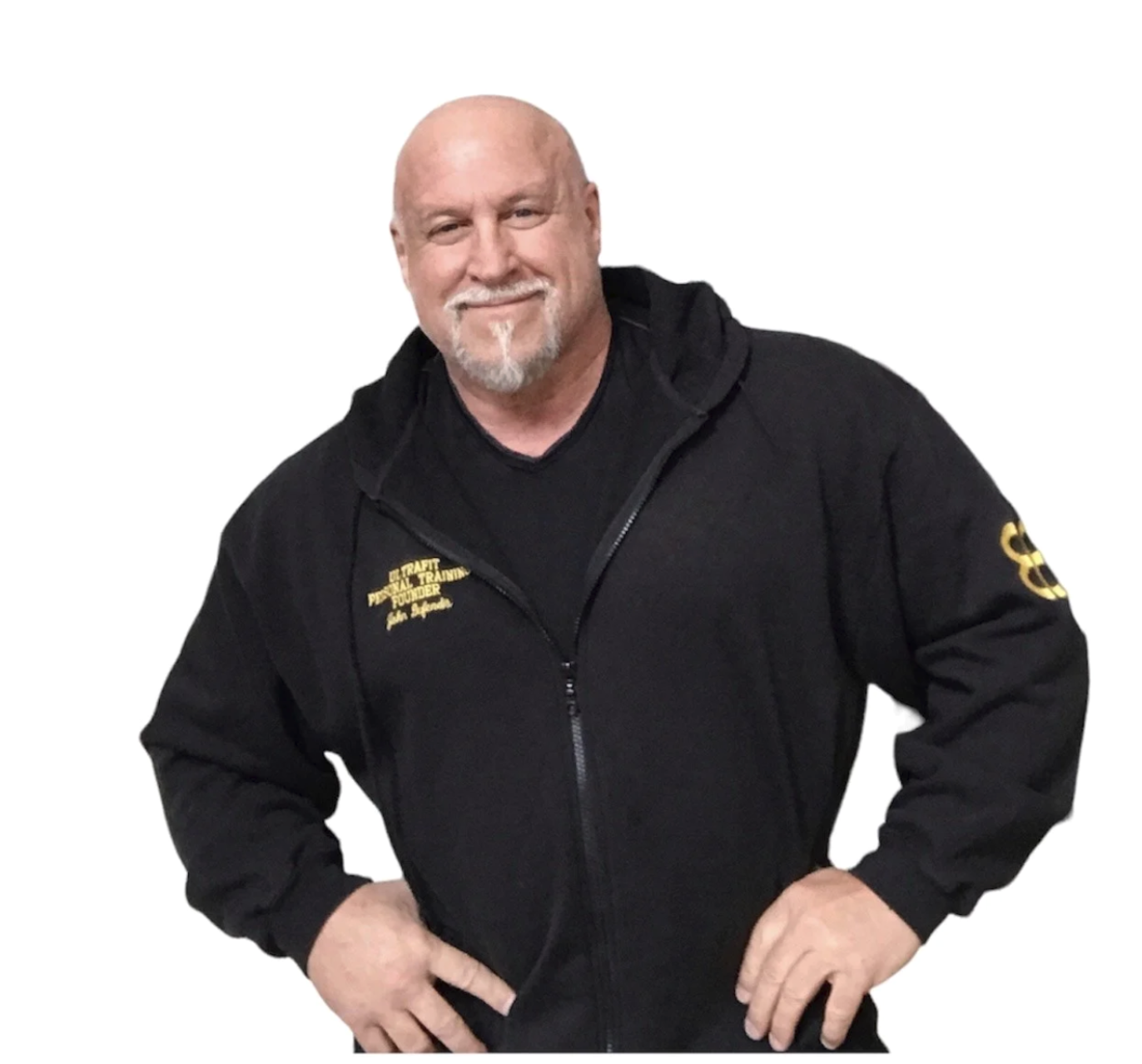
John DeFendis is the owner of Ultra Fit, the personal training company he founded in 1982. He began lifting at ten, competed in bodybuilding from fifteen, and has trained clients in gyms since the 1970s, working in Arizona and Florida before bringing the company to South Carolina in 2006. He says more than 750 trainers have worked for him over that time and that he has taught weight-loss seminars around the world. The method his trainers deliver today is the TEAM concept he developed: progressive, muscle-first sessions in which rest periods shrink as clients adapt, set food choices in place of macro counting, firm appointments with a 24-hour cancellation rule, and early results used as motivation. He still trains four days a week.

This feature is based on a recorded interview with John DeFendis, owner of Ultra Fit. Photographs and the logo were provided by the business. Ultra Fit’s website, linked above, was named during the interview and was consulted only for the list of locations and the new-client workout offer. The TEAM concept, session structure, progression rule, nutrition approach, accountability policies, trainer development and reported results described here all come from the interview.
Results, client outcomes and comparisons with other training approaches are attributed to DeFendis rather than presented as guarantees, and they were not independently verified. No results, testimonials or client details were added beyond what he described. This article is editorial; it does not provide medical, rehabilitation, nutrition or individualized training advice, and it does not guarantee outcomes.
- Recorded interview with John DeFendis, owner of Ultra Fit, covering the business structure, the TEAM concept, session design, progression, nutrition, accountability, trainer development, client results and the first step for new clients.
- Photographs and logo provided by Ultra Fit.
- Ultra Fit website: theultrafit.com, named during the interview and consulted for locations and the new-client offer.