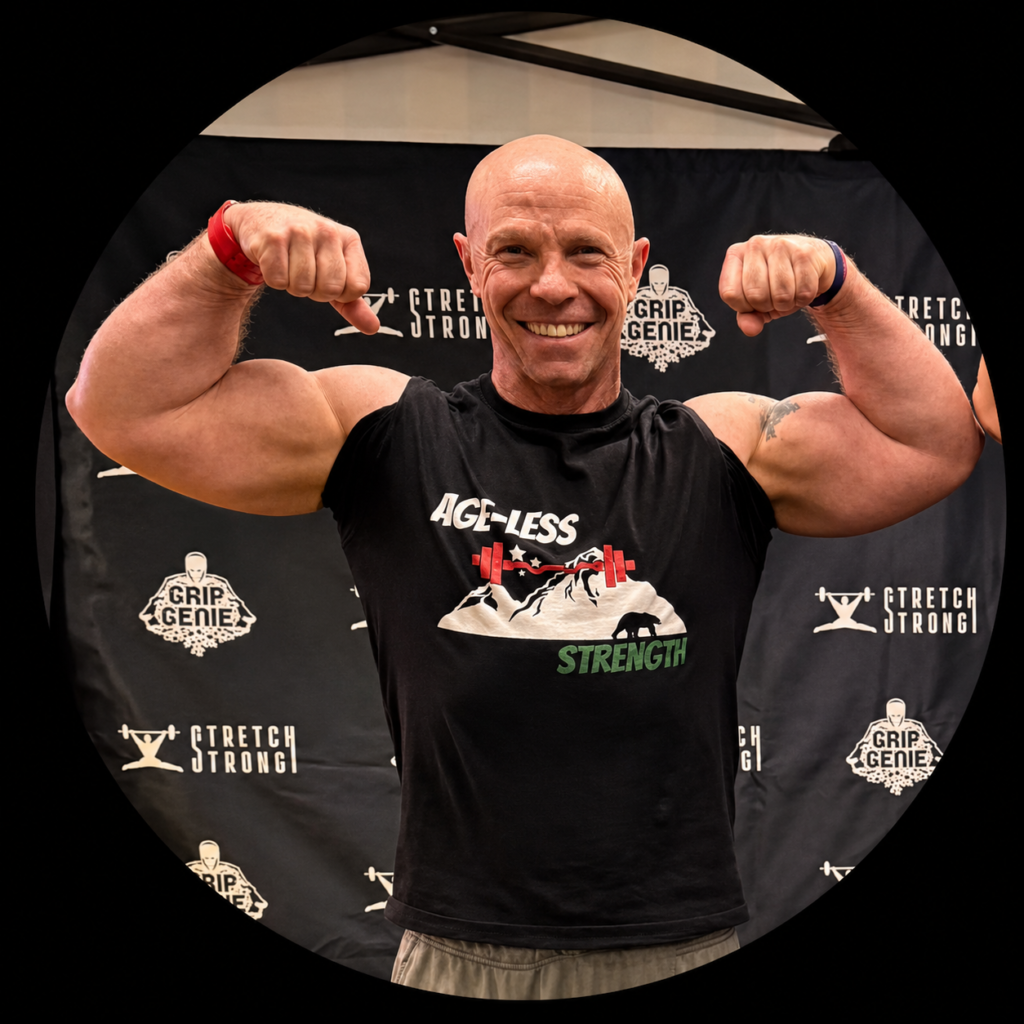



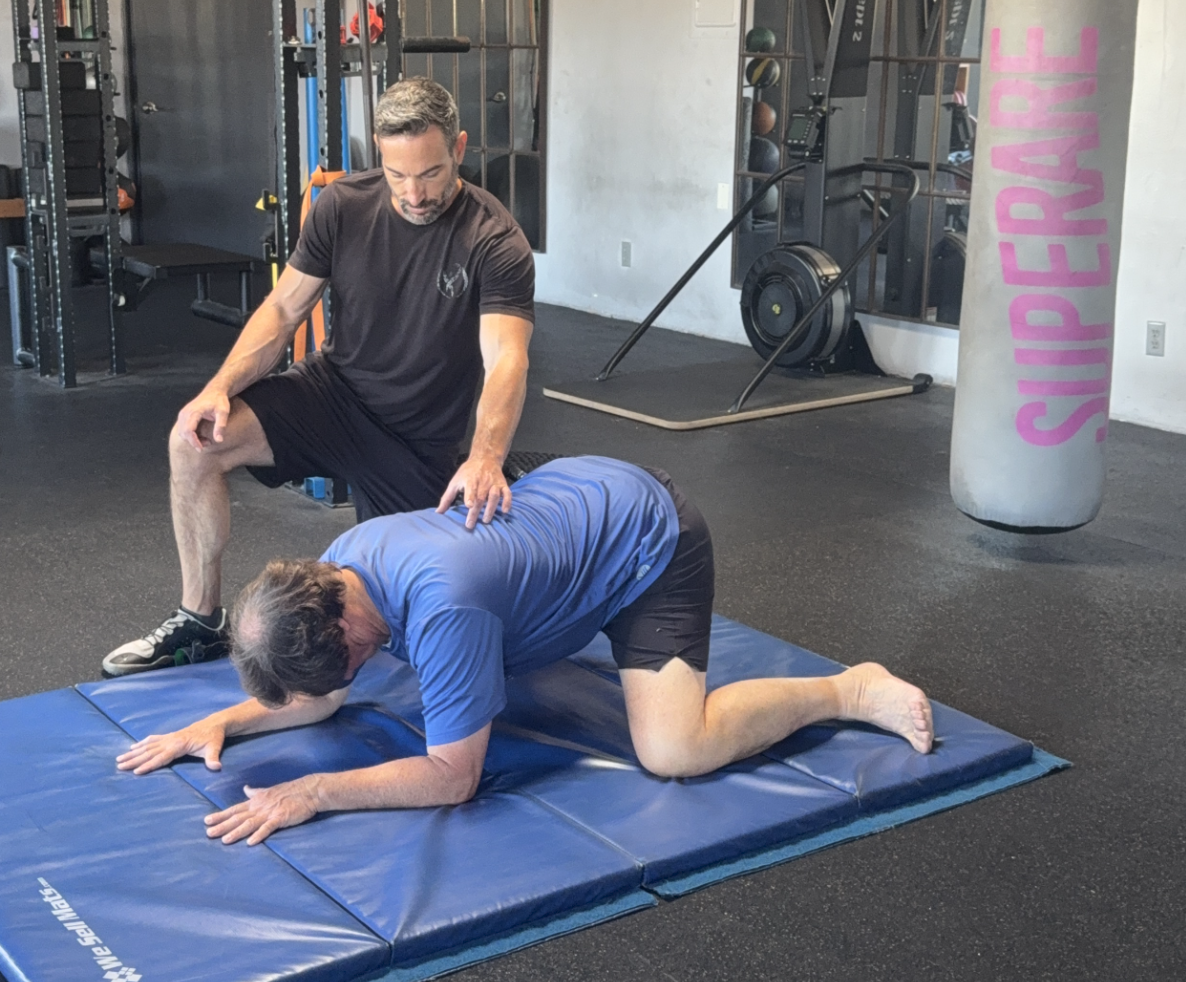
Aaron Delgrolice has spent twenty years refining a training system that the mainstream fitness industry largely ignores. His standing does not come from branding, marketing, or the volume of clients he serves in a given week. It comes from something rarer: a deep, working knowledge of how the brain and nervous system govern movement, pain, balance, and recovery, and a practical ability to use that knowledge inside a one-on-one coaching environment.
His business, Hybrid Fitness Training, operates out of a private co-op gym on 10th and Olympic in Santa Monica: a quiet, second-floor space where every session is one-on-one, every program is individualized, and every trainer in the building carries a specialization that most commercial gyms never develop. The result is not a fitness experience. It is a rehabilitation-forward, neuroscience-informed training practice.
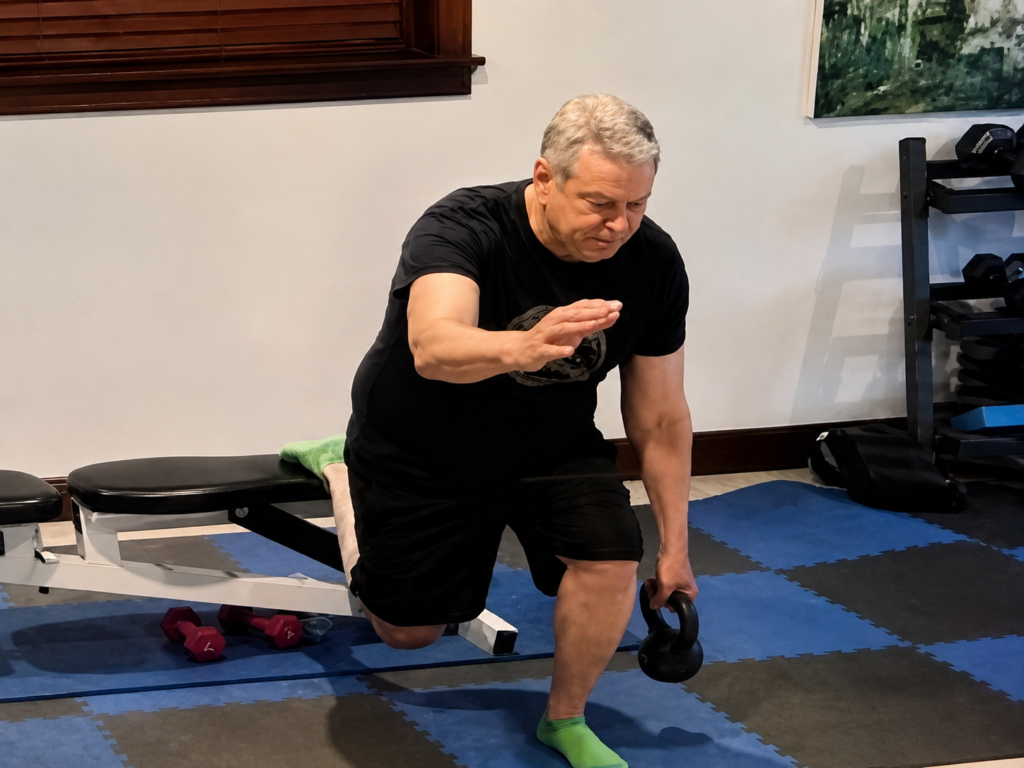
Each session opens with a check-in on energy, stress, and any new pain or restriction, and the work is shaped from there rather than run straight from a script. Delgrolice tests visual and vestibular drills against how the client responds, keeping those that produce a positive change and dropping any that provoke a negative one, then builds strength with isometrics, kettlebells, bands, and calisthenics scaled to the client.
Hybrid Fitness Training: Inside the Brain-Based Methods Driving Real Results in Santa Monica
Location: Santa Monica, California (10th & Olympic)
Founder / Interview Source: Aaron Delgrolice
Business Type: Private personal training business operating within a specialized co-op training gym
Training Focus: Brain-based movement neurology, nervous system regulation, visual and vestibular training, and isometric strength work
Primary Clients: Adults in their forties through seventies managing chronic pain or injury, and post-physical therapy clients
M&AView Contents
A structured guide to the training methods, coaching philosophy, progression system, client experience, and evidence examined in this Authority Spotlight.
Delgrolice’s training philosophy begins with a principle that separates his approach from the fitness mainstream: the nervous system governs everything. Before a client lifts, stretches, or performs any structured movement, Delgrolice wants to understand how that person’s brain and nervous system are currently processing threat, pain, and input from the environment.
That understanding shapes every programming decision that follows. A client in a high-threat neurological state cannot simply be pushed through a challenging workout. The tissues may technically be capable, but the nervous system will resist, compensate, or shut down. Delgrolice’s job, as he describes it, is to reduce that threat response, build the foundation, and progress in a way the body and brain can actually accept.
The practical language he uses for this is straightforward: stimulate, not annihilate. In his view, the research increasingly supports a gentler, more targeted approach, particularly for the population he serves most, clients in their forties, fifties, sixties, and seventies who are managing injuries, recovering from surgery, or dealing with neurological conditions that require a different kind of expertise.
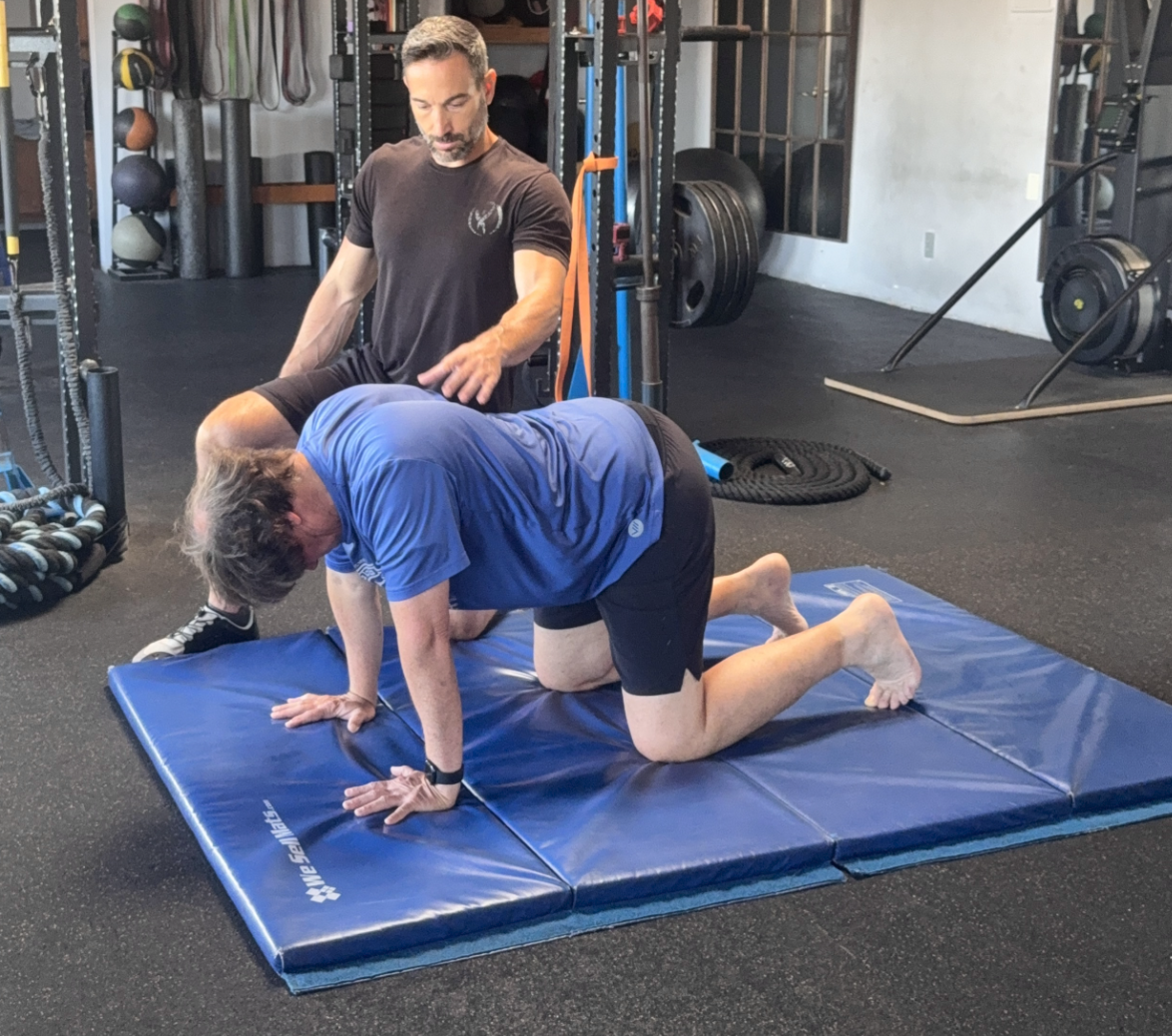
The term “brain-based training” can sound abstract. In Delgrolice’s practice, it is intensely practical. The visual system, he explains, is responsible for processing roughly eighty percent of the sensory information a person receives from their environment. If that system is not functioning optimally, whether due to concussion, aging, injury, or neurological disruption, then movement quality, balance, pain levels, and coordination will all be compromised, regardless of how hard the person trains.
What Delgrolice found, through both personal experience and years of client work, is that targeted visual and vestibular drills can produce rapid, measurable changes. He describes cases where a single correctly applied drill produced near-immediate improvements in a client’s mobility, pain level, or balance: changes that would have taken weeks of conventional training to approximate, if they could be achieved at all.
He calls this instant plasticity: a temporary but real neurological shift that signals a productive direction. If a drill creates a positive change, it becomes part of the program. If it creates a negative response, it is removed. Over time, those temporary changes compound into more permanent adaptations. The method is not speculative. Delgrolice continues his own education through ongoing certifications in this specific field, ensuring his practice stays current with the evolving research.
A session with Delgrolice begins with a check-in. He wants to know how the client is feeling that day: their energy, their stress level, any new pain or restriction. From there, the session is shaped in real time. The longer-term program exists as a framework, but the individual day’s needs are always factored in. A client who comes in exhausted or dealing with a flare-up does not simply execute that day’s planned workout at full intensity.
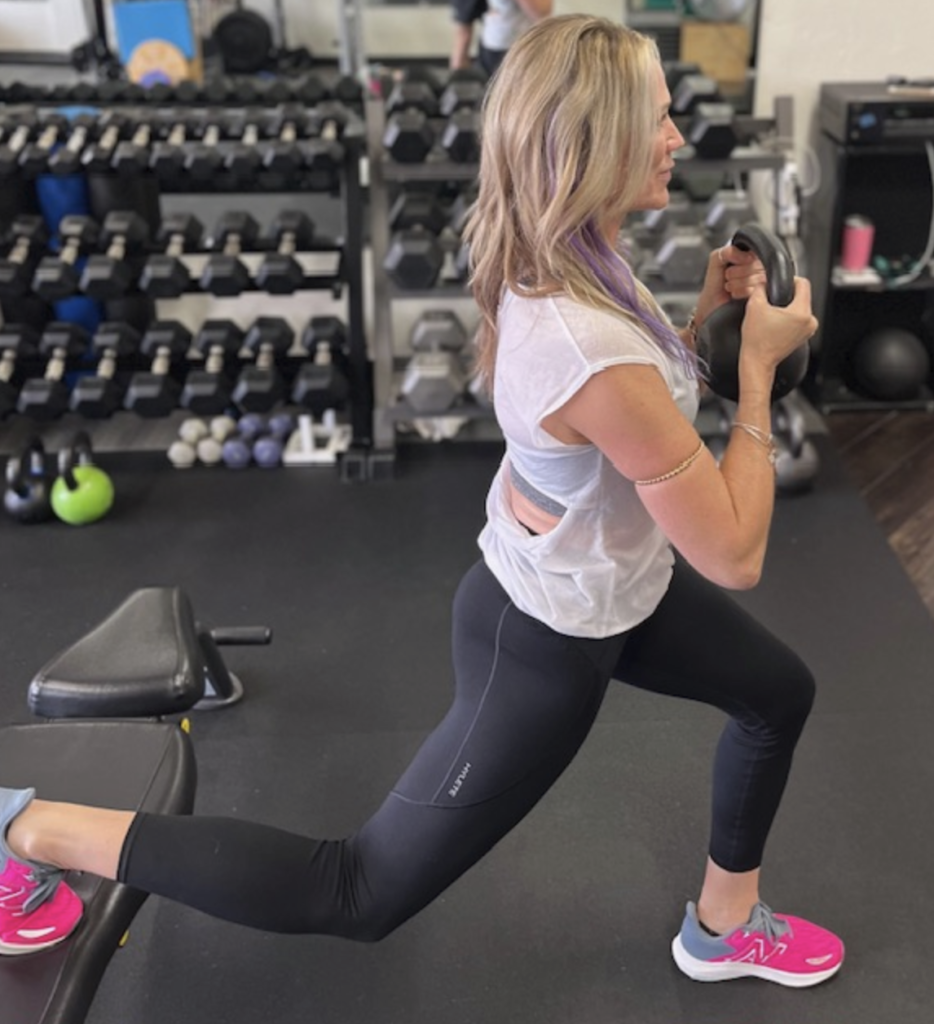
Isometric training occupies a significant position in his programming. The research supporting isometrics for pain rehabilitation is well-established, and Delgrolice uses it deliberately, not as a replacement for dynamic strength work, but as a targeted tool for building strength without aggravating compromised tissues or threatening a nervous system already under load. Kettlebells, band resistance, and calisthenics round out the physical programming, each selected and scaled to the client’s current state and goals.
The fall prevention protocol, which he calls the fall matrix, illustrates the level of specificity his work reaches. Teaching clients how to get up and down off the ground with control, how to manage an unexpected loss of balance, and how to fall in a way that reduces injury risk is not standard fitness programming. It is targeted, evidence-informed work that has made a measurable difference in the lives of people he has trained.
Delgrolice describes the early phase of client work through the analogy of a house remodel. A client may arrive with years of accumulated issues: injuries, compensations, neurological patterns that have solidified around pain or fear of movement. Rather than loading those patterns immediately, his approach is to strip back to the foundation, identify what is actually working and what is not, and rebuild from there with a deliberate, unhurried progression.
What he observes across those first sixty to ninety days is consistent. Strength improves quickly, often within the first few sessions. Balance responds measurably. Posture shifts. Pain levels reduce. Sleep quality improves as the nervous system begins to regulate. And perhaps most significantly, confidence grows, which in his view is not a soft byproduct of good training. It is one of the most important clinical markers he watches.
A client who leaves each session feeling better than when they arrived will return. A client who returns consistently will make progress. That snowball effect, as Delgrolice describes it, is how the brain’s emotional systems begin to associate movement with reward rather than threat, and it is one of the most reliable mechanisms for building a sustainable training practice.
Delgrolice’s definition of a client win is specific. He has worked with individuals who regained the ability to put on their own socks after years of spinal cord injury. He has worked with athletes who returned to competitive sports following traumatic brain injuries. He has worked with older clients who, because of targeted balance and fall prevention training, were able to absorb an unexpected fall without injury and credit that outcome directly to the work they had done together.
These are not abstract outcomes. They are the kind of functional gains that change the texture of a person’s daily life: their independence, their confidence, their sense of what is still possible. That is what makes the Hybrid Fitness Training model serious in a way that goes beyond session count or quarterly progress photos.
He is also explicit about the ongoing nature of this work. The rehab tools he uses with clients, he still uses himself. The nervous system training does not end at a certain milestone and get retired. It becomes part of how a person maintains their capacity to move well, stay strong, and feel capable. In Delgrolice’s view, that is the honest measure of what real results look like.
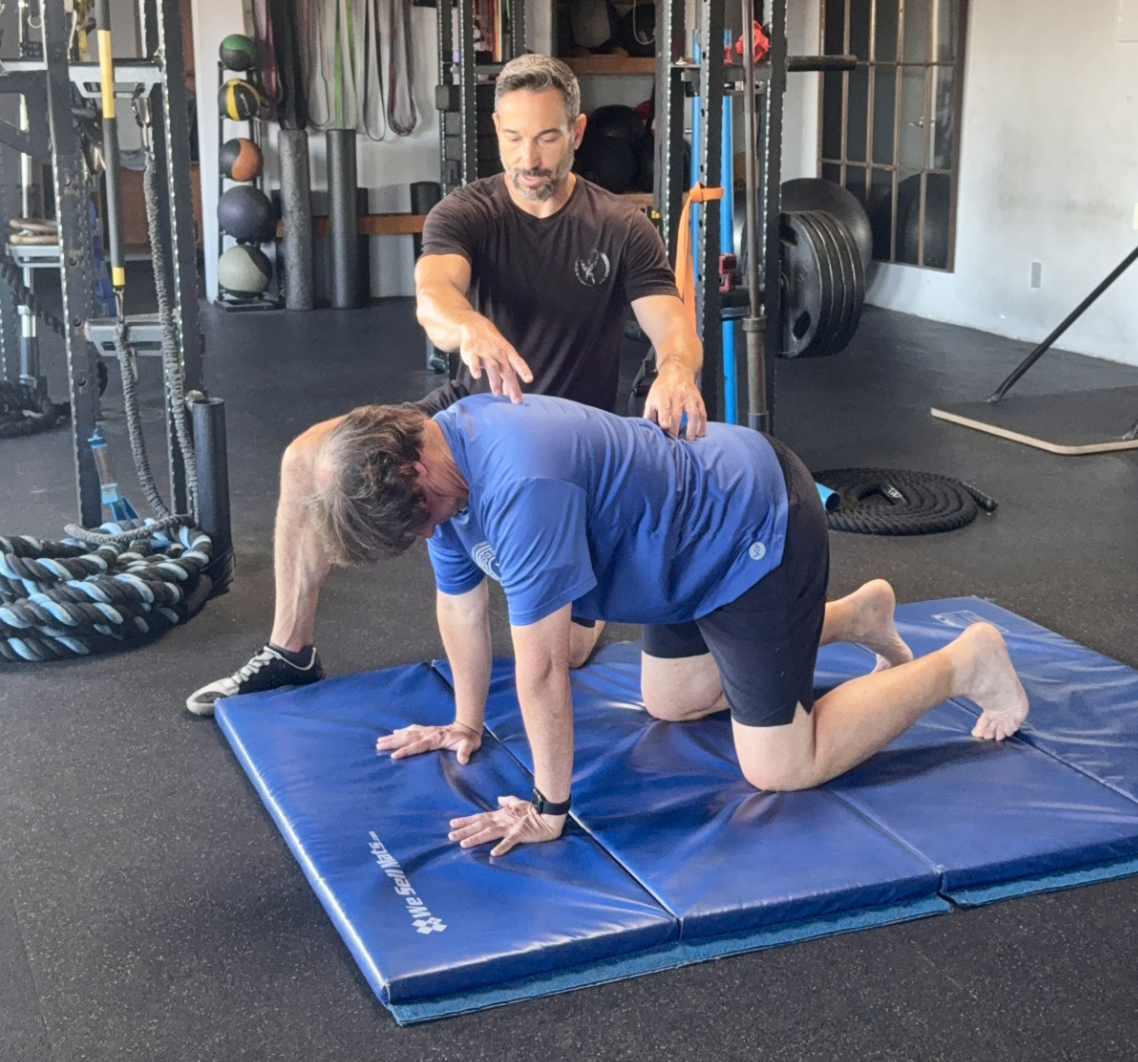
The private co-op model Delgrolice operates within is itself a differentiating factor. There are no open memberships, no crowds, no shared equipment lines. The only people in the gym are working directly with their trainers. That environment (2,500 square feet of open floor, natural light, and quiet professionalism) is by design. It allows Delgrolice to work with full attention, and it allows clients to train without the ambient stress of a commercial gym floor.
But the deeper differentiator is the niche itself. Hybrid Fitness Training occupies the space between physical therapy and conventional personal training, a gap that exists for a significant number of adults and is almost never served well. When physical therapy ends, many clients are discharged with a home program and limited ongoing guidance. What they need is a trainer who understands neurology, who can continue the rehabilitation arc, and who knows how to build strength without introducing new risk. That is precisely what Delgrolice has spent two decades developing the ability to do.
He also offers online training and a structured app-based program for those who cannot train in person, extending his method’s reach beyond Santa Monica and into a broader population of people who need specialized, brain-forward coaching and simply cannot find it locally.
- Hybrid Fitness Training is a private, specialized personal training business in Santa Monica, California, founded and led by Aaron Delgrolice.
- The training model is built on brain-based movement neurology, specifically visual, vestibular, proprioceptive, and cerebellar drills that produce measurable improvements in mobility, balance, strength, pain levels, and coordination.
- Delgrolice’s philosophy of “stimulate, not annihilate” is evidence-informed and reflects twenty years of coaching adults managing pain, injury, and neurological conditions including TBI, Parkinson’s, and stroke recovery.
- The business bridges the gap between physical therapy discharge and long-term, sustainable strength, a specialized role that most gyms and trainers are not prepared to fill.
- In-person training, online coaching, and a structured app-based program make Hybrid Fitness Training’s method accessible beyond Santa Monica to anyone who needs specialized, brain-forward coaching.
Where the Method Leads
Hybrid Fitness Training is not merely a place where people exercise. It is a specialized training environment built around the understanding that real, lasting physical improvement begins with the brain and nervous system, not the weight on the bar or the number of reps completed.
For anyone in the Los Angeles area who has been left without a clear path forward after injury, surgery, or neurological challenge, or who simply wants a trainer with the expertise to meet them where they actually are, the work Delgrolice does is rare, credible, and built on twenty years of continuous learning. The method is serious. The bar is high. And the goal, every session, is simple: leave feeling better than you arrived.
For those who feel connected to what Hybrid Fitness Training offers, whether dealing with chronic pain, managing a neurological condition, recovering from injury, or simply wanting a training approach that begins with the individual rather than a generic program, the first step is a direct conversation with Aaron Delgrolice.
Delgrolice’s process begins with an initial contact (by email, text, or phone) to establish a fit and answer initial questions. From there, he sets up a formal consultation, either in-person at the Santa Monica facility or online, where he takes a full history, conducts movement and brain assessments, and develops a roadmap tailored to the individual. Online training and his structured app-based programming are also available for those outside the Los Angeles area. The goal of that first conversation is not to sell a program. It is to understand the person and determine whether the method is right for what they need.
Explore Hybrid Fitness Training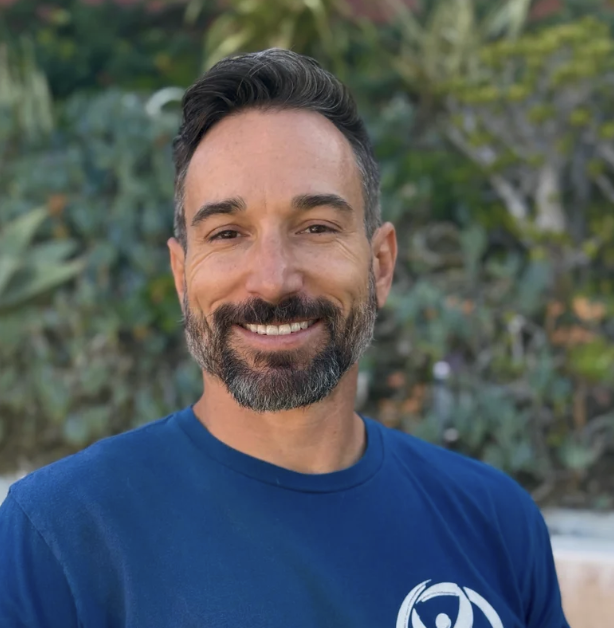
Aaron Delgrolice is the founder and training lead behind Hybrid Fitness Training in Santa Monica, California. His NSCA-certified foundation, seven years of coaching at Equinox, and two decades of private practice have been refined through ongoing study of neuroscience, movement neurology, and brain-based training protocols. The method featured in this article reflects that evolution: a rigorous, individualized system that begins with the nervous system and builds outward, producing functional strength, reduced pain, improved balance, and a quality of life clients did not know was still within reach.

This feature is based on a recorded interview with Aaron Delgrolice, founder and training lead of Hybrid Fitness Training, and on source material, photographs, and a logo provided by the business. Hybrid Fitness Training’s official online platform, linked above, was reviewed for publicly available program information. Details on training philosophy, workout structure, client experience, and the first step for new clients come from Delgrolice’s interview and the business’s own material.
Statements about methods, client progress, and results are attributed to Delgrolice’s account rather than presented as guarantees. This article is editorial; it does not provide medical, rehabilitation, neurological, nutrition, or individualized training advice, and it does not guarantee individual outcomes. Readers should consult a qualified professional before beginning or changing a fitness or rehabilitation program.
- Recorded interview with Aaron Delgrolice, founder and training lead of Hybrid Fitness Training, covering training philosophy, workout structure, client experience, and the first step for new clients.
- Photographs, logo, and business source material provided by Hybrid Fitness Training.
- Hybrid Fitness Training online platform: my.playbookapp.io/aaron-delgrolice, reviewed for publicly available program information.